Dr. Vipin Gaur Meets Minister Dr. L. Murugan – A Warm and Useful Conversation
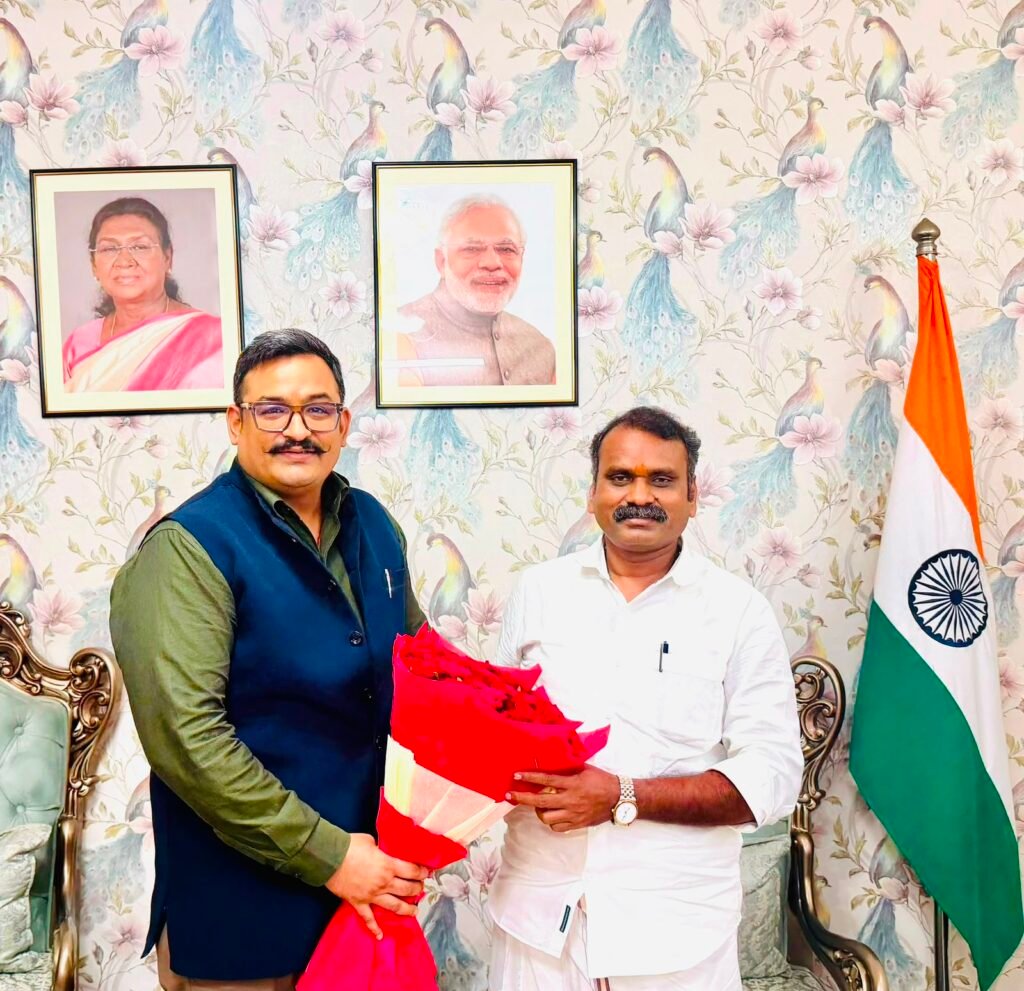
Dr. Vipin Gaur, the General Secretary of the Newspaper Association of India, sat down with Union Minister of State for Information and Broadcasting and Parliamentary Affairs, Dr. L. Murugan, for a courteous and open conversation. It wasn’t some stiff formal event. It was a proper discussion where both sides talked freely about the things that actually matter to Indian media right now. Dr. Gaur told the minister about the work his association has been doing across the country – the programmes they run, the efforts they make to stand up for newspapers and journalists, and the steps they’re taking to keep journalism ethical and responsible. He spoke about how digital media is growing so fast these days, how broadcasting needs better technology, and how the Indian film and entertainment world can become stronger on the world stage. They also talked about giving young people more chances in these fields and encouraging fresh ideas. What stood out was how Dr. Gaur appreciated the minister’s simple and humble way of working. He said Dr. Murugan’s quiet commitment to growing the information and broadcasting sector, keeping creative conversations alive, and making the media community stronger really comes through. That kind of approach makes people feel heard. They didn’t just stick to one topic. They exchanged thoughts on several important issues that are in the news these days, and the tone stayed positive throughout. At the end, Dr. Gaur shared a clear hope – that if the government, media institutions, and journalists’ organisations keep talking and working together, Indian media, journalism, and the creative industries will find a better direction. He believes this kind of steady cooperation will make responsible, trustworthy journalism even stronger. The Newspaper Association of India has been quietly doing a lot of groundwork – protecting journalists’ interests, supporting media education, helping young reporters build skills, and recognising good work at the national level. Meetings like this one give them a chance to share what’s happening on the ground and also hear the government’s side of things. It’s the kind of conversation that doesn’t make big headlines every day, but it matters. When people from the media side and the government side sit across a table and talk honestly about technology changes, digital growth, broadcasting upgrades, and how to keep public interest at the centre, something useful usually comes out of it. Dr. Gaur explained the association’s different initiatives in detail, and the minister listened. That simple exchange of information and ideas is how better understanding starts. Both sides seem to want the same basic things – a stronger, more professional media that serves people well and can hold its own internationally, especially in films and entertainment where so many young talents are looking for opportunities. In a time when everything is changing so quickly – from how news reaches us to how stories are told on screens – these calm, respectful conversations help everyone stay on the same page. No drama, no big speeches. Just two people who care about the media ecosystem sitting together and talking about what needs attention and how things can move forward. Dr. Gaur left the meeting feeling hopeful. He believes that continuous dialogue will give Indian journalism and the creative industries the fresh push they need. And honestly, that kind of quiet confidence is worth noting. The Newspaper Association of India will keep doing its work – supporting journalists, building skills, promoting ethical standards, and recognising people who do good reporting. And conversations like the one with Dr. Murugan help keep the door open so that practical issues can be discussed whenever they come up. That’s really the heart of it. A straightforward, respectful meeting in New Delhi where media and government talked about real concerns and shared a common wish for a stronger, more responsible Indian media landscape. Sources: Smart Vision Samachar, Ghaziabad edition, Thursday 30 July 2026 @Rohit Manral
Meta Assures IT Ministry: PM Modi’s Posts and Other Prominent Accounts Will Get Extra Oversight and Senior-Level Reviews
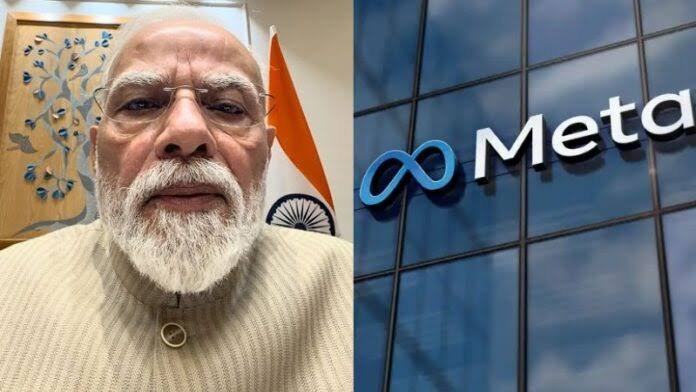
A video from the Prime Minister’s own verified account goes missing for a bit on Facebook, the government gets involved, and suddenly the company that runs the platform is scrambling to show it takes the matter seriously. That’s pretty much where we are right now. On Wednesday, Meta told the Ministry of Electronics and Information Technology that posts from Prime Minister Narendra Modi and other high-profile Indian accounts will now receive additional oversight. Reviews of such content will happen at a senior level inside the company. Multiple checks are being put in place so that something like this does not happen again. Sources close to the matter shared these details with PTI, and the message has been consistent across several reports. This comes a day after the IT ministry summoned Meta’s global head of public policy. The trigger was a short video that Modi had posted. It was his first direct selfie-style video aimed at young people. In it, he spoke about the pain of paper leaks, the impact on lakhs of students and their families, and the government’s plan to bring tougher laws, including fast-track courts and stricter punishments. The video first went up on Instagram around 23 July and was shared on Facebook. For a brief period early on 28 July, access to it was restricted on Facebook. Meta later restored it and said the removal happened “in error.” The company has blamed a glitch in its automated content filters. According to what Meta told the government, those AI-powered systems were reviewing shared versions of the post and related content circulating on the platform, and in the process the original post itself got caught up and restricted for a short time. Meta has apologised. An official statement from the company confirmed the content was removed by mistake and has been put back. But the government was not fully satisfied. IT Secretary S. Krishnan said it was good that Meta admitted the mistake and apologised, yet the explanation was not adequate. Officials described Meta’s account of events as “not reasonable” and made it clear the matter was far from closed. They want deeper discussions and clearer answers on how such an error could affect a post from the Prime Minister’s verified handle. If automated systems can make this kind of mistake, the company needs to improve those tools, sources indicated. Meta has now written to the ministry outlining the new safeguards. Posts by the Prime Minister and other prominent accounts will get extra layers of scrutiny. Multiple checks will take place involving senior company officials. The idea, from what sources describe, is a kind of ring-fencing for high-profile accounts so that automated systems do not casually pull them down. Meta officials are also expected to meet government representatives later this week or early next week to discuss the incident further. The timing of the original video mattered. It came amid prolonged student protests over alleged irregularities in the NEET-UG examination. Modi spoke directly to that frustration, saying paper leaks are not an ordinary issue and that the government was moving to set up fast-track courts and bring legislation with harsh penalties. The Union Cabinet was to discuss the proposals, after which efforts would be made to pass the bill in Parliament. On Wednesday itself, the Lok Sabha passed the anti-paper leak amendment bill. For a platform that handles millions of posts every day, automated moderation is unavoidable. Yet when a verified post from the country’s highest elected office gets restricted, even briefly, it raises questions about reliability and accountability. The government has made it clear it expects better from a technology company of Meta’s size. Summoning global executives rather than relying only on the India team signals that New Delhi wants these conversations to happen at a higher level. Meta, for its part, has moved into what looks like correction mode. By promising additional oversight and senior reviews for content from the Prime Minister and other prominent personalities, the company is trying to show it has taken the government’s concerns on board. Whether these new processes will fully prevent similar incidents remains to be seen, but the commitment has been put on record. For now, the video is back up. Meta has apologised and outlined tighter internal checks. The government continues to press for more details and systemic improvements. Officials from both sides are likely to sit across the table in the coming days. How those conversations go will decide whether this particular chapter is truly closed or whether it leads to longer-term changes in how platforms handle content from prominent Indian voices. Sources: PTI reports carried by The Times of India, CNBC-TV18, India TV, The Tribune, and related coverage from Hindustan Times and other outlets citing government and company sources. @Rohit Manral
Welcomed Him Like a Superstar: Priyanka Gandhi Hits Out at BJP MPs for Felicitating Pradhan
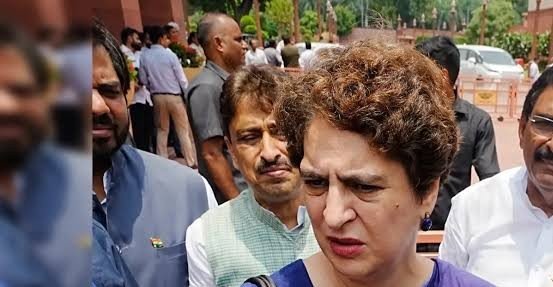
Yesterday, Congress leader Priyanka Gandhi Vadra was speaking about on Tuesday when she tore into BJP MPs for the way they welcomed Dharmendra Pradhan back into Parliament. Just two days after Pradhan resigned as Education Minister, some of his party colleagues in the Parliament complex greeted him with a traditional cap, a stole, and loud slogans of “Pradhan Zindabad.” They treated him like he’d just returned from winning a big match. Priyanka didn’t hold back. “Don’t you think it is shameful?” she asked. “Everyone saw the circumstances under which Dharmendra Pradhan resigned, but yesterday in the Parliament premises, he was welcomed as if he were a superstar!” Those circumstances weren’t some quiet office decision. For weeks, young people—students who had prepared for years for exams that decide their entire future—had been out on the streets. The NEET paper leak controversy and a string of exam irregularities had left thousands feeling cheated. Protests at Jantar Mantar and across the country grew louder and more determined. Families of students who took their own lives after being forced to retake exams were still grieving. The pressure finally forced Pradhan to step down on 25 July. He said he was doing it so that “anti-national forces” wouldn’t take advantage and so students could focus on their studies again. Many in the opposition and among the protesters saw it differently—they called it a victory for the youth who refused to stay quiet. And then, barely 48 hours later, the same man walks into Parliament and gets a hero’s reception from his own side. Opposition MPs weren’t having it. They shouted “Chor, chor, paper chor” right back. The contrast was hard to miss. Priyanka didn’t stop at the welcome. She pointed out that even now, students are still being targeted. She spoke about Instagram posts showing photographs of young women being accused of things, and she asked a simple question: Are you actually trying to talk and fix the mess, or are you still more interested in suppressing the students? “This is wrong,” she said. “No one can trust the Modi government.” Her brother Rahul Gandhi had already said his piece the day before. In a post on X, he called Pradhan a lasting symbol of corruption and of an education system that has failed India’s children. He reminded everyone that the system had claimed the lives of 26 young people and pushed lakhs of others onto the streets. Pradhan didn’t resign out of any sudden moral awakening, Rahul said—he resigned because the anger of the youth scared the government. And now the BJP was putting a garland on that same person inside Parliament. “This is not an honour,” Rahul wrote. “It is a celebration of the ruined futures of lakhs of children. Every student in the country is watching this, and will remember every face involved.” There’s something deeply uncomfortable about the whole scene. On one side you have students who exhausted months studying, only to find the exam paper had been leaked, their hard work wasted, their mental health bone-tired. On the other side you have politicians inside the highest temple of democracy treating the man who presided over that mess like a returning champion. It sends a message, whether intentional or not: the real power still belongs to those who can manage the optics, not to those who suffer the consequences. Of course politics is full of these moments. One day a minister is under fire, the next day the party closes ranks and puts on a show of strength. But when the issue involves the future of an entire generation of students—kids who trusted the system enough to put their dreams on the line—the performance feels especially tone-deaf. The “Cockroach Janta Party” protests may have quietened after the resignation, but the bitterness hasn’t disappeared. Young people are still watching. Parents are still watching. And the families who lost children are still carrying a grief that no slogan can erase. Priyanka’s words cut through the usual political noise because they were plain. She didn’t need long speeches or complicated arguments. She simply pointed at what everyone could see and asked if it wasn’t shameful. In a country where education is still the biggest hope for jumping out of poverty and building a better life, the way leaders treat a crisis in that system matters more than any temporary show of loyalty inside the Parliament gates. Sources: @Rohit Manral
‘No legal action, FIRs being withdrawn’: Bihar govt assures protesters in big win for students, CJP
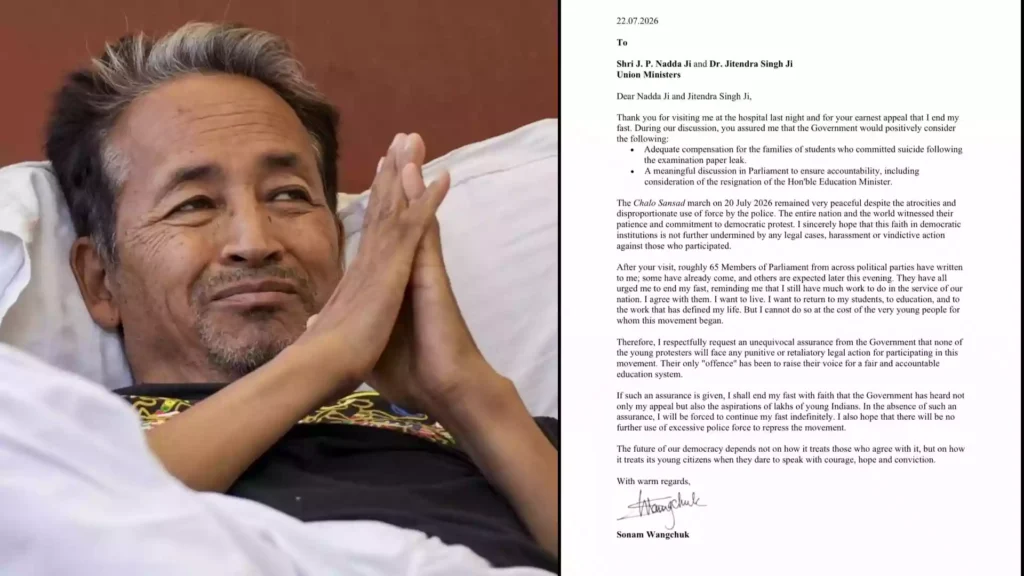
Look, sometimes the system actually listens. Not always, and not perfectly, but every now and then something shifts, and you feel it in the air. That’s what’s happening in Bihar right now. On Monday evening, the Bihar government put it in writing. The Home Department issued a notification saying it is withdrawing all FIRs, complaints and show-cause notices linked to the protests over the NEET paper leak — specifically for incidents that took place before 6 am on 26 July. People who were arrested in connection with those events will be released “forthwith.” No more legal action on those cases. Just like that. For the students who spent weeks on the streets, for the families who spent sleepless nights wondering if their kids would have a police record hanging over them for years, this is huge. It’s the kind of relief that doesn’t come with fireworks or victory marches. It comes quietly, in the form of a government order that finally matches what was promised. You remember how this started. The NEET paper leak allegations exploded across the country. Students who had prepared for years felt cheated. Trust in the examination system took a beating. Protests grew, first in pockets, then into a nationwide movement. The Cockroach Janta Party, or CJP, became the loudest voice. They sat at Jantar Mantar, they organised, they kept the pressure on. The agitation went on for more than a month. It got messy in places — stone-pelting, police action, injuries, even firing in Siwan. But the core demand was simple: fix the system, hold people accountable, and stop treating students like criminals for raising their voices. Then came the talks in Delhi. Union ministers JP Nadda and Jitendra Singh sat down with CJP representatives. The government accepted the demand for Dharmendra Pradhan’s resignation as Education Minister. That happened. They also gave verbal assurances that no punitive action would be taken against peaceful protesters, that existing FIRs would be withdrawn, and that no fresh cases would be filed for the agitation. CJP, in good faith, suspended the nationwide protest. But the ground reality in the states lagged behind. Reports started coming in of students still being detained or facing cases in Assam, West Bengal and Bihar. CJP leaders got angry. They called it a breach of trust. They said they had withdrawn the agitation only because of the clear assurance that no one would face coercive action. They warned that if the promises weren’t kept — if detainees weren’t released and FIRs weren’t pulled back — they would be forced to hit the streets again. Kapil Sibal even stepped in with legal support and a fund. The tension was real. In Bihar, opposition voices, including Tejashwi Yadav, added pressure. He gave the state government a 24-hour ultimatum: withdraw the cases, release the students, or face a bigger movement. Student organisations like AISA kept the heat on. The situation looked like it could spiral again. And then Bihar moved. The notification came. Cases linked to the protests before that specific cut-off time are being withdrawn. Those in jail will walk free. It’s not a complete clean slate for every single incident that happened after, and the Centre still has to fully deliver on the written guarantee CJP is waiting for by Tuesday. But for Bihar, this is a clear step. Officials have said no legal action will follow on these matters. That assurance matters. Think about what this means for the students. Many of them are first-generation learners, kids from small towns and villages who poured everything into clearing NEET. A police case against your name doesn’t just disappear from records. It follows you into jobs, into higher education, into the way people look at you. Having those FIRs withdrawn is not a small technicality. It’s dignity restored. It’s the state saying, “We hear you, and we’re not going to punish you for speaking up.” CJP has called this a big win, and it is. The organisation may have started as an online movement with a quirky name, but it forced a national conversation on exam integrity and the treatment of student protesters. The fact that a state government is now formally rolling back cases is validation of that pressure. At the same time, CJP leaders are still watching the other states closely. They have made it clear that the Centre’s written commitment is still pending, and any fresh harassment will bring them back to the streets. This doesn’t magically fix the deeper problems. Paper leaks, coaching mafia influence, the immense pressure on young people — those issues remain. The government has talked about considering CJP’s five-point charter on examination reforms and providing compensation to families of students who died by suicide linked to the crisis. Those conversations need to continue. Real change will take more than withdrawn FIRs. But for now, in Bihar, the immediate threat of legal harassment has been lifted for hundreds of young people. Parents can breathe a little easier. Students who were sitting in lock-ups or living under the shadow of cases can step back into their lives. That is not nothing. Politics will keep spinning. Opposition parties will claim credit, the ruling side will say they acted with maturity, and social media will argue over who “won.” The students themselves just wanted a fair system and the freedom to protest without permanent punishment. On that last point, Bihar has finally delivered the words they needed to hear: no legal action, FIRs being withdrawn. Sometimes the system does listen. Not always gracefully, not always completely, but it listens. And when it does, the kids who stood in the sun and the rain for weeks get to go home without a case hanging over their heads. That feels like a win worth noting. Sources: @Rohit Manral