Rahul Gandhi Flags India’s ‘Economic Crisis’ In US, BJP Calls Him Anti-India
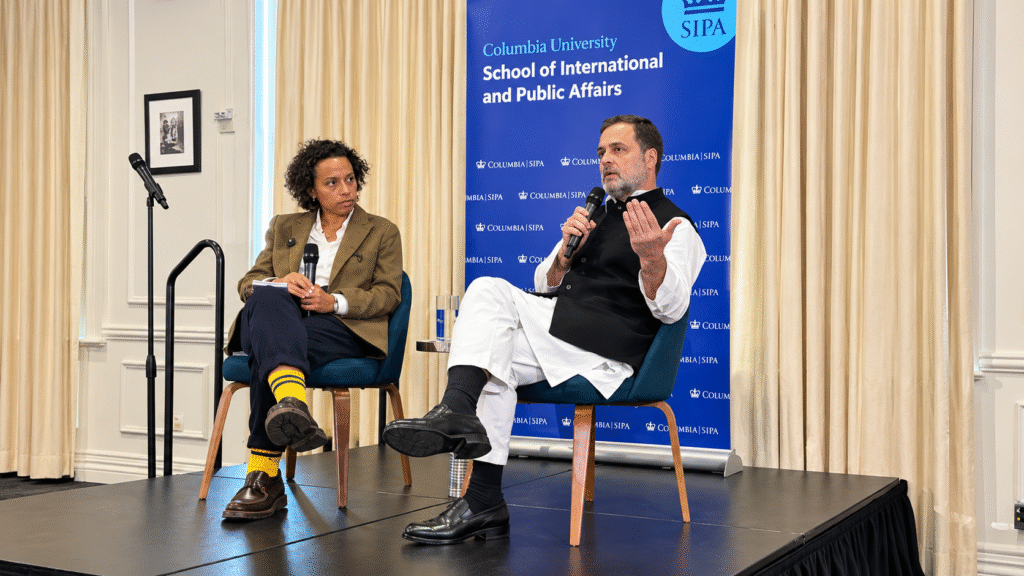
Rahul Gandhi is in the US again, and once more he’s saying things that have the BJP climbing the walls. This time it was at Columbia University in New York. He looked at the students and faculty and basically told them India is sitting on an economic disaster. Not some mild concern. He used the word disaster. And of course the BJP wasted no time calling him anti-India. It happened on Tuesday during a conversation moderated by Lydia Polgreen. Gandhi was talking about the young people in India, especially the middle-class kids who actually went to college. He said a lot of them are frustrated because they just don’t see a future for themselves. Parents tell them to study hard, get a degree, do what the previous generation did. But the kids are looking around and saying it doesn’t work anymore. No proper jobs. The education system itself has deep problems. And the unemployment numbers are massive. “The blunt thing is that India is sitting on an economic disaster. That’s the reality. One can brush it aside, the media can brush it aside, but India’s got a massive unemployment problem. India’s got a massive problem with its education system,” he said. Straight up. No softening it. He went further. According to him the economic model stopped delivering results almost a decade ago. Schemes like Make in India and Startup India didn’t fix the broken backbone. He kept coming back to small and medium businesses and agriculture. Those are the real job creators in India, he said. The spine of the economy. And that spine has been broken. You can’t employ everyone through the services sector. A few percent maybe, but not the millions who need work. Manufacturing needs rebuilding, he argued. Private investment is missing for the smaller players. The only ones growing, in his telling, are the big names. This is not the first time Gandhi has spoken this way about the economy. He’s been hammering the jobs issue and the state of education for a while. But doing it on an American university campus, in front of an international audience, is what lights the fuse every time. And the BJP reaction was immediate and sharp. Party spokesperson Pradeep Bhandari went straight for the “anti-India” label. He called Gandhi the “Leader of Anti-India Propaganda.” In posts and statements he said Gandhi has this habit of speaking ill of India every time he steps abroad. He pointed out that the world currently sees India as the fastest-growing major economy and that Indian democracy is respected globally. So why, Bhandari asked, does the Leader of the Opposition keep painting a picture of disaster? Bhandari also dragged in the recent Bharat Summit in Hyderabad, saying Gandhi had given space to foreigners to criticise Indian democracy there too. He contrasted all this with Prime Minister Narendra Modi, who, according to the BJP, upholds India’s interests and dignity whenever he travels. The message from the ruling party was clear: this is not constructive criticism, this is running down the country on foreign soil. Other BJP voices joined in with the same line. The accusation that Gandhi is “hungry for power” and therefore willing to damage India’s image also floated around. It’s the familiar script. Whenever the Congress leader raises structural problems abroad, the response is that he is insulting the nation rather than debating policy at home. Gandhi’s side, of course, sees it differently. From their point of view he’s simply stating what many young Indians feel every day. The frustration over jobs is real. The quality of education and the mismatch with the market is real. Small businesses and farmers have been under pressure for years. Saying it in New York doesn’t change the facts, they argue. It just makes the discomfort louder. He’s on a short two-day visit. After Columbia he was scheduled to go to the University of Chicago. These university interactions have become a regular part of his overseas trips. He talks to students, answers questions, and often returns to the same themes: democracy, the economy, the future of the youth. The BJP treats each one as another episode of what they call propaganda. Congress treats them as attempts to keep the conversation honest. The political temperature in India is already high. With elections always somewhere on the horizon, every statement gets magnified. Gandhi’s remarks land in a country that is simultaneously celebrating high growth numbers and dealing with the daily reality of educated young people struggling to find stable work. Both things can be true at once. Growth at the top and distress lower down is a tension many economies face. The fight is over how serious that tension is and who is responsible for it. What stands out is how predictable the cycle has become. Gandhi goes abroad, raises uncomfortable points about jobs or institutions, the BJP hits back with the anti-India charge, the news cycle runs for a day or two, and then everyone waits for the next round. The underlying problems he pointed to at Columbia — unemployment, the state of education, the health of small businesses — do not disappear with the headlines. Whether one agrees with his diagnosis or not, the conversation he forced is not going away. Young people in India are watching their prospects closely. Parents are worried. And politicians on both sides know that the jobs question is not going to be settled by press conferences or social media posts. It will be settled by whether enough decent work appears for the generation that is already impatient. For now the lines are drawn the usual way. Gandhi says the country is sitting on an economic disaster. The BJP says he is the disaster for talking about it the way he does, especially from American soil. The students at Columbia heard one version. Voters back home will keep hearing both. SourcesEconomic Times, Indian Express, Deccan Herald, The Hindu, Moneycontrol, Times Now, News18, India TV, Business Standard, and related reports dated 18
BJP Sees ‘Treason’ As Italian Leader Echoes ‘Vote Chor’ Slogan, Rahul Gandhi Laughs At Hyderabad Event
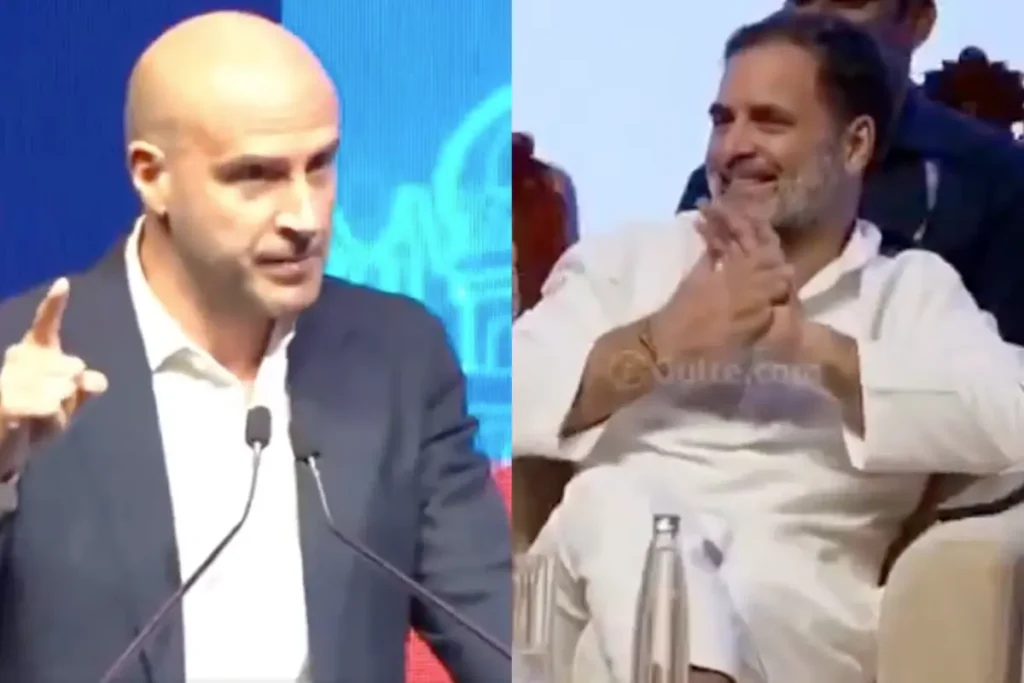
At the Congress-organised Bharat Summit 2026, an Italian politician stood up, repeated the party’s own “Vote Chor, Gaddi Chhod” slogan, and Rahul Gandhi was right there on the stage, smiling and clapping. The BJP didn’t take it lightly. They called it foreign interference and worse. Giacomo Filibeck is the Secretary General of the Party of European Socialists. He was invited to speak at the two-day gathering that brought together progressive voices and party leaders from different countries. In his remarks he praised Rahul Gandhi’s recent push for cleaner voter lists and the big march to Ramlila Maidan a couple of weeks earlier. Then he launched into the slogan that Congress has been using against the government over the Special Intensive Revision of electoral rolls. He said it in Hindi first—”Vote Chor, Gaddi Chhod”—and then translated it into English: “Vote thief, leave your seat.” The crowd responded, and the cameras caught Rahul Gandhi and Telangana Chief Minister A. Revanth Reddy laughing and applauding. That video spread fast. Within hours the BJP was all over it. Telangana BJP president N. Ramchander Rao didn’t hold back. He asked on X whether it wasn’t treason to let a foreign leader mock India’s democracy while Indian leaders proudly clap along. He said Rahul Gandhi no longer behaves like an Indian leader and accused him of acting like a puppet dancing to foreign masters. Union Minister Kiren Rijiju took a more pointed dig without naming anyone directly: “Have you ever seen anyone laughing when India is insulted by a foreigner?” Other leaders piled on. Bandi Sanjay Kumar called the whole event an “Anti-Bharat Summit” and questioned why an Italian politician was commenting on India’s internal affairs. BJP spokesperson Pradeep Bhandari went further, talking about foreign powers and regime-change talk. The slogan itself isn’t new. Congress has been raising “Vote Chor, Gaddi Chhod” for months, linking it to concerns over the electoral roll revision process. Rahul Gandhi has repeatedly claimed the process is being misused. Filibeck framed his support around the basic idea of one person, one vote and said democracy needs defending. He also credited the Congress with laying the democratic foundations of modern India and said progressive forces everywhere stand with them. For the BJP, the problem wasn’t just the words. It was a foreign guest saying them on Indian soil at an event hosted with state involvement, and the open approval from the Leader of the Opposition. BRS leaders also criticised the episode, calling it unnecessary foreign commentary on domestic politics. The summit itself was billed as a big international gathering with delegates from dozens of countries. Congress presented it as a platform for like-minded people fighting similar battles against authoritarianism and financial power structures. Rahul Gandhi, speaking at the event, talked about shared struggles and the need to defeat the current government. The Italian leader’s intervention fitted that narrative for the hosts but handed the BJP a ready-made attack line about sovereignty and national pride. It’s the kind of moment that feeds the endless cycle. One side sees a legitimate expression of solidarity on electoral integrity. The other sees an invitation to outsiders to lecture India and a smiling response that looks like celebration of the insult. Videos of the applause keep circulating, the posts keep flying, and both parties dig in. Filibeck’s presence was always going to draw attention because of his political position in Europe, opposite the current Italian government. Linking that to the ongoing “vote chori” campaign turned a summit speech into national political ammunition overnight. Whether this changes anything on the ground is another question. The electoral roll debate continues, the slogans will keep getting used, and the accusations of foreign interference will keep getting traded. For now the images of Rahul Gandhi laughing as the Italian leader chanted the slogan have given the BJP a sharp talking point, and they are using it fully. In Indian politics, a single stage moment can dominate the news cycle for days. This one has done exactly that. Sources: India Today, News18, Hindustan Times, Times of India, NDTV, India TV reports on the Bharat Summit 2026 events and subsequent reactions (November 14-15, 2026). @Rohit Manral