Rahul Gandhi’s Latest Push: Vote Chori, Ramlila Rally and the Debate Challenge
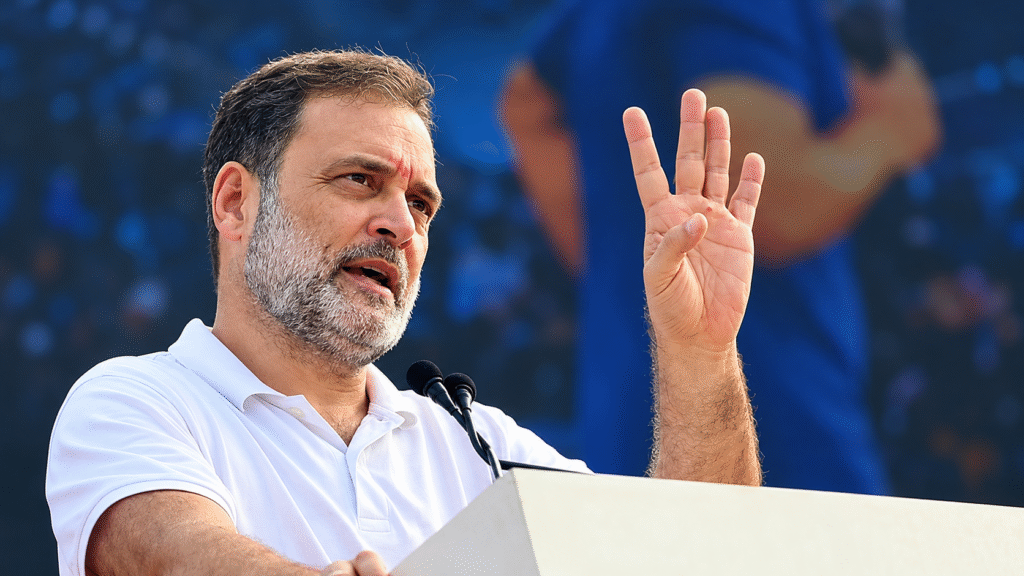
The Leader of Opposition is once again in the middle of the noise, this time with a sharp focus on what he calls “vote chori” — alleged large-scale voter list deletions and election manipulation. On November 1 the INDIA bloc held a big rally at Delhi’s Ramlila Maidan. Rahul was front and centre. He told the crowd that Chief Election Commissioner Gyanesh Kumar had committed vote theft and would eventually go to jail. He claimed around 13.5 crore voters had been improperly removed from the rolls. Mamata Banerjee, Akhilesh Yadav and Congress president Mallikarjun Kharge were there too. The march earlier in the day from Connaught Place area to the Maidan drew a mixed crowd — party workers, some students, and people who just turned up. Shops in Connaught Place stayed shut that day, which Rahul later said hurt ordinary traders and was done deliberately by the BJP. The “Vote Bachao, Desh Bachao” line has become the opposition’s main slogan for now. They want the CEC’s resignation and a full debate on the Special Intensive Revision of electoral rolls and the reliability of EVMs. Rahul has been repeating that the 2024 Lok Sabha results were not clean and that the same pattern is continuing. Then came the personal challenge. After Prime Minister Modi accused the opposition of being an obstructionist force that spreads rumours on social media, Rahul hit back. He posted that foreign social media fully backs the Prime Minister and challenged him to an open debate. Sit across a table, he said. Media will be there, young people will be there. You can even make Mohan Bhagwat the judge. He listed topics — the financial system, the US deal, why the Adani case was closed, Epstein references, and more. He ended with a Happy Diwali message. The post got heavy traction. Amit Shah, meanwhile, told a gathering in Hyderabad that Rahul Gandhi will never become Prime Minister and accused Congress of opposing the electoral roll revision only to protect its vote bank. Finance Minister Nirmala Sitharaman has now formally challenged Rahul to debate SIR and EVMs inside Parliament. She pointed out that Amit Shah has already offered a special session if the opposition wants one. So the ball is in their court on whether they actually take it up on the floor of the House or keep it on the streets and social media. This is not a sudden shift. For months Rahul has been pushing the vote theft narrative. He has spoken about it in Parliament, at press conferences, and during coordination meetings with other INDIA leaders. At one recent internal meeting he told colleagues that when the campaign started only about 20 percent of people believed the claim, but now the number is much higher. He has also been telling the alliance to stay ready to mobilise within 24 hours if needed. There have been other smaller stories around him. A UP court recently acquitted him in an old 2018 defamation case related to remarks against Amit Shah. His convoy had a collision with an ambulance on the Purvanchal Expressway earlier, with some injuries reported. He made a trip to Vietnam that the BJP tried to turn into an issue. He has also spoken about alleged government interference in the Tata Sons matter. The bigger picture is that Rahul is trying to keep the opposition united around one clear issue — trust in the electoral system. Whether the Ramlila Maidan show of strength turns into sustained public pressure is the real test. Urban turnout was not massive, and the BJP has dismissed the whole thing as an attempt to create anarchy and refuse to accept electoral defeat. Still, the fact that multiple opposition parties showed up together and that the “vote chori” phrase is now part of everyday political conversation means the campaign has at least registered. For now Rahul is doing what he does best in opposition mode — keep attacking, keep the issue alive, and force the other side to respond. The debate challenge is still hanging. Whether Modi or the government takes it up in any form remains to be seen. The streets and the television studios will stay busy either way. Sources: Business Standard, Economic Times, The Hindu, NDTV, Indian Express, National Herald, and recent public statements and social media posts by Rahul Gandhi and other political leaders. @Rohit Manral
Hundreds Detained as Delhi Protest Against CEC Gyanesh Kumar Enters Third Day; Journalist Who Alleged Cop Harassment Among Those Held
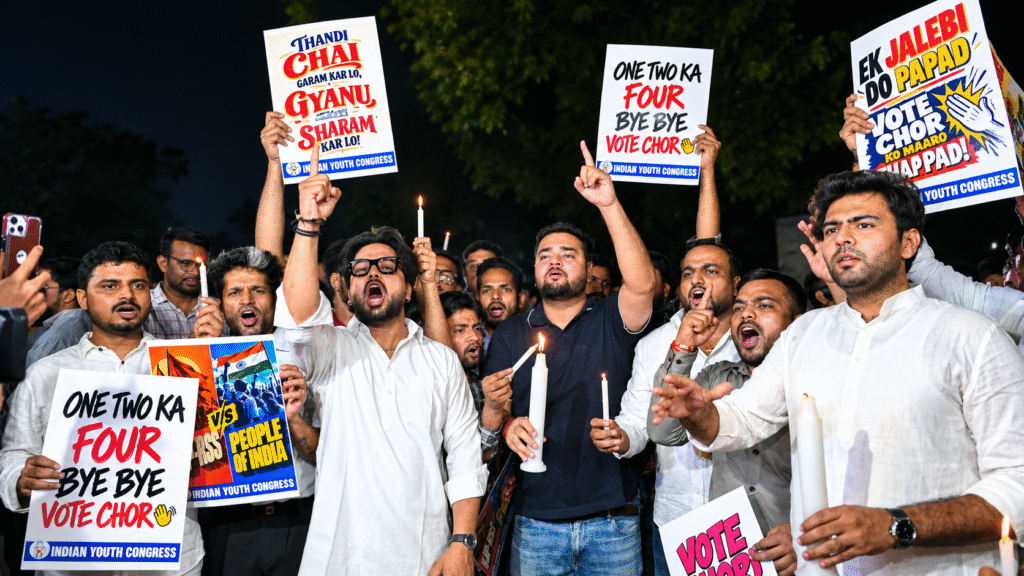
New Delhi, October 4, 2026 – The protest demanding the removal of Chief Election Commissioner Gyanesh Kumar stretched into its third straight day on Sunday, and by evening the streets around Ashoka Road and the Shangri-La intersection looked like a scene of mass detention. Hundreds of students, activists and ordinary citizens were picked up by Delhi Police as they tried to march towards Jantar Mantar. Among those taken away was AISA national president Neha Bora – detained for the third consecutive day – and a woman journalist who only a day earlier had accused a police officer of sexual harassment while covering the same agitation. The march, organised under the banner of the All India Students’ Association and backed by several civil society groups, began from Andhra Bhawan circle in the afternoon. Protesters carried placards calling for Kumar’s resignation and an immediate halt to the Special Intensive Revision of electoral rolls. They alleged that the SIR process had led to large-scale and irregular deletion of voter names. The crowd included students from different universities, members of youth organisations, and a few senior activists who have been part of the stir since Friday. Police had already put up multiple layers of barricades. When the march reached the Shangri-La intersection, officers blocked the road. What followed was a familiar pattern of the past three days: pushing, dragging, and people being forced into buses and private vehicles. Videos circulating later showed male officers handling women protesters, and one clip captured a man being shoved into a bus with his head pressed down. Neha Bora was taken around 5 p.m. AISA claimed she was pulled into a private SUV by male personnel who were not wearing name badges, and that no woman officer was present inside the vehicle. Her colleagues said they did not know her exact location for some time. Police later confirmed she had been detained and taken to Narela Industrial Area police station. She was released in the evening, as were most others. The woman journalist who had alleged sexual harassment on Saturday was also among those detained on Sunday. She had gone to the Parliament Street police station the previous night with her complaint, and on Sunday she joined the march. After being taken away she told people nearby, “Instead of arresting the accused police officer, they have detained me. Is this justice?” Delhi Police has said that three women journalists filed complaints of sexual harassment against officers during Saturday’s protest, and that the complaints have been transferred to the Crime Branch for inquiry. No FIR has been registered so far, according to reports. Estimates of the number detained varied. Some accounts put the figure at around 250, others said nearly 500 people were picked up from different points in central Delhi and shifted in 10 to 15 buses. Police sources later spoke of roughly 110 detentions and claimed 12 to 15 officers were injured during scuffles. Heavy deployment – nearly 5,000 personnel including Rapid Action Force units, drones and CCTV monitoring – was visible throughout the day. Prohibitory orders under Section 163 of the BNSS remain in force in the New Delhi district. The protest itself is part of a wider anger over the ongoing SIR of electoral rolls. Opposition parties and activists have accused the Election Commission of opacity and of allowing deletions that could affect the fairness of future polls. The Commission has maintained that the exercise is meant to clean up duplicate and ineligible entries. Gyanesh Kumar has not issued any public comment on the street protests. On the ground, the mood among those who managed to stay out of police vans was defiant. “We will come again tomorrow,” several young protesters said as they regrouped near the barricades. Similar demonstrations were reported in Mumbai, where the Thackeray brothers led a march on the same issue. By late evening most of those detained had been released. The journalist who alleged harassment was also let go. But the questions she and the other two women raised remain unanswered. The Crime Branch inquiry is yet to begin in earnest, and the demand for Kumar’s removal continues to echo on Delhi’s streets for a third day. Sources:The Hindu, Indian Express, The Wire, Times of India, CNBC-TV18, Telegraph India, Deccan Herald, News18, Hindustan Times (reports dated 3–5 October 2026).
If Gyanesh Kumar Goes, Modi Will Have to Follow Suit: Dipke
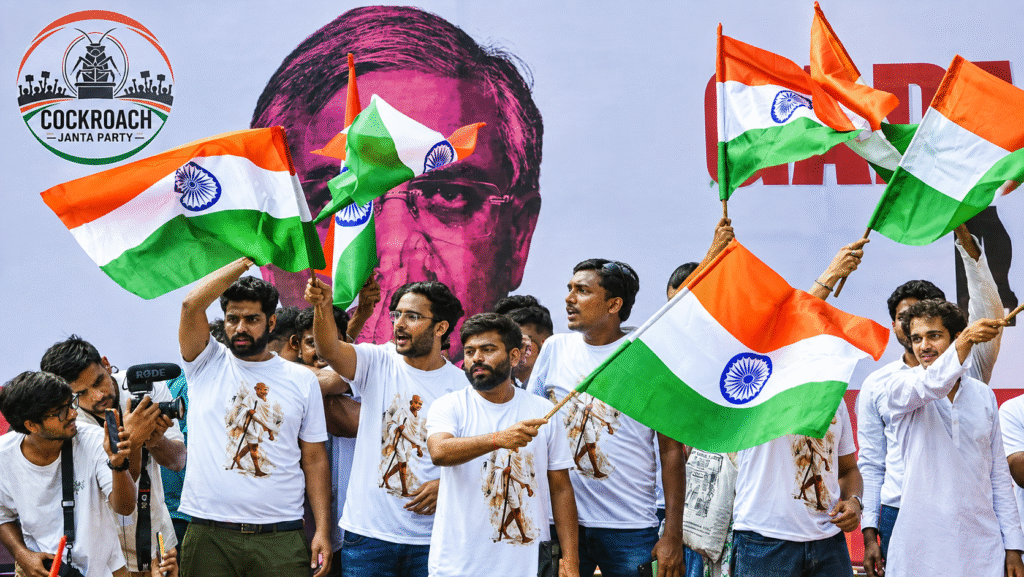
Mumbai, October 3 – Abhijeet Dipke is not mincing words anymore. The Cockroach Janta Party founder stood at Shivaji Park in Dadar and said straight out that if Chief Election Commissioner Gyanesh Kumar does not resign, then Prime Minister Narendra Modi will have to go as well. He called the whole thing “vote chori” on a massive scale. Dipke claimed nearly 13 crore names have been struck off the voter lists in the last couple of years. That number, he said, is no coincidence. It lines up with the difference between the NDA and the opposition in the 2024 Lok Sabha polls. According to him, once Kumar took over as CEC, the government started deciding who gets to vote and who does not. “Is this still democracy?” he asked the crowd. Dipke did not stop at the Election Commission. He pointed the finger directly at the Prime Minister. He said Modi is the one pulling the strings. If the Centre refuses to make Kumar quit, then the protests will demand Modi’s resignation next. “If Gyanesh Kumar does not leave his post, the Prime Minister will have to resign,” he told the gathering. He warned that Jantar Mantar 2.0 is coming, and even if they lock him up for three months, he will come back. The protest itself had a mix of young faces. People held placards, did street plays, sang a bit. Dipke announced the next steps: similar protests in Goa, Karnataka, West Bengal, Uttar Pradesh, Bihar and Jharkhand. If nothing happens by the end of October, they will camp at Jantar Mantar in Delhi. He made it clear CJP will not join the opposition’s planned protest on October 6. They want to stay separate. He put the current mess in a longer story. After 2024 did not go as the BJP hoped, he said they turned to voter-list changes in Maharashtra, Delhi, Tamil Nadu and West Bengal. Leaders like Mamata Banerjee, Stalin and Kejriwal, he claimed, lost because so many voters simply disappeared from the rolls. At the same time, he said the party let opposition governments stay in some places while tightening its grip on the bigger states. He compared it to match-fixing. Dipke also spoke about the constant party-hopping. He said 111 sitting MLAs and MPs switched sides between 2022 and 2026. If legislators can be bought like that, why bother with elections at all? Just auction the seats like IPL players, he said. He brought up the splits in Shiv Sena, NCP and other regional parties, arguing the real aim is one country, one party. There is the internal report hanging over everything. The Indian Express had detailed how Election Commissioners Sukhbir Singh Sandhu and Vivek Joshi put formal objections on record at least 14 times in ten months. Some of those notes said decisions were taken without them even knowing. The Commission’s line has been that different views are normal and every order is legally sound. Kumar is a 1988-batch Kerala cadre IAS officer. He became CEC in February 2025. Earlier he worked in the Home Ministry around the Article 370 decision and the Ram temple trust. He was the first CEC chosen under the 2023 law that changed how the panel is selected. Opposition parties have been after him for months over the Special Intensive Revision. CJP has now raised the stakes by tying his job to the Prime Minister’s. Dipke also made a broader appeal. He said the last twelve years have been spent dividing people on Hindu-Muslim lines. He asked people to put that aside and stand together as Indians first. Support whoever you want, he said, but right now the vote itself is under threat. Whether any of this forces a resignation is another matter. The Election Commission has given no sign that Kumar is leaving. The government has treated the internal notes as ordinary differences. Still, Dipke’s words at Shivaji Park have made the demand sharper. In his telling, Kumar and Modi are now linked. The protests are set to continue, and CJP says it will not back down until the CEC goes. Sources:ETV Bharat report on Dipke’s Mumbai statements, October 3, 2026Deccan Chronicle, Hindustan Times, Outlook India, ThePrint, Moneycontrol and PTI coverage of CJP protests and the SIR row, September 24 to October 2, 2026Indian Express investigation into objections inside the Election Commission @Rohit Manral