“Gyanesh Kumar Will Go To Jail”: Rahul Gandhi Calls 2024 Polls “Illegal” At Delhi Rally
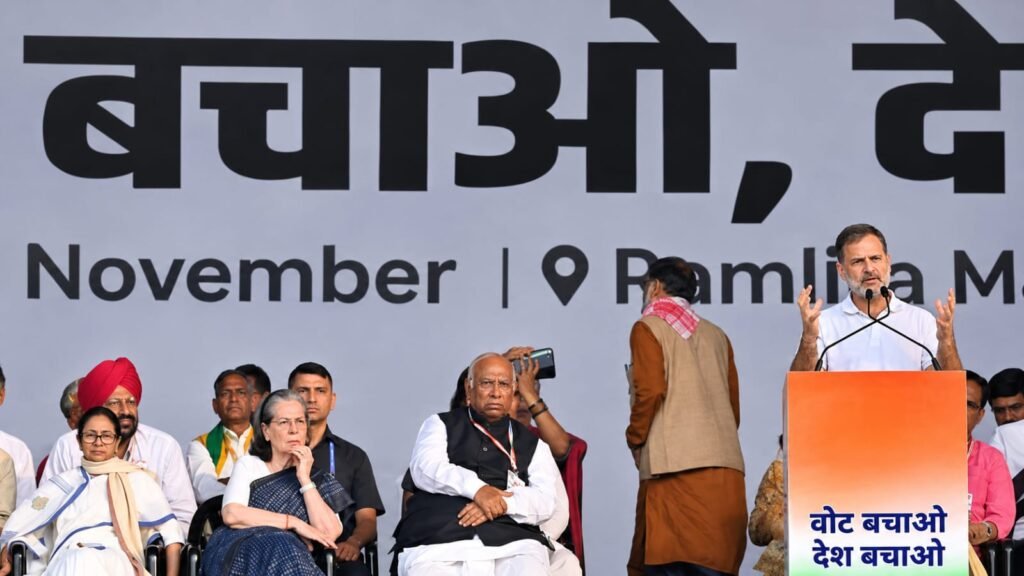
New Delhi, November 1, 2026 — You could feel the heat in the air at Ramlila Maidan this afternoon. Not just from the November sun, but from the words coming off the stage. Rahul Gandhi stood there in his usual white shirt and went straight for the jugular. He looked at the crowd and said it plain: Gyanesh Kumar will go to jail. The Chief Election Commissioner, he claimed, had committed treason by helping steal votes. Not ordinary theft, mind you. “This is not regular chori like someone lifting something from a shop,” Gandhi told the gathering. “This is the theft of the voice of every person in India. In legal terms, it is the rarest of rare cases. It is called treason.” The INDIA bloc had called this “Vote Bachao, Desh Bachao” or “Chalo Dilli” rally to protest the Election Commission’s Special Intensive Revision of electoral rolls and to demand Kumar’s resignation. Leaders from Congress, TMC, Samajwadi Party and others shared the stage. But it was Gandhi’s speech that set the tone. He went further. He said the 2024 Lok Sabha elections were illegal and stolen. According to him, after those polls the Election Commission removed around 13.5 crore names — about 15 percent of voters — from the rolls. The difference between the NDA and the INDIA bloc in 2024, he reminded everyone, was only about three percent. “This means the 2024 election was an illegal election. It was a stolen election. I am not the one saying this; the Election Commission is saying this,” he argued. Gandhi claimed vote theft had been happening for years through EVMs and by adding or deleting names from the lists. He named states — Madhya Pradesh, Haryana, Chhattisgarh, Maharashtra, Karnataka — where he said the same methods were used in assembly elections. And then he dropped the line that will travel far: without Gyanesh Kumar, Narendra Modi would not have become Prime Minister and Amit Shah would not be Home Minister. He turned personal toward the top two. “Amit Shah said Narendra Modi is not going anywhere. I would tell you, Narendra Modi cannot go anywhere; even if he wants to go, we will not let him. After Gyanesh Kumar, we will stand against you. Don’t forget that for the vote chori you have done, there will be legal action against you and Narendra Modi.” He added that they should not think of fleeing. The country would get justice, he said, both for the alleged vote theft and for other issues he linked to the government. There was a confident flourish too. “Listen to me. What I say always turns out to be true, doesn’t it? I am telling every citizen and every youth of India: Gyanesh Kumar will be removed from the post of Chief Election Commissioner. Gyanesh Kumar will go to jail.” The first step to put the country back on track, he declared, was removing Kumar. The people standing in front of him — youth, farmers, labourers — represented the real voice of India, he said, and that voice would not let democracy or the Constitution be destroyed. No one, however powerful or rich, is bigger than the Constitution, Gandhi insisted. Other leaders echoed the mood. Mamata Banerjee, Akhilesh Yadav, Mallikarjun Kharge and the rest spoke about accountability and the need to protect the electoral process. The rally itself was the opposition’s attempt to keep the “vote chori” narrative alive and show a united front. Of course the other side did not stay quiet. The BJP quickly called the whole event a flop and pointed to empty chairs and vacant patches of the ground. Sambit Patra and others reminded everyone that Gyanesh Kumar was not even CEC during the 2024 Lok Sabha elections and asked why the opposition had not challenged the results in court two and a half years ago. If the election was illegal, they said, then Rahul Gandhi himself would be an illegal Leader of Opposition. They also objected to the timing of the rally around the anniversary of the 1984 anti-Sikh riots. Still, for the opposition the speech was the point. Gandhi had drawn a clear line: Kumar must go, the 2024 polls were stolen, and legal action would follow against the highest levels of the government. Whether those strong words turn into court cases or remain stage rhetoric is something the coming months will show. For one Sunday afternoon in Delhi, though, the Leader of Opposition had put the charge out in the open for everyone to hear. The ground slowly emptied as evening came, but the statements will keep circulating. One side says democracy is under threat. The other says the opposition is crying foul after losing. In Indian politics, that argument never really ends. It just waits for the next election. Sources: @Rohit Manral
Acted ‘unanimously’ on electoral roll revision orders: Election Commission tells Supreme Court
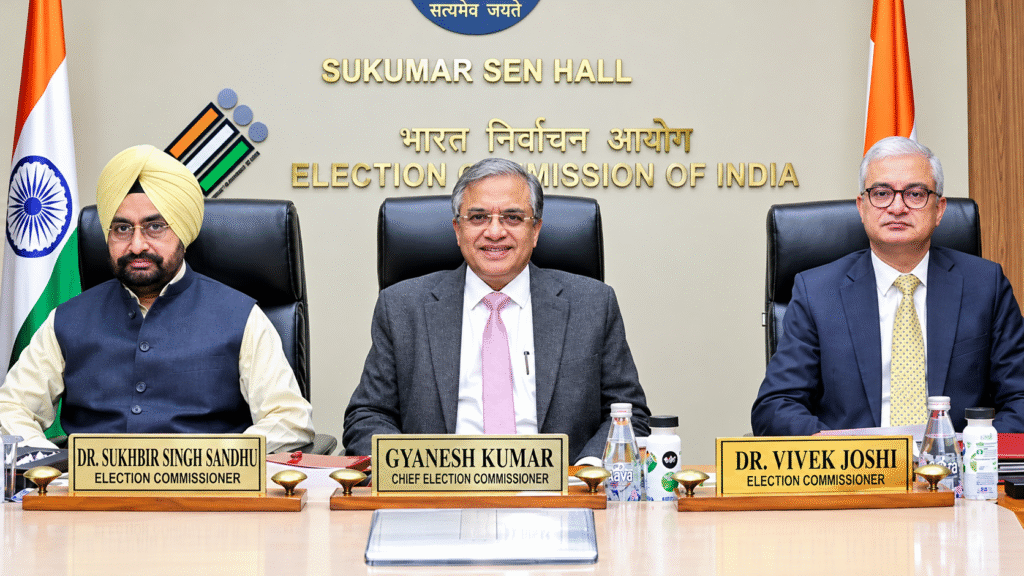
New Delhi: The Election Commission has told the Supreme Court that every single order on the Special Intensive Revision of electoral rolls was cleared by all three members together. No one acted alone. In an affidavit filed Monday, the Commission said the three main SIR orders — 24 June 2025, 27 October 2025 and 14 May 2026 — were issued only after full agreement among Chief Election Commissioner Gyanesh Kumar and the two Election Commissioners, Sukhbir Singh Sandhu and Vivek Joshi. The affidavit itself carries the same unanimous stamp. All three approved it before it went to court. This comes against petitions that claim the CEC was taking decisions on his own and want him restrained. One petition is from activist Rakesh Kumar Singh. Others have come from Rahul Gandhi and several Opposition leaders. A bench led by Chief Justice Surya Kant is set to hear the matters today. The Commission’s reply is simple. It says the whole case rests on one newspaper report and that newspaper stories about internal differences cannot be treated as evidence in court. Individual remarks, questions or notes written while a file is moving around are not final decisions, the affidavit makes clear. Files normally go first to one Election Commissioner, then the other, and only after that to the CEC. Urgent approvals can be taken on email and put on the file later, but the actual orders that get issued carry all three signatures. On Form 6, the form people use to get their names added to the voter list, the Commission is firm. None of the SIR orders changed that form. Only the Central government can amend Form 6. What was adjusted was a separate declaration used just for the SIR exercise. Calling that a change to Form 6 is wrong, the Commission says. It also confirms something that had come out earlier. The two Election Commissioners did write separately to Cabinet Secretary T.V. Somanathan about an internal work-allocation order. That order was issued by an Additional Secretary on deputation, was never put into effect, and was stopped after the two commissioners issued a joint direction. The Commission maintains the SIR itself is legal and was done the right way. It points to the Supreme Court’s own order of 27 May this year that upheld the exercise in Bihar. Eligible people still have the chance to enrol. In most cases Booth Level Officers will collect papers from homes. Hearings will be rare and preferably online. No name can be added or removed on the system without a proper order from the Electoral Registration Officer. The Commission also says any request to stop the CEC from working is not maintainable. Three members are there so that if they disagree, a majority can decide under the 2023 law. Decisions are supposed to be unanimous when possible. Freezing one member because of newspaper reports would go against that system. The SIR has been under fire for months over large deletions and questions about how new voters were added. The Commission’s stand in court is that the key orders were collective, the process stayed within the rules, and genuine voters still have the door open. Whether the court accepts this explanation will be clear once the hearing begins. For now the Election Commission has put its position on record in plain terms: the three SIR orders were unanimous, Form 6 was not rewritten by them, and the decision-making stayed inside the framework meant for a three-member body. Sources: Election Commission affidavit in the Supreme Court; The Indian Express, The Tribune, LiveLaw, Economic Times, India Today, PTI reports. @Rohit Manral