CJP’s Saurav Das, Ashutosh Ranka Sent to Tihar Jail for Five Days Over Jantar Mantar Trespass
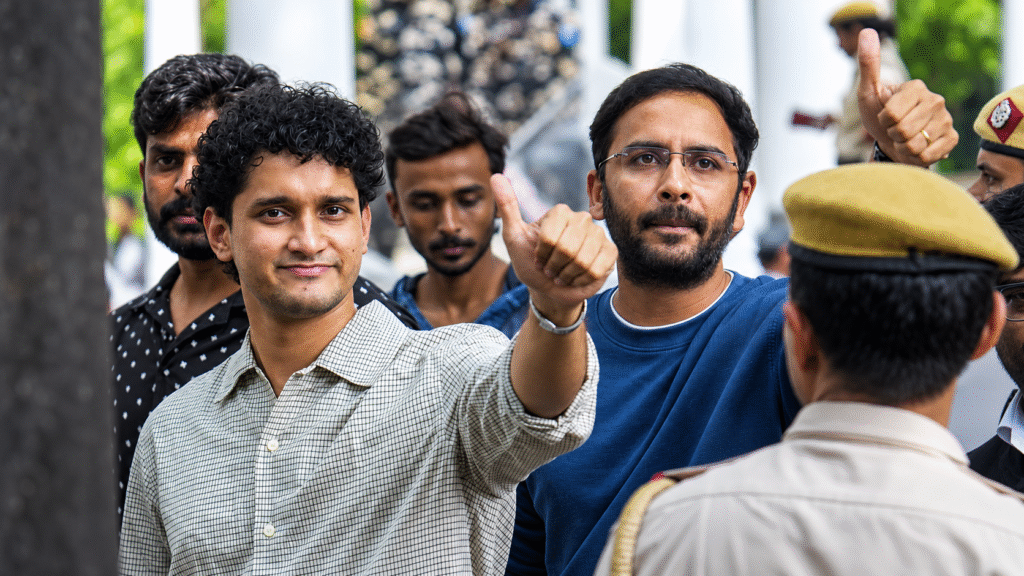
New Delhi, October 14, 2026 – Two senior leaders of the Cockroach Janta Party (CJP), Saurav Das and Ashutosh Ranka, were sent to five days of judicial custody in Tihar Jail on Wednesday after a Special Executive Magistrate ordered their remand. Their associate Ajinkya Shinde walked free after signing a fresh peace bond. The three had been placed under preventive arrest following their alleged unauthorised entry into Jantar Mantar a day earlier. According to police sources and multiple reports, the incident unfolded on Tuesday morning, October 13. A group of around 14 CJP members, including Das, Ranka and Shinde, reached the area near the JD(U) office adjoining Jantar Mantar. They reportedly used a lane, climbed over a locked iron gate, entered the site, unfurled the national flag and raised slogans demanding the resignation of Chief Election Commissioner Gyanesh Kumar. The slogans included calls for Kumar to step down over alleged irregularities in the Special Intensive Revision (SIR) of electoral rolls, along with “Bharat Mata Ki Jai.” Jantar Mantar had been denotified as a designated protest venue just a day earlier, on October 12. Delhi Police had identified alternative sites such as Ramlila Maidan, Burari Ground and CBD Ground for demonstrations. Officers said the CJP group breached barricades and entered without authorisation. All 14 were detained and initially taken to a police station some distance away. Phones were seized, according to the party. Delhi Police registered a case against the three leaders on charges that include trespassing, violating prohibitory orders, breaching a peace bond and obstructing a public servant from discharging official duties. Sources indicated the action also involved provisions under Section 163 of the Bharatiya Nagarik Suraksha Sanhita (BNSS) related to preventing breach of peace. Das and Ranka were treated as repeat violators because they had signed bonds only days earlier promising to maintain peace for one year. That earlier bond stemmed from a detention on Saturday, October 10. Das, Ranka and CJP founder Abhijeet Dipke had been detained after landing in Delhi ahead of a planned protest. An executive magistrate ordered their release the next day on the condition that they maintain peace and good behaviour for a year. Police sources said the Tuesday entry at Jantar Mantar amounted to a clear breach of those conditions. On Wednesday morning, the three were produced before the Special Executive Magistrate at Mandir Marg. Das and Ranka were remanded to five days’ judicial custody and lodged in Tihar Jail. Shinde was allowed to leave after completing bond formalities. CJP’s legal team, including advocate Abhisht Hela and legal head Ratna Singh, described the process as involving preventive arrest. Singh stated on X that the leaders had not been allowed to meet their lawyers until late at night and were brought to Parliament Street police station around 3 am in a private van. She maintained their spirits remained high despite what the party called illegal actions. CJP founder Abhijeet Dipke reacted strongly. In posts on X, he accused the government of crushing dissent and using “cowardly tactics.” He shared video footage of the Tuesday entry showing members scaling the gate with the tricolour and raised slogans. “You cannot denotify the resistance,” he wrote, tagging Prime Minister Narendra Modi. Later, after the custody order, Dipke said Das and Ranka had shown the country that the only way to stand up to what he called a bully was never to bow down, no matter the consequences. The broader context is CJP’s ongoing campaign against the SIR exercise and related electoral concerns. The party has staged several protests in recent days, leading to multiple detentions. Police have maintained that the denotification of Jantar Mantar followed legal requirements, including compliance with a Supreme Court order, and that alternative venues remain available. Officials stressed that the leaders’ actions after signing peace bonds left little room for leniency. Reports from India Today, The Indian Express, Rediff, The Print, The Quint and others confirmed the custody order and the sequence of events. Police sources consistently described the entry as unauthorised trespass after the site’s status change. CJP continues to frame the episode as an attempt to silence protest. Das and Ranka will remain in Tihar for the five-day period unless further legal developments intervene. Shinde’s release on bond closes one chapter of the immediate case while the larger dispute over protest spaces and electoral processes continues. The episode highlights the tight restrictions now placed on one of Delhi’s traditional protest locations and the swift use of preventive measures and bond conditions against organisers who return to the same site. Both sides – police and CJP – have drawn clear lines. One insists on law and designated venues; the other insists the right to protest cannot be denotified. For now, two of the party’s most visible faces are behind bars for five days. Sources: @Rohit Manral
If Gyanesh Kumar Goes, Modi Will Have to Follow Suit: Dipke
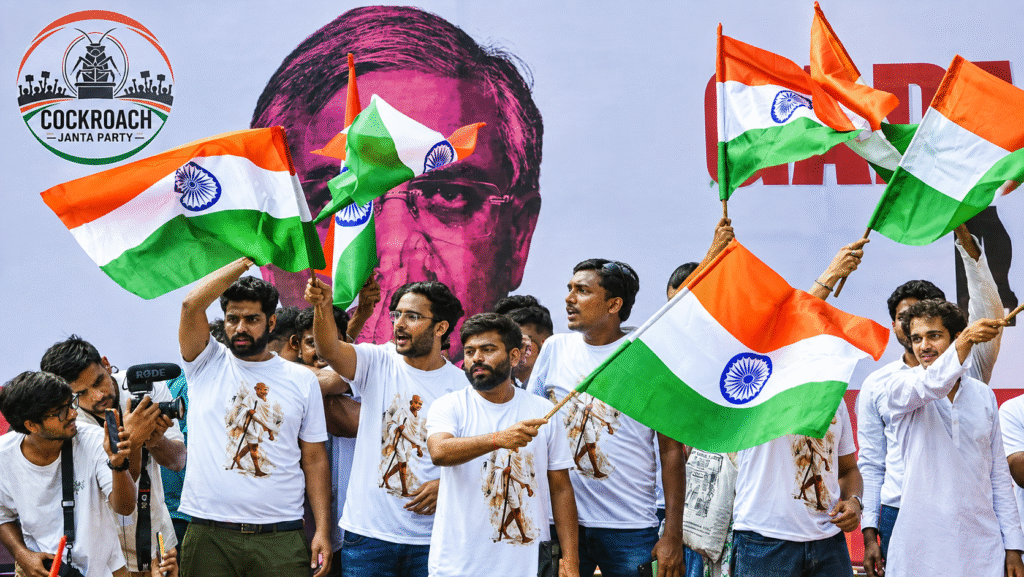
Mumbai, October 3 – Abhijeet Dipke is not mincing words anymore. The Cockroach Janta Party founder stood at Shivaji Park in Dadar and said straight out that if Chief Election Commissioner Gyanesh Kumar does not resign, then Prime Minister Narendra Modi will have to go as well. He called the whole thing “vote chori” on a massive scale. Dipke claimed nearly 13 crore names have been struck off the voter lists in the last couple of years. That number, he said, is no coincidence. It lines up with the difference between the NDA and the opposition in the 2024 Lok Sabha polls. According to him, once Kumar took over as CEC, the government started deciding who gets to vote and who does not. “Is this still democracy?” he asked the crowd. Dipke did not stop at the Election Commission. He pointed the finger directly at the Prime Minister. He said Modi is the one pulling the strings. If the Centre refuses to make Kumar quit, then the protests will demand Modi’s resignation next. “If Gyanesh Kumar does not leave his post, the Prime Minister will have to resign,” he told the gathering. He warned that Jantar Mantar 2.0 is coming, and even if they lock him up for three months, he will come back. The protest itself had a mix of young faces. People held placards, did street plays, sang a bit. Dipke announced the next steps: similar protests in Goa, Karnataka, West Bengal, Uttar Pradesh, Bihar and Jharkhand. If nothing happens by the end of October, they will camp at Jantar Mantar in Delhi. He made it clear CJP will not join the opposition’s planned protest on October 6. They want to stay separate. He put the current mess in a longer story. After 2024 did not go as the BJP hoped, he said they turned to voter-list changes in Maharashtra, Delhi, Tamil Nadu and West Bengal. Leaders like Mamata Banerjee, Stalin and Kejriwal, he claimed, lost because so many voters simply disappeared from the rolls. At the same time, he said the party let opposition governments stay in some places while tightening its grip on the bigger states. He compared it to match-fixing. Dipke also spoke about the constant party-hopping. He said 111 sitting MLAs and MPs switched sides between 2022 and 2026. If legislators can be bought like that, why bother with elections at all? Just auction the seats like IPL players, he said. He brought up the splits in Shiv Sena, NCP and other regional parties, arguing the real aim is one country, one party. There is the internal report hanging over everything. The Indian Express had detailed how Election Commissioners Sukhbir Singh Sandhu and Vivek Joshi put formal objections on record at least 14 times in ten months. Some of those notes said decisions were taken without them even knowing. The Commission’s line has been that different views are normal and every order is legally sound. Kumar is a 1988-batch Kerala cadre IAS officer. He became CEC in February 2025. Earlier he worked in the Home Ministry around the Article 370 decision and the Ram temple trust. He was the first CEC chosen under the 2023 law that changed how the panel is selected. Opposition parties have been after him for months over the Special Intensive Revision. CJP has now raised the stakes by tying his job to the Prime Minister’s. Dipke also made a broader appeal. He said the last twelve years have been spent dividing people on Hindu-Muslim lines. He asked people to put that aside and stand together as Indians first. Support whoever you want, he said, but right now the vote itself is under threat. Whether any of this forces a resignation is another matter. The Election Commission has given no sign that Kumar is leaving. The government has treated the internal notes as ordinary differences. Still, Dipke’s words at Shivaji Park have made the demand sharper. In his telling, Kumar and Modi are now linked. The protests are set to continue, and CJP says it will not back down until the CEC goes. Sources:ETV Bharat report on Dipke’s Mumbai statements, October 3, 2026Deccan Chronicle, Hindustan Times, Outlook India, ThePrint, Moneycontrol and PTI coverage of CJP protests and the SIR row, September 24 to October 2, 2026Indian Express investigation into objections inside the Election Commission @Rohit Manral
‘No legal action, FIRs being withdrawn’: Bihar govt assures protesters in big win for students, CJP
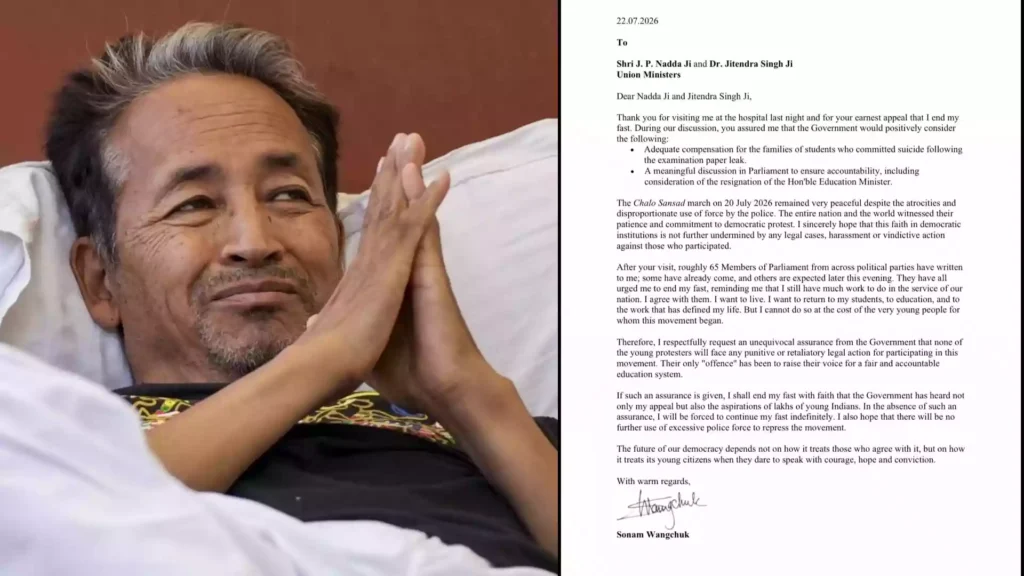
Look, sometimes the system actually listens. Not always, and not perfectly, but every now and then something shifts, and you feel it in the air. That’s what’s happening in Bihar right now. On Monday evening, the Bihar government put it in writing. The Home Department issued a notification saying it is withdrawing all FIRs, complaints and show-cause notices linked to the protests over the NEET paper leak — specifically for incidents that took place before 6 am on 26 July. People who were arrested in connection with those events will be released “forthwith.” No more legal action on those cases. Just like that. For the students who spent weeks on the streets, for the families who spent sleepless nights wondering if their kids would have a police record hanging over them for years, this is huge. It’s the kind of relief that doesn’t come with fireworks or victory marches. It comes quietly, in the form of a government order that finally matches what was promised. You remember how this started. The NEET paper leak allegations exploded across the country. Students who had prepared for years felt cheated. Trust in the examination system took a beating. Protests grew, first in pockets, then into a nationwide movement. The Cockroach Janta Party, or CJP, became the loudest voice. They sat at Jantar Mantar, they organised, they kept the pressure on. The agitation went on for more than a month. It got messy in places — stone-pelting, police action, injuries, even firing in Siwan. But the core demand was simple: fix the system, hold people accountable, and stop treating students like criminals for raising their voices. Then came the talks in Delhi. Union ministers JP Nadda and Jitendra Singh sat down with CJP representatives. The government accepted the demand for Dharmendra Pradhan’s resignation as Education Minister. That happened. They also gave verbal assurances that no punitive action would be taken against peaceful protesters, that existing FIRs would be withdrawn, and that no fresh cases would be filed for the agitation. CJP, in good faith, suspended the nationwide protest. But the ground reality in the states lagged behind. Reports started coming in of students still being detained or facing cases in Assam, West Bengal and Bihar. CJP leaders got angry. They called it a breach of trust. They said they had withdrawn the agitation only because of the clear assurance that no one would face coercive action. They warned that if the promises weren’t kept — if detainees weren’t released and FIRs weren’t pulled back — they would be forced to hit the streets again. Kapil Sibal even stepped in with legal support and a fund. The tension was real. In Bihar, opposition voices, including Tejashwi Yadav, added pressure. He gave the state government a 24-hour ultimatum: withdraw the cases, release the students, or face a bigger movement. Student organisations like AISA kept the heat on. The situation looked like it could spiral again. And then Bihar moved. The notification came. Cases linked to the protests before that specific cut-off time are being withdrawn. Those in jail will walk free. It’s not a complete clean slate for every single incident that happened after, and the Centre still has to fully deliver on the written guarantee CJP is waiting for by Tuesday. But for Bihar, this is a clear step. Officials have said no legal action will follow on these matters. That assurance matters. Think about what this means for the students. Many of them are first-generation learners, kids from small towns and villages who poured everything into clearing NEET. A police case against your name doesn’t just disappear from records. It follows you into jobs, into higher education, into the way people look at you. Having those FIRs withdrawn is not a small technicality. It’s dignity restored. It’s the state saying, “We hear you, and we’re not going to punish you for speaking up.” CJP has called this a big win, and it is. The organisation may have started as an online movement with a quirky name, but it forced a national conversation on exam integrity and the treatment of student protesters. The fact that a state government is now formally rolling back cases is validation of that pressure. At the same time, CJP leaders are still watching the other states closely. They have made it clear that the Centre’s written commitment is still pending, and any fresh harassment will bring them back to the streets. This doesn’t magically fix the deeper problems. Paper leaks, coaching mafia influence, the immense pressure on young people — those issues remain. The government has talked about considering CJP’s five-point charter on examination reforms and providing compensation to families of students who died by suicide linked to the crisis. Those conversations need to continue. Real change will take more than withdrawn FIRs. But for now, in Bihar, the immediate threat of legal harassment has been lifted for hundreds of young people. Parents can breathe a little easier. Students who were sitting in lock-ups or living under the shadow of cases can step back into their lives. That is not nothing. Politics will keep spinning. Opposition parties will claim credit, the ruling side will say they acted with maturity, and social media will argue over who “won.” The students themselves just wanted a fair system and the freedom to protest without permanent punishment. On that last point, Bihar has finally delivered the words they needed to hear: no legal action, FIRs being withdrawn. Sometimes the system does listen. Not always gracefully, not always completely, but it listens. And when it does, the kids who stood in the sun and the rain for weeks get to go home without a case hanging over their heads. That feels like a win worth noting. Sources: @Rohit Manral