Acted ‘unanimously’ on electoral roll revision orders: Election Commission tells Supreme Court
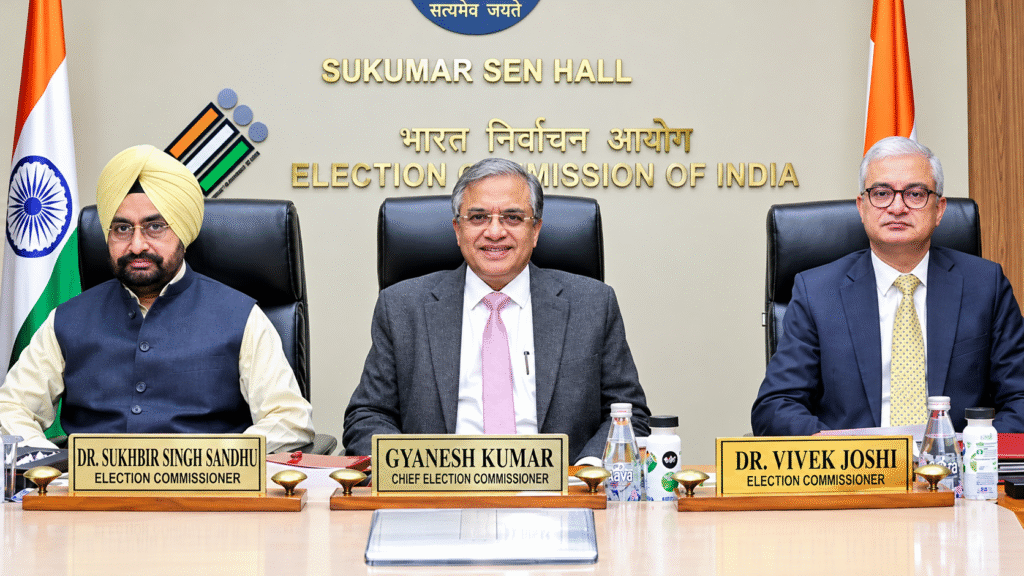
New Delhi: The Election Commission has told the Supreme Court that every single order on the Special Intensive Revision of electoral rolls was cleared by all three members together. No one acted alone. In an affidavit filed Monday, the Commission said the three main SIR orders — 24 June 2025, 27 October 2025 and 14 May 2026 — were issued only after full agreement among Chief Election Commissioner Gyanesh Kumar and the two Election Commissioners, Sukhbir Singh Sandhu and Vivek Joshi. The affidavit itself carries the same unanimous stamp. All three approved it before it went to court. This comes against petitions that claim the CEC was taking decisions on his own and want him restrained. One petition is from activist Rakesh Kumar Singh. Others have come from Rahul Gandhi and several Opposition leaders. A bench led by Chief Justice Surya Kant is set to hear the matters today. The Commission’s reply is simple. It says the whole case rests on one newspaper report and that newspaper stories about internal differences cannot be treated as evidence in court. Individual remarks, questions or notes written while a file is moving around are not final decisions, the affidavit makes clear. Files normally go first to one Election Commissioner, then the other, and only after that to the CEC. Urgent approvals can be taken on email and put on the file later, but the actual orders that get issued carry all three signatures. On Form 6, the form people use to get their names added to the voter list, the Commission is firm. None of the SIR orders changed that form. Only the Central government can amend Form 6. What was adjusted was a separate declaration used just for the SIR exercise. Calling that a change to Form 6 is wrong, the Commission says. It also confirms something that had come out earlier. The two Election Commissioners did write separately to Cabinet Secretary T.V. Somanathan about an internal work-allocation order. That order was issued by an Additional Secretary on deputation, was never put into effect, and was stopped after the two commissioners issued a joint direction. The Commission maintains the SIR itself is legal and was done the right way. It points to the Supreme Court’s own order of 27 May this year that upheld the exercise in Bihar. Eligible people still have the chance to enrol. In most cases Booth Level Officers will collect papers from homes. Hearings will be rare and preferably online. No name can be added or removed on the system without a proper order from the Electoral Registration Officer. The Commission also says any request to stop the CEC from working is not maintainable. Three members are there so that if they disagree, a majority can decide under the 2023 law. Decisions are supposed to be unanimous when possible. Freezing one member because of newspaper reports would go against that system. The SIR has been under fire for months over large deletions and questions about how new voters were added. The Commission’s stand in court is that the key orders were collective, the process stayed within the rules, and genuine voters still have the door open. Whether the court accepts this explanation will be clear once the hearing begins. For now the Election Commission has put its position on record in plain terms: the three SIR orders were unanimous, Form 6 was not rewritten by them, and the decision-making stayed inside the framework meant for a three-member body. Sources: Election Commission affidavit in the Supreme Court; The Indian Express, The Tribune, LiveLaw, Economic Times, India Today, PTI reports. @Rohit Manral
Supreme Court Clears Air on Form 6 Changes, Issues Notice Amid Protests Against CEC Gyanesh Kumar
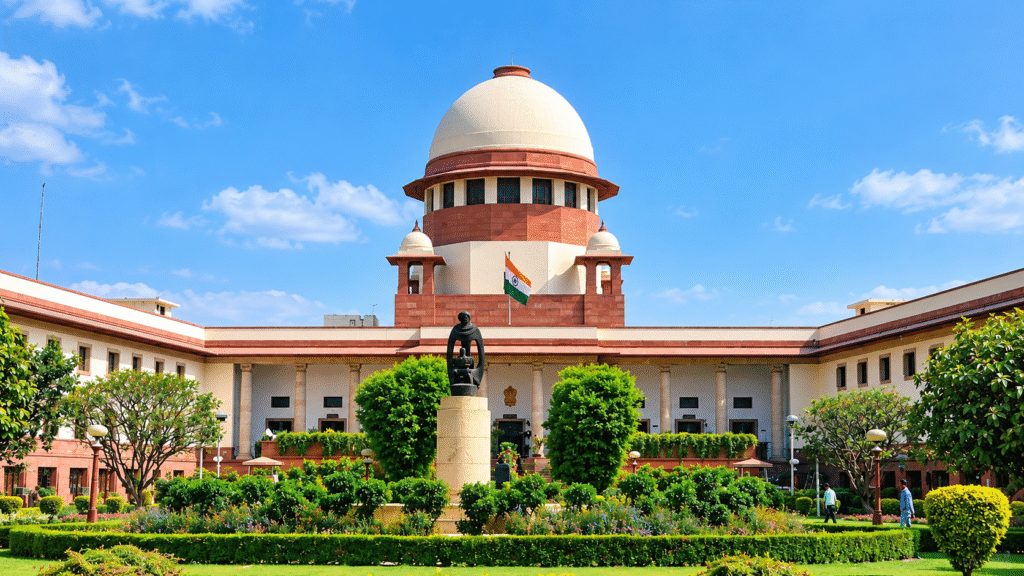
The protests against Chief Election Commissioner Gyanesh Kumar have been heating up across the country for weeks now, with opposition parties taking to the streets demanding his resignation over the Special Intensive Revision of electoral rolls. On Monday, the Supreme Court stepped into the middle of it all and made one thing very clear: the changes to Form 6, the form people fill to get their names added as new voters, were not something the court had ever approved. A three-judge bench headed by Chief Justice of India Surya Kant, along with Justices Joymalya Bagchi and V. Mohana, was hearing petitions that accuse Kumar of taking decisions on his own without proper involvement of the other two Election Commissioners, Sukhbir Singh Sandhu and Vivek Joshi. One of the main points raised was about how Form 6 had been altered online on the ECINET portal. During the hearing, senior advocate Menaka Guruswamy pointed out that the form had been changed in a way that added extra questions about whether the applicant or their parents or grandparents had been on the rolls during earlier SIR exercises. She argued this was done without following the proper legal process. The Chief Justice responded straight away: “Let’s be very clear. Any modified Form 6 has not been approved by us… Let us also be clear that when the record will be produced, we will like to see who has modified what.” That statement cut through a lot of the confusion. Just days earlier, the Election Commission had put out a statement saying the declaration attached to Form 6 for the SIR period had been upheld by the Supreme Court. The court has now said that is not the case. Form 6 is a statutory form under the Registration of Electors Rules, 1960. Any real change to it is supposed to go through proper channels involving the government and parliamentary oversight, not just get added online. The court issued notices to the Election Commission of India, the Centre, CEC Gyanesh Kumar himself, the other two commissioners, a Deputy Election Commissioner and the DG of IT. It wants the full records produced so it can examine what exactly was decided, by whom, and whether those decisions followed the law. The bench made it clear that if any decision turns out to have been taken without unanimity or majority, it can be struck down. “We will examine all the decisions. If any decision is not in accordance with the law, we will annul it. You know the power of the court,” the judges said. At the same time, the court refused to pass any interim order suspending Kumar from his post or stopping him from functioning while the case is pending. The Chief Justice noted that the court cannot act only on newspaper reports and needs to look at the actual records first. These petitions stem from an Indian Express investigation published in late September that detailed how Sandhu and Joshi had put their objections on record at least 14 times over ten months. Their concerns covered changes to Form 6, the way names were being added or deleted from voter lists, access to the electoral roll database, and other steps taken during the SIR exercise. One of them had even called the Form 6 alteration “unauthorised and illegal” and asked for it to be withdrawn, yet it stayed live for some time. The protests against Kumar have been going on in multiple cities. Congress workers and other opposition groups have held marches, tried to reach Election Commission offices, and called for his removal, accusing the process of disenfranchising large numbers of voters. In some places police used water cannons or detained protesters. There have also been attempts by groups of former civil servants and activists to submit what they call a people’s chargesheet to the Commission. The Election Commission has maintained that all major SIR decisions had the approval of the full Commission and that differing views are normal in any institution. After the controversy grew, it announced that the additional declaration would be limited to SIR periods and that the original Form 6 under the 1960 Rules would apply otherwise. Sources in the Commission have also said they did not change a single comma in the original Form 6 itself, only added a separate declaration in some cases. Still, the Supreme Court’s clarification on Monday has given fresh momentum to the criticism. Opposition leaders have seized on the court’s words to argue that the changes lacked proper legal backing. The court has asked for responses within a week or so and indicated it will look closely at the records when they come in. For ordinary people trying to get on the voter list for the first time, especially young voters whose families may not have been on older rolls, the extra questions on the online form had become a practical hurdle. Whether that extra layer was necessary for cleaning up the rolls or whether it went beyond what the law allows is exactly what the court now wants to examine with the full papers in front of it. The case is likely to come up again soon once the replies and records are filed. Until then, the protests continue and the questions around how decisions were taken inside the Election Commission remain very much alive. Sources:The Indian Express (reports dated 5 and 6 October 2026 and earlier investigation of 23 September 2026), India Today, Business Standard, The Hindu BusinessLine, The Wire, News18, Economic Times, Hindustan Times, LiveLaw, Verdictum, Deccan Herald. @Rohit Manral