GDP growth of 7.8% or 2.5%? Surjit Bhalla, Montek Singh Ahluwalia settle debate
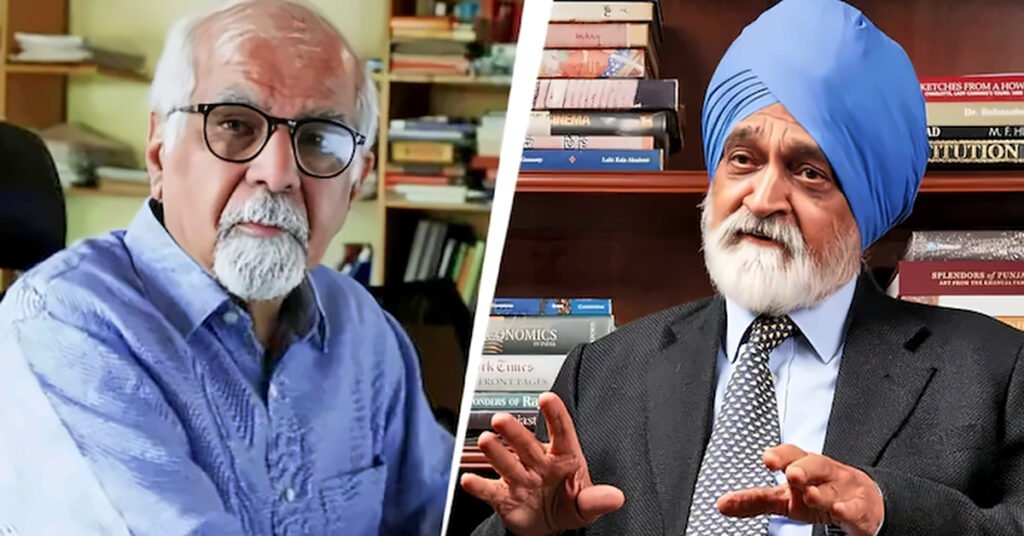
These GDP numbers come out and suddenly everyone’s shouting from the rooftops? One side is cheering 7.8 percent growth in the first quarter, the other is waving papers saying it’s actually closer to 2.5 percent if you dig into the revisions. Former finance secretary Subhash Chandra Garg kicked it off by pointing out that last year’s first-quarter GDP figure had been brought down from around Rs 86 lakh crore to about Rs 80 lakh crore. Use the lower base, he said, and the growth looks much better. Nominal growth would have been under 2.5 percent without that change. Congress jumped on it, questioning the whole methodology, the deflator, the new 2022-23 base series. The government hit back saying you can’t mix old series with new series like that. So Rajdeep Sardesai pulled in a few people who actually know this stuff cold – Surjit Bhalla, Montek Singh Ahluwalia, and Neelkanth Mishra – and they sat down to sort through the noise. What came out was pretty clear on one point: none of them saw evidence that the numbers were cooked for political reasons. Bhalla was straight about it. He said he specifically went looking to see if the revisions were designed to juice up the growth rate. “I come out squarely that there is no evidence to date that we have played politics with the numbers.” When someone asked him directly about political influence on the downward revision, he didn’t hedge: “Absolutely no politics.” He pointed out something simple. If the government wanted to pad the numbers, why leave consumption looking weaker in the new data than the old one? Consumption is hard to measure properly, and it was revised lower. At the same time, independent data shows investment has gone up, and investment feeds straight into GDP. India’s national accounts people, he added, are among the most conservative statisticians he’s come across. Mishra explained the revision itself in practical terms. Fast-growing economies with a big informal sector have to reset their base and methods every few years. India had gone about a decade without a proper reset. When you bring in new surveys and new source data, the overall numbers can move up or down. You simply cannot compare the old series with the new one. Different methodology, different inputs. It’s not apples to apples. Nominal GDP was actually revised down by about 4 percent under the new series. Why would any government do that if the goal was to look stronger? A chunk of the downward revision came from services – trade, hotels, the more informal parts – where the old assumption that the informal sector tracks the formal one pretty closely no longer held as well. Ahluwalia agreed that the 2.5 or 2.6 percent alternative calculation doesn’t hold when you mix series. But he also said quarterly numbers always need a pinch of salt. They’re based on preliminary information. You can’t look at the first quarter and declare what the full year will be. He did flag a fair technical question though: why do these base changes in India tend to revise GDP down, when some other countries see upward revisions? Once the full details come out from the statistics people, economists will need to look carefully at the reasons. Still, he wasn’t buying the idea that the 7.8 percent was manufactured. On the bigger picture – has India proved the doomsayers wrong? – the views were more measured. Mishra said he had expected something around 7.5 percent for the year anyway, so 7.8 percent wasn’t a shock. Last year there were fiscal and monetary headwinds. Once those ease, growth can pick up even if the global picture stays messy. Ahluwalia put it this way: you could say the economy looks more resilient than the doomsayers claimed. Even if the full-year number settles closer to 7 percent than 7.8 percent, that would still be faster than most major developing economies. But one strong quarter is no reason to sit back. “You can’t look at these data and say, ‘I told you so.’” He wants the conversation to move from general talk about reforms to actual lists of what needs fixing – private investment, institutions, the things that determine whether growth stays high for years, not just one quarter. Prime Minister Modi did take a dig at the sceptics after the numbers came out, saying the doomsayers were doomed and India bloomed again. Fair enough for a political moment. But the economists on that roundtable kept coming back to the same place. The 7.8 percent isn’t fake. The revision process is messy because measuring a large informal economy is messy. Mixing old and new series creates confusion that looks like foul play when it isn’t. And a good quarterly print doesn’t erase the longer-term challenges – jobs, investment quality, the need for deeper reforms if the Viksit Bharat target is going to mean anything. That’s where they left it. No grand conspiracy, no reason to dismiss the growth either. Just data that needs to be read carefully, revisions that happen for technical reasons, and an economy that is performing better than the darkest forecasts but still has real work ahead. The debate will keep going, of course. These numbers always do. But the people who’ve spent careers staring at the national accounts say the politics-of-data charge doesn’t hold up this time. Sources: India Today (Anand Singh report on the Rajdeep Sardesai Roundtable, 4 September 2026); Business Today coverage of the same discussion; statements from Surjit Bhalla, Montek Singh Ahluwalia and Neelkanth Mishra during the India Today TV debate; Subhash Chandra Garg’s earlier comments on the revision; official GDP releases from the Ministry of Statistics and Programme Implementation. @Rohit Manral
Rs 6 lakh crore GDP revision sparks Subhash Garg-Gaurav Vallabh face-off over 7.8% growth
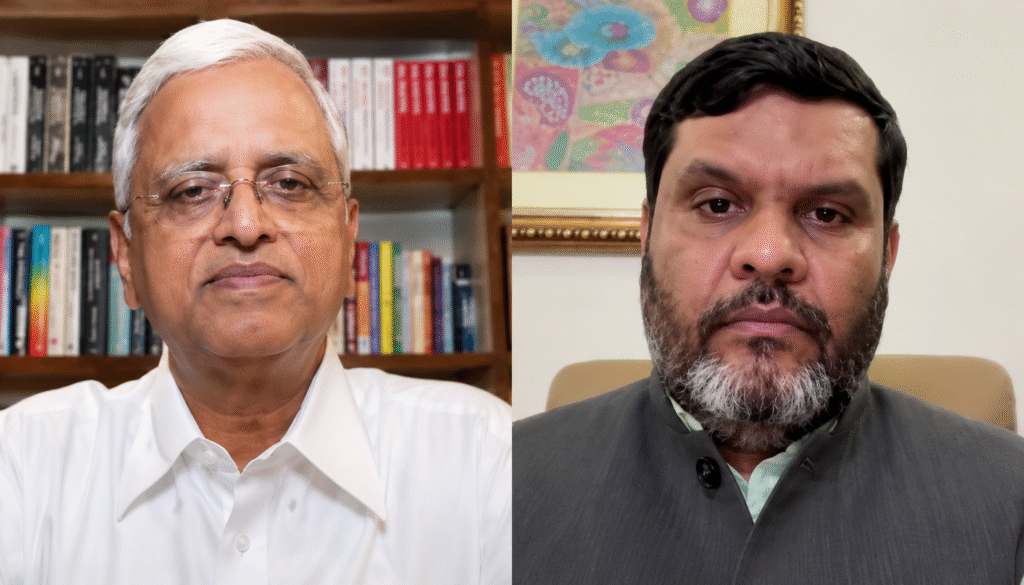
India puts out its Q1 GDP numbers — April to June of this financial year — and the official figure is a solid 7.8 per cent growth. Looks good, right? Beats the RBI’s more cautious 7 per cent call. Prime Minister even jumps in talking about collective strength and doomsayers being proved wrong. And then former Finance Secretary Subhash Chandra Garg comes on television and basically says, hold on, let’s look at the actual numbers properly. Garg’s point is pretty straightforward, and he’s been repeating it across channels. Last year’s same quarter, the current-price GDP was originally put at around Rs 86 lakh crore. In the latest release, that same base figure has come down to roughly Rs 80 lakh crore. That’s a drop of about Rs 6 lakh crore. If you simply take this year’s current-price GDP of around Rs 88.3 lakh crore and compare it with the old unrevised number of Rs 86 lakh crore, the nominal growth works out to just 2.6 per cent. Knock off inflation of around 2–2.5 per cent, and suddenly real growth looks close to zero, or at best very thin. Garg’s argument is that by lowering last year’s base so sharply, this year’s growth automatically looks much stronger — 10.3 per cent nominal, which then becomes the 7.8 per cent real figure after deflation. He called the scale of the revision unprecedented. “This kind of unprecedented revision I haven’t seen in my life at all,” he said. He also pointed out that manufacturing and private consumption numbers aren’t exactly screaming strength, and that the government owes a clear explanation for why current-price GDP was pulled down by such a large amount. It’s not about the deflator or the base-year change alone, he insists; it’s the sheer size of the cut in the previous year’s estimate that bothers him. That’s when Gaurav Vallabh, who’s a member of the Economic Advisory Council to the Prime Minister, stepped into the ring. On the same India Today debate hosted by Marya Shakil, Vallabh pushed back hard. He said Garg is essentially mixing two different series — the old 2011-12 base-year numbers with the new 2022-23 series — and that simply isn’t a valid comparison. When you change the base year, you don’t just update prices. You bring in better data sources, wider coverage of the economy, GST records, newer surveys, updated Index of Industrial Production and Producer Price Index series. The economy itself is being measured more completely. So the Rs 86 lakh crore figure belonged to the old series; under the new series the comparable number for that quarter is around Rs 80 lakh crore. Compare like with like and the growth is exactly what the government has put out. Vallabh also pointed to high-frequency indicators, gross fixed capital formation, and the labour force numbers that, according to him, support the idea of a reasonably strong economy. He treated Garg’s 2.6 per cent calculation as factually and economically incorrect because it crosses series. The government, through the Ministry of Statistics and Programme Implementation, put out a detailed clarification along similar lines. They said the shift from Rs 86.05 lakh crore to Rs 80 lakh crore happened in stages — first when the new base year was introduced in February 2026, then with subsequent data updates. It was not a deliberate downward revision of last year’s numbers just to make this year’s growth look prettier. Different series cannot be mixed, they repeated. The timing of the revisions is important. A big chunk of that Rs 6 lakh crore adjustment had already been made months earlier when the new series came in. The latest Q1 number for this year was released only at the end of August. Still, Garg is not backing down. He wants the government to show historical data on whether current-price GDP has ever been revised by such a large percentage before. He also noted that earlier years saw upward revisions of similar magnitude in the other direction, which only adds to the sense that the numbers are moving around a lot. This isn’t just two experts arguing on TV. The Congress has jumped on Garg’s remarks, saying the 7.8 per cent is statistical jugglery and the real picture is closer to 2.6 per cent. Some independent economists have expressed discomfort with parts of the methodology, especially around how manufacturing is being deflated. Others, including people who track the data closely, say the controversy is overblown and that base-year revisions always produce these kinds of jumps. One set of analysts even called the mixing of series “ill-educated.” What makes the whole episode interesting is that both sides are using the government’s own numbers. Garg isn’t inventing figures; he’s taking the old published estimate and the new one and doing simple arithmetic. Vallabh and the ministry are saying the arithmetic is invalid because the underlying measurement has changed. In principle, when a country updates its GDP base year and improves data sources, the level of GDP can shift — sometimes quite a bit. The question people are left with is whether the shift this time is fully explained and transparent enough, and whether the high-frequency data on the ground (consumption, manufacturing, jobs) match the headline growth rate as closely as the official series suggests. For ordinary people watching the debate, the practical worry is simple: is the economy growing at a robust 7-plus per cent, or is the real momentum more modest once you look past the revisions? Garg wants the government to recognise the underlying reality and focus on reforms rather than numbers. Vallabh insists the numbers already reflect a better-measured, expanding economy. The face-off has forced the statistics ministry to explain its methods in more detail than usual, which is probably healthy. Whether it settles the argument is another matter. These GDP debates tend to linger, especially when the gap between the official headline and an alternative calculation is as wide as 7.8 versus 2.6. At the end of the day, GDP