Supreme Court Clears Air on Form 6 Changes, Issues Notice Amid Protests Against CEC Gyanesh Kumar
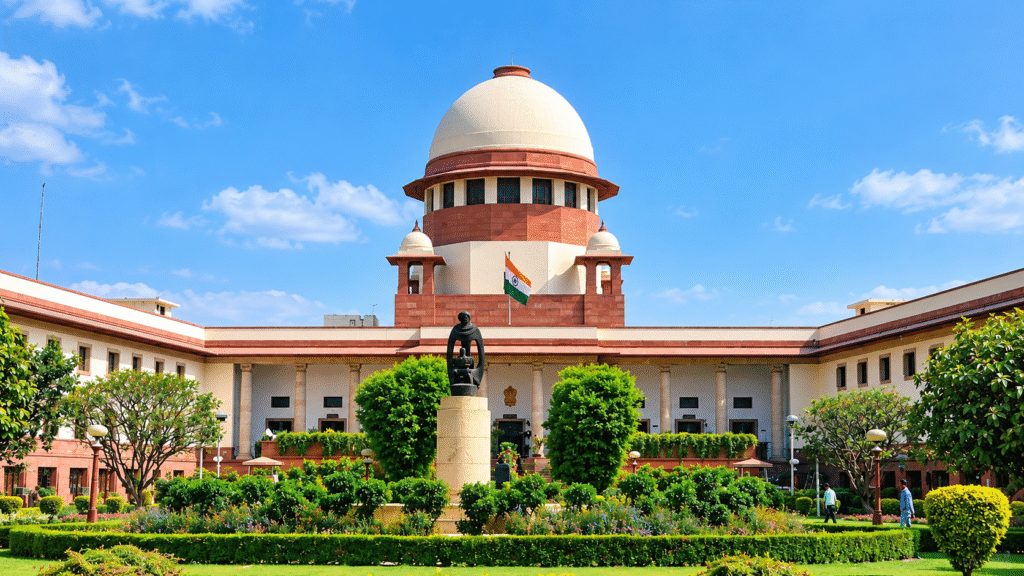
The protests against Chief Election Commissioner Gyanesh Kumar have been heating up across the country for weeks now, with opposition parties taking to the streets demanding his resignation over the Special Intensive Revision of electoral rolls. On Monday, the Supreme Court stepped into the middle of it all and made one thing very clear: the changes to Form 6, the form people fill to get their names added as new voters, were not something the court had ever approved. A three-judge bench headed by Chief Justice of India Surya Kant, along with Justices Joymalya Bagchi and V. Mohana, was hearing petitions that accuse Kumar of taking decisions on his own without proper involvement of the other two Election Commissioners, Sukhbir Singh Sandhu and Vivek Joshi. One of the main points raised was about how Form 6 had been altered online on the ECINET portal. During the hearing, senior advocate Menaka Guruswamy pointed out that the form had been changed in a way that added extra questions about whether the applicant or their parents or grandparents had been on the rolls during earlier SIR exercises. She argued this was done without following the proper legal process. The Chief Justice responded straight away: “Let’s be very clear. Any modified Form 6 has not been approved by us… Let us also be clear that when the record will be produced, we will like to see who has modified what.” That statement cut through a lot of the confusion. Just days earlier, the Election Commission had put out a statement saying the declaration attached to Form 6 for the SIR period had been upheld by the Supreme Court. The court has now said that is not the case. Form 6 is a statutory form under the Registration of Electors Rules, 1960. Any real change to it is supposed to go through proper channels involving the government and parliamentary oversight, not just get added online. The court issued notices to the Election Commission of India, the Centre, CEC Gyanesh Kumar himself, the other two commissioners, a Deputy Election Commissioner and the DG of IT. It wants the full records produced so it can examine what exactly was decided, by whom, and whether those decisions followed the law. The bench made it clear that if any decision turns out to have been taken without unanimity or majority, it can be struck down. “We will examine all the decisions. If any decision is not in accordance with the law, we will annul it. You know the power of the court,” the judges said. At the same time, the court refused to pass any interim order suspending Kumar from his post or stopping him from functioning while the case is pending. The Chief Justice noted that the court cannot act only on newspaper reports and needs to look at the actual records first. These petitions stem from an Indian Express investigation published in late September that detailed how Sandhu and Joshi had put their objections on record at least 14 times over ten months. Their concerns covered changes to Form 6, the way names were being added or deleted from voter lists, access to the electoral roll database, and other steps taken during the SIR exercise. One of them had even called the Form 6 alteration “unauthorised and illegal” and asked for it to be withdrawn, yet it stayed live for some time. The protests against Kumar have been going on in multiple cities. Congress workers and other opposition groups have held marches, tried to reach Election Commission offices, and called for his removal, accusing the process of disenfranchising large numbers of voters. In some places police used water cannons or detained protesters. There have also been attempts by groups of former civil servants and activists to submit what they call a people’s chargesheet to the Commission. The Election Commission has maintained that all major SIR decisions had the approval of the full Commission and that differing views are normal in any institution. After the controversy grew, it announced that the additional declaration would be limited to SIR periods and that the original Form 6 under the 1960 Rules would apply otherwise. Sources in the Commission have also said they did not change a single comma in the original Form 6 itself, only added a separate declaration in some cases. Still, the Supreme Court’s clarification on Monday has given fresh momentum to the criticism. Opposition leaders have seized on the court’s words to argue that the changes lacked proper legal backing. The court has asked for responses within a week or so and indicated it will look closely at the records when they come in. For ordinary people trying to get on the voter list for the first time, especially young voters whose families may not have been on older rolls, the extra questions on the online form had become a practical hurdle. Whether that extra layer was necessary for cleaning up the rolls or whether it went beyond what the law allows is exactly what the court now wants to examine with the full papers in front of it. The case is likely to come up again soon once the replies and records are filed. Until then, the protests continue and the questions around how decisions were taken inside the Election Commission remain very much alive. Sources:The Indian Express (reports dated 5 and 6 October 2026 and earlier investigation of 23 September 2026), India Today, Business Standard, The Hindu BusinessLine, The Wire, News18, Economic Times, Hindustan Times, LiveLaw, Verdictum, Deccan Herald. @Rohit Manral
Why India’s Election Commission is in the eye of a storm – again
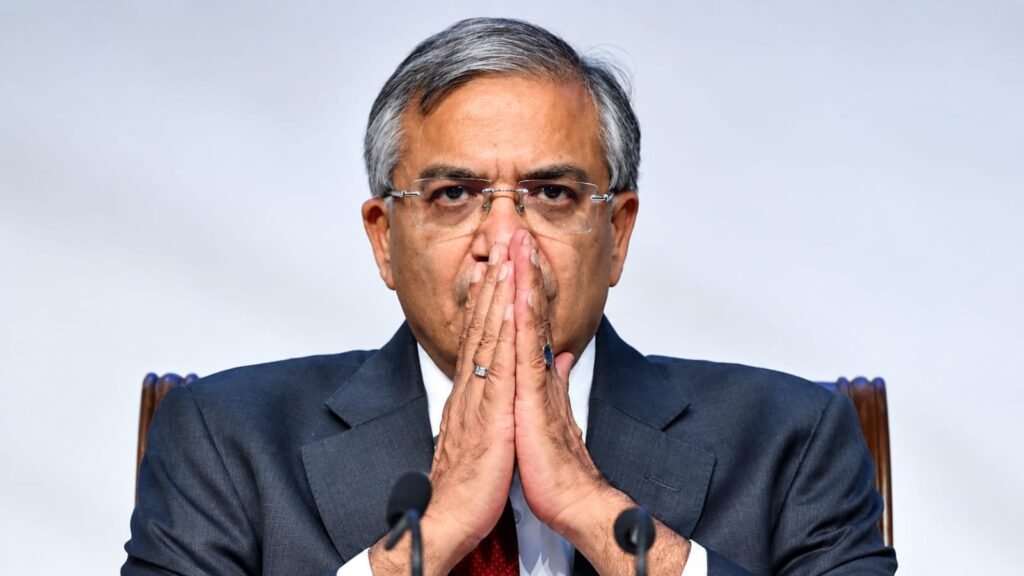
The Election Commission of India used to be one of those rare institutions people still trusted. In a country as noisy and divided as ours, that mattered. You could argue about parties, about governments, about almost everything else, but the EC was supposed to be the referee that stayed clean. That reputation is taking a beating right now, and this time the cracks are showing from inside the building itself. The latest spark came from a detailed investigation by The Indian Express. It reported that the two other Election Commissioners — Sukhbir Singh Sandhu and Vivek Joshi — had formally objected, on the record, at least 14 times in the past 10 months to decisions taken under Chief Election Commissioner Gyanesh Kumar. Many of those decisions, they said, were made without their knowledge. We’re talking about changes to how new voters get enrolled (Form 6), the way names were deleted and restored during the Special Intensive Revision of electoral rolls, and the centralisation of the voter database itself. In one case the two commissioners even wrote to the Cabinet Secretary complaining about what they saw as a clear violation of the law governing the Commission. That is not normal. The Election Commission is a three-member body. Decisions are supposed to be by majority, ideally by consensus. When two of the three keep raising red flags and still get overruled or kept out of the loop, it starts looking less like internal debate and more like one man running the show. The Commission’s response has been that differing views are part of the process and that all final decisions were unanimous. But it has not answered the specific questions the two commissioners put on paper — who authorised certain changes, why the full Commission did not meet for stretches, who filed appeals on the Commission’s behalf in West Bengal, and so on. This is not happening in a vacuum. The Special Intensive Revision, or SIR, started in Bihar last year and has since rolled out across many states. The Commission says it is simply cleaning up rolls that had not seen a proper intensive revision in decades — removing the dead, the duplicates, the people who have moved. Fair enough in principle. But the scale has been massive. In Bihar alone the draft list dropped by around 65 lakh names. Across 30 states and Union Territories, more than 13 crore names have been struck off draft rolls. In West Bengal the numbers were especially raw — roughly 27 lakh deletions in the later stages, with judicial officers later restoring a large share of those who appealed. When nearly nine out of ten appeals succeed, you have to ask how many genuine voters got knocked off in the first place. Opposition parties have been screaming about this for months. Rahul Gandhi has called it “vote chori.” He has pointed to specific constituencies, like Mahadevapura in Karnataka during the 2024 general elections, claiming tens of thousands of dubious entries — duplicates, fake addresses, bulk registrations at single locations. Other parties have joined in, especially in states where elections are coming or have just happened. They say the process put the burden of proof on ordinary voters, many of them migrants, the urban poor, or people without the exact documents the Commission demanded. Some of those documents were the ones people actually use every day; the list of acceptable papers felt designed to exclude rather than include. The Commission and the ruling side push back hard. They say the opposition is crying foul because it lost. They insist every deletion can be challenged, that appeals mechanisms exist, and that cleaning the rolls is necessary for the integrity of elections. Dead people and double voters have no business on the list. Fair point. But the optics have been terrible. When the same institution that is supposed to be neutral starts looking opaque — refusing machine-readable lists for a while, destroying CCTV footage faster than before, centralising software control in Delhi against the objections of its own commissioners — trust erodes. There is a deeper background here that makes the current storm worse. The way Election Commissioners are appointed changed in 2023. The Supreme Court had wanted a panel that included the Chief Justice. Parliament replaced the CJI with a Cabinet minister nominated by the Prime Minister. The opposition always said that gave the government a built-in 2-1 majority. Every appointment since has been viewed through that lens. When the man at the top of the Commission is seen as close to the government of the day, every controversial decision gets read as political, whether it is or not. Former Election Commissioners have called the internal dissent “unprecedented” and “very serious.” Opposition leaders are demanding Kumar’s resignation, some even talking of arrest or impeachment. A few are calling for the SIR to be paused and for court-monitored inquiries. The ruling party calls it an attack on the referee by sore losers. What is actually at stake is bigger than one Chief Election Commissioner or one revision exercise. In a democracy of this size, the only thing that keeps the peace is the shared belief that the count is honest. When large numbers of people start believing the voter list itself is being gamed — whether by over-enthusiastic cleaning or by selective blindness — that belief frays. Once it frays far enough, every result becomes contestable, every loss becomes theft, and the referee loses the authority to blow the whistle. The Election Commission still has the legal powers and the institutional memory to fix this. It can open its processes, answer the specific objections on record, restore genuine voters quickly, and show that majority decision-making inside the Commission is real. Whether it chooses to do that, or digs in, will decide if this storm passes or becomes the new normal. India’s democracy is loud and messy by design. It cannot afford a referee that looks like it has picked a side — or worse, looks like
Deep Rot: On the Election Commission of India’s Functioning During Its SIR
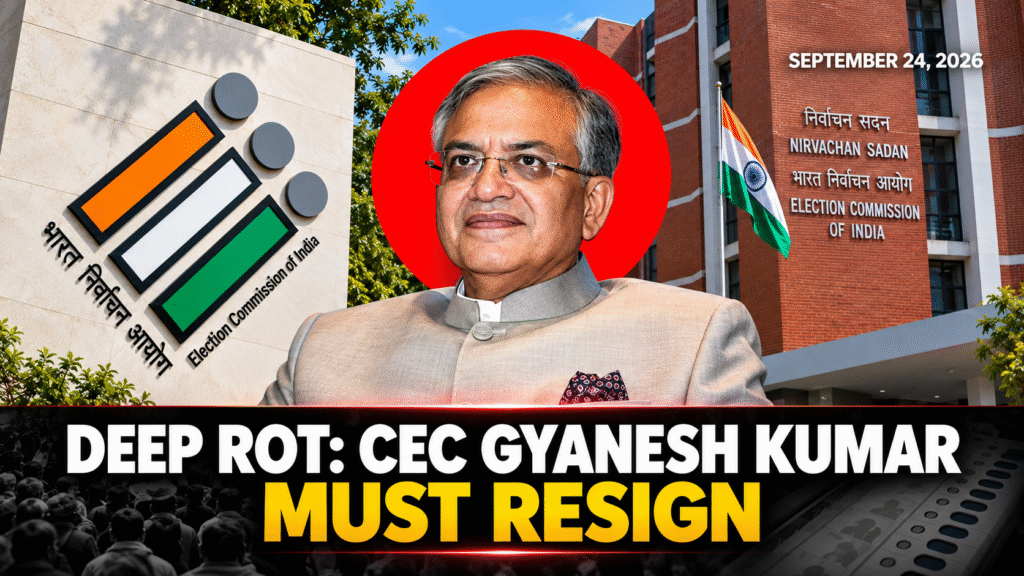
With the SIR thoroughly vitiated, CEC Gyanesh Kumar must resign The Special Intensive Revision of electoral rolls – this big clean-up drive they call SIR – was supposed to be about making the voter lists pure and accurate. No eligible person left out, no ineligible one kept in. That’s the line. But the way it’s been run under Chief Election Commissioner Gyanesh Kumar has left a sour taste that just won’t go away. And now, with reports of deep internal rifts coming out, it’s hard to see how this exercise hasn’t been thoroughly compromised. Back in 2025, they kicked off SIR in Bihar ahead of the assembly polls. House-to-house checks by booth-level officers, forms to fill, draft rolls, claims and objections – the works. Then it spread. Phase after phase across states and union territories. By the time it reached places like West Bengal, Uttar Pradesh, Delhi and beyond, the numbers of deletions started looking huge. Crores of names struck off – some dead, some shifted, some just not matching up. Opposition parties cried foul from day one, saying genuine voters, especially those who might lean their way, were being pushed off the rolls. The Commission kept insisting everything was transparent, multi-party agents were watching, courts had given the go-ahead. Fair enough on paper. But then the cracks inside Nirvachan Sadan itself started showing. Just this week an investigation laid it out. The other two election commissioners – Sukhbir Singh Sandhu and Vivek Joshi – had put their objections on record at least fourteen times over ten months. Decisions and orders going out without them even knowing, they said. Changes to Form 6, the basic application for new voters. Centralised control over the database that field officers use. Questions on how names were being added, deleted, restored. Appeals processes. One report even mentioned four objections on a single day. That’s not normal difference of opinion over tea. That’s a full-blown signal that the three-member body wasn’t functioning as a collegium the way the Constitution expects under Article 324. The Commission’s response? Differing views are part of healthy discussion, final decisions were unanimous. Okay. But when two of the three keep flagging that things are happening behind their backs, the claim of unanimity starts sounding thin. And Gyanesh Kumar sits right at the top of this. He’s the first CEC appointed after the 2023 law that tilted the selection panel towards the government – no Chief Justice in the mix anymore. Came in as Election Commissioner in March 2024, right before the Lok Sabha schedule, then took over as CEC in February 2025. Background is solid IAS, Kerala cadre, important central postings including cooperation ministry. But the manner of functioning during SIR has raised the same old questions about independence that have dogged the institution for years. Think about the scale. Over a crore names removed in some phases, more than five crore in twelve states and UTs alone by one count, and still going in others. In West Bengal the deletions ran into millions; in Delhi notices went out in large numbers. People on the ground – ordinary voters, opposition workers – kept saying the process felt rushed, the verification uneven, the appeals window too tight in places. The Commission points to record turnout in some polls held on revised rolls and says no major court challenges stuck after the Supreme Court upheld the legality. Yet the political temperature never cooled. Rahul Gandhi’s “vote chori” charges, the public back-and-forth, the earlier notices in Parliament seeking the CEC’s removal – all of it kept piling up. Those notices were rejected, but the underlying unease didn’t vanish. What makes this different is that the dissent is no longer just from outside. It’s internal. When the two other commissioners feel the need to formally object to how the SIR is being steered – access to data, form changes, the very process of revision – the exercise loses the moral authority it claims. A clean electoral roll is the foundation. Everyone agrees on that. But if the body preparing it is seen as operating with one person calling most of the shots while the others scramble to catch up, the foundation starts looking shaky. Voters notice. Parties notice. And once trust erodes, it is devilishly hard to rebuild. Gyanesh Kumar has defended the SIR robustly. He’s spoken of unparalleled transparency, of BLOs and BLAs keeping watch, of purest rolls in the world. Fine. But leadership also means ensuring the institution itself doesn’t look fractured. The reported centralisation of database control, the alleged bypassing of colleagues on key orders – these aren’t minor process notes. They go to the heart of collective decision-making that the Commission is supposed to embody. At this point the SIR stands vitiated in the public eye. Too many deletions without enough confidence that every eligible citizen was properly heard. Too many questions about how decisions were taken. The only clean way out is for the man heading it to step aside. CEC Gyanesh Kumar must resign. Not as some political scalp, but because the institution needs to recover its credibility before the next round of polls. Let a full three-member body, functioning without these internal shadows, take charge of whatever remains of the revision and of future ones. Democracy runs on trust more than on perfect lists. Right now that trust is fraying, and the deep rot has to be cut out before it spreads further. Sources: Reports from The Indian Express investigation (September 2026), The Hindu, Economic Times, Tribune, Scroll.in, and Election Commission of India press notes and statements on the Special Intensive Revision process. @Rohit Manral