‘Immature and Counterproductive’: Sheikh Hasina Calls Out Bangladesh PM for Skipping BRICS Summit
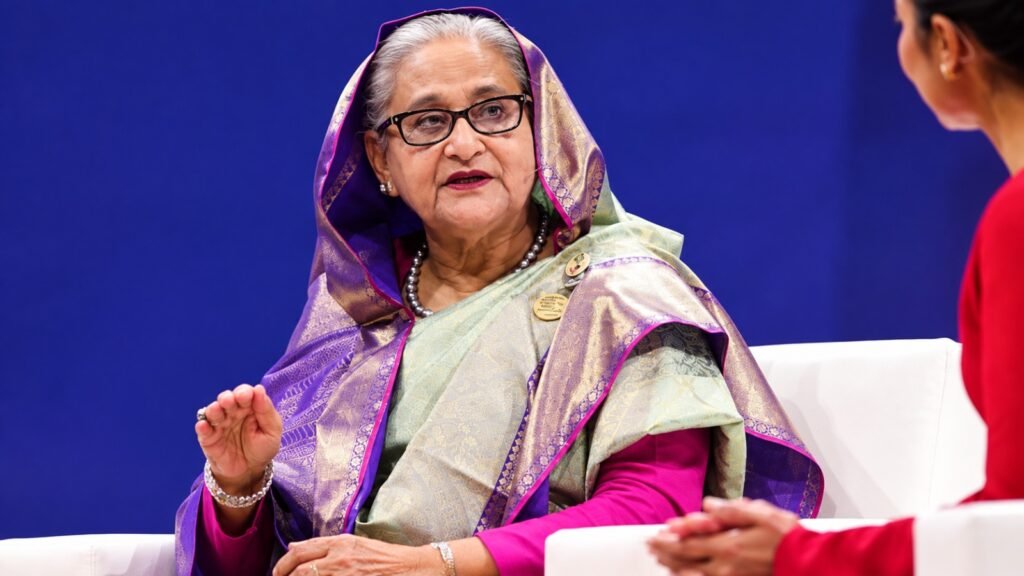
Sheikh Hasina is not happy with Tarique Rahman. In fact, she’s pretty blunt about it. In an interview she gave to PTI, the former Bangladesh prime minister said Rahman’s decision to skip the BRICS Summit in New Delhi last month was immature and ended up hurting the country’s own interests. The summit happened on 12 and 13 September in New Delhi. India had invited Rahman because Bangladesh currently chairs BIMSTEC. He didn’t go. Bangladesh’s side said the invitation was only for the BIMSTEC chair, not for the prime minister as such, and that they preferred to sort out things with India bilaterally first. Hasina doesn’t buy that explanation. “It was deeply unfortunate that Bangladesh chose not to participate,” she said. “In my view, it was an immature decision and one that did not serve Bangladesh’s national interest.” She went on to explain that BRICS isn’t just another talking shop. It’s a group of big emerging economies where countries can talk trade, investment, infrastructure, technology—the kind of things that actually help a country grow. Bangladesh could have picked up useful experience and maybe opened a few new doors. That chance, she said, is gone now. She was clear that foreign policy shouldn’t be run on personal feelings or short-term political scores. “A responsible government should open doors for the country, not close them,” she said. That’s the line that keeps coming up. Hasina also addressed the elephant in the room—her own presence in New Delhi. She’s been living there since her government fell in August 2024. Some people suggest Rahman stayed away because she is in India. She called that idea very unfortunate. “Relations between two countries cannot be determined by personal considerations or political sensitivities involving one individual,” she said. Then she brought up history to make her point. After her father, Sheikh Mujibur Rahman, was killed in 1975, Ziaur Rahman (Tarique’s father) took power. Yet when Ziaur came to Delhi in 1979, Hasina was already living there. When he went to London in 1980, she was in London too. “My presence in either city did not prevent him from travelling there,” she said. “So why should my presence in Delhi prevent Ziaur Rahman’s son, Tarique Rahman, from coming to India today? What is the real reason behind such a decision?” She used the moment to talk about how she handled foreign policy when she was in power. Bangladesh kept good relations with India and still worked with China, Russia, Japan, the US, Europe and others. “Friendship with one country never required hostility towards another,” she said. The country needs a mature, balanced, confident foreign policy, she added—one that opens doors instead of slamming them shut. Hasina didn’t stop at the summit. She painted a pretty dark picture of what’s happening inside Bangladesh right now. She called it a grave national crisis. Democratic space has been closed, she said. The judiciary is being used for political revenge. Media freedom is restricted. Law and order have weakened. Minorities feel unsafe. Extremists have more room than before. The economy is suffering. One of the biggest political parties has been banned, its leaders are in jail or hiding, and millions of supporters can’t take part in normal politics. “This is no longer only an Awami League issue. It is a national crisis,” she said. You can’t stabilise a country by shutting out such a large part of the population. She also spoke about returning to Bangladesh. She knows the risks—there’s a death sentence hanging over her from a Bangladeshi court—but she said personal safety isn’t the biggest worry. She’s faced death before, starting with the 1975 killings of her family, later assassination attempts, and time in prison. What bothers her more is what she sees as the collapse of justice. A death sentence given without a real chance to defend yourself isn’t justice, she said. Her return, she claimed, is about restoring democracy, voting rights and the rule of law. She wants ordinary people to be able to decide their future through a free and fair election. All of this comes while India-Bangladesh relations are already tense. Dhaka keeps asking for Hasina’s extradition. India has said Rahman was invited both for a bilateral visit and for the BRICS outreach as BIMSTEC chair. Still, no senior Bangladeshi leader showed up for the summit, and the home minister also skipped a BIMSTEC meeting in Delhi more recently. Hasina’s interview is her latest public shot from exile. Whether it changes anything in Dhaka is another question. What she’s saying, in plain words, is that skipping BRICS cost Bangladesh more than it gained, and that letting personal or short-term politics decide foreign policy is a bad idea for the country. Sources:PTI interview with Sheikh Hasina, reported on 14 October 2026 by The Tribune, Moneycontrol, India Today, India TV, CNBC-TV18 and other outlets.@Rohit Manral
After brief disruption, officials restart talks for Bangladesh PM Tarique Rahman’s India visit
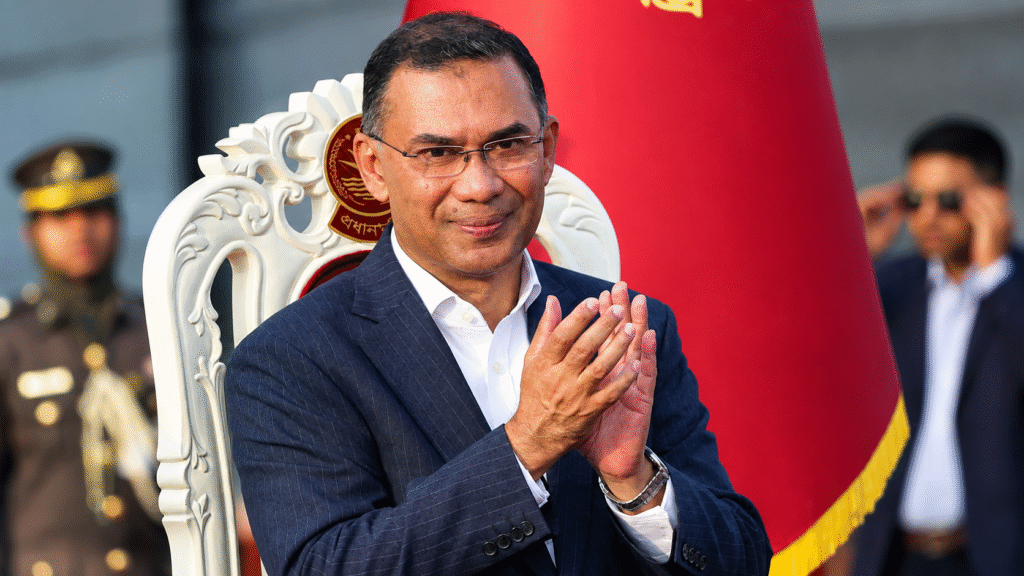
New Delhi and Dhaka have quietly got the conversation going again. After a few weeks of frost that followed Sheikh Hasina’s virtual press conference from somewhere in India in early August, officials on both sides are back at the table, working out the details of a possible visit by Bangladesh Prime Minister Tarique Rahman to India. Diplomatic sources say the two sides are aiming for a suitable window in November. Rahman is due in New York later this month for the United Nations General Assembly. After that he has a string of other engagements lined up through October and into November. The idea is to slot the India trip into a gap that works for both capitals once those are done. Indian High Commissioner Dinesh Trivedi has been busy in Dhaka over the past few days. He has met Water Resources Minister Mohammed Shahiduddin Chowdhury Anee and Education Adviser Mahdi Amin, among others. Officials from both countries have continued meeting in the Bangladeshi capital and are putting together an agenda. Top of the list are ways to regularise bilateral trade, which has taken a hit because of the earlier political uncertainty, and questions around the renewal of the Ganga Water Treaty. That treaty runs out in December, so the clock is ticking. This is not the first time a visit has been talked about. India invited Rahman for a bilateral trip soon after he took office in February following the BNP’s election win. There was also a separate invitation for him to attend the recent BRICS summit in New Delhi as chair of BIMSTEC. Bangladesh chose not to send anyone to that meeting. State Minister for Foreign Affairs Humayun Kobir made it plain that Dhaka wants to reset the relationship through a proper bilateral visit at a moment that feels right, rather than starting on the sidelines of a multilateral event. The August disruption was sharp. Hasina’s press interaction from Indian soil, marking two years since she left power, triggered strong reactions in Bangladesh. Dhaka said the atmosphere had been spoiled and that a more favourable environment was needed before any high-level trip could go ahead. There were also repeated calls from the Bangladeshi side for progress on extradition requests involving Hasina and others. India has maintained that those are legal matters that will be handled through established processes. Despite the earlier friction, the practical work has not stopped. Trade and connectivity remain important for both countries. Bangladesh faces pressure on energy and other supplies, and India has previously indicated readiness to discuss soft loans, easing of certain trade and transit restrictions, and other practical steps. The Ganga waters issue is particularly time-sensitive. Officials know that letting the treaty simply lapse would create fresh problems for farmers and communities on both sides of the border. Rahman has already travelled to Malaysia and China since becoming prime minister. India was traditionally the first stop for new Bangladeshi leaders, but the political changes after 2024 shifted that pattern. Now both sides appear to recognise that prolonged distance serves neither. People who deal with these files say the conversations in Dhaka are focused on concrete outcomes rather than symbolism alone. Rahman is understood to want clear takeaways he can present back home, whether on trade normalisation, visa facilitation, land-port usage, or water sharing. The Indian side has kept the invitation open. High Commissioner Trivedi’s recent meetings are being read as a signal that New Delhi is ready to move whenever Dhaka is. Sources in Dhaka confirm that efforts are under way to find that November window after Rahman’s other commitments are cleared. Of course, nothing is locked in yet. Schedules can shift, and domestic political pressures in both countries can still intervene. Anti-India sentiment exists in sections of Bangladeshi public opinion, and any visit will be watched closely for what it delivers. At the same time, the economic and geographic realities of the neighbourhood pull both capitals toward engagement. Trade that once flowed more freely, water that both sides depend on, and people who move across the border for work and family all create daily reasons to keep talking. For now, the officials are doing exactly that. Meetings continue in Dhaka. An agenda is being shaped around trade, water and other practical matters. Rahman heads to New York first, then turns to the rest of his autumn calendar. Somewhere in the weeks that follow, if the timing falls right and the agenda looks solid enough, the long-discussed India visit may finally take place. It has been a careful, stop-start process. The brief disruption after August is behind them for the moment. The talks have restarted, the issues are on the table, and both sides appear to be looking for a workable date rather than an open-ended delay. Whether November works will depend on the fine print still being negotiated, but the willingness to sit down and sort it out is back on display. Sources:The Hindu (Kallol Bhattacherjee, 17 September 2026)The Business Standard (18 September 2026)India Today, bdnews24.com, Daily Sun and other reports on the BRICS invitation and earlier positions of both governments. @Rohit Manral
‘Not expecting neighbours to do only what’s in my interest’: Jaishankar on Bangladesh amid Hasina row
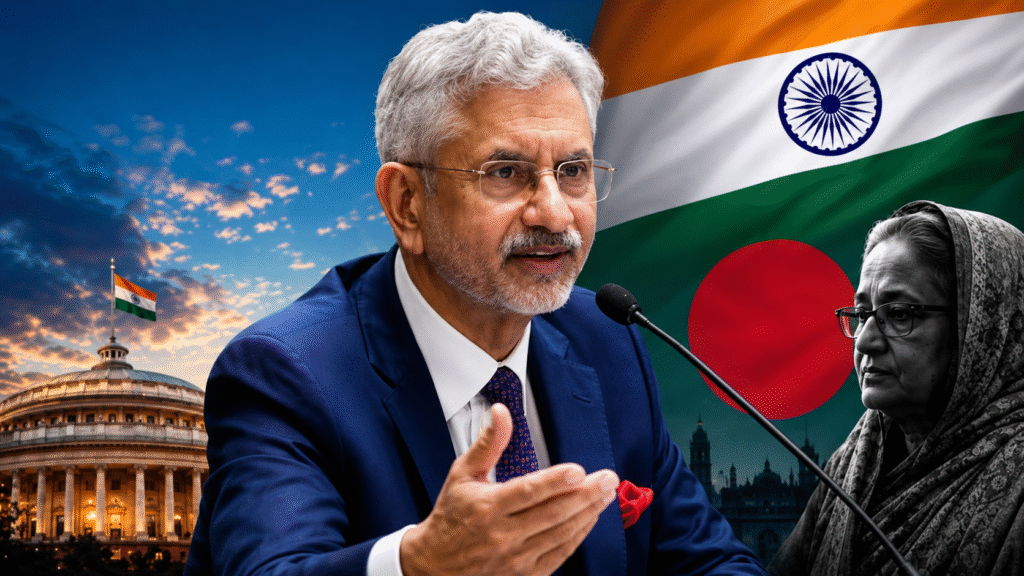
External Affairs Minister S. Jaishankar was saying on Saturday when he spoke about India and Bangladesh.He was at the Economic Times World Leaders Forum in Delhi, and someone asked him about the current awkwardness between the two countries—especially Bangladesh’s demand that India hand over Sheikh Hasina, and the question mark hanging over a possible visit by Bangladesh’s new Prime Minister Tarique Rahman. Jaishankar didn’t get into the details of any private talks. He rarely does. Instead he kept it simple and practical. He said, “What I can tell you is for any relationship to work, it has to meet the test of mutual interest. It has to work for them, it has to work for us.” Then he added the line that really stays with you: “I am also realistic, I’m not expecting neighbours to do only what’s in my interest. There has to be a fair degree, a reasonable degree, of my recognising and respecting what is their interest, just as I expect them also to do so.” He went on to say that once both sides find that common ground—that “landing point”—things start moving more smoothly. At the end of the day, he said, mutuality is what holds these relationships together. It’s a calm, grown-up way of putting it at a time when things have been a bit tense. Sheikh Hasina has been in India since August 2024, when she left Bangladesh during the big political upheaval. Bangladesh has been asking for her return so she can face the cases against her there. Some reports say Dhaka has even linked that demand to Rahman’s possible trip to India. New Delhi has invited him—both for a regular bilateral visit and in connection with the BRICS summit, since Bangladesh chairs BIMSTEC right now. But the timing has been uncertain, and the Hasina issue keeps sitting in the background. After 2024 the relationship took a real knock. There was coolness, some trade friction, sharper public comments. When Tarique Rahman took charge earlier this year, it looked like both sides were trying to steady the boat a bit. Then Hasina did a virtual media interaction from India on the second anniversary of her departure, and that seemed to irritate Dhaka all over again. India has said it didn’t organise or endorse that interaction, but the episode still added to the strain. Jaishankar’s answer didn’t pick a fight and it didn’t give anything away either. He just stated the obvious truth: lasting ties can’t be one-sided. India has its own interests—border security, connectivity for the Northeast, trade, regional stability. Bangladesh has its own priorities, shaped by what its people and its politics want right now. Pretending those don’t exist doesn’t help anyone. He’s talked about neighbourhood diplomacy this way before. What feels refreshing is that he isn’t treating this as a zero-sum game. He’s not saying India holds all the cards, and he’s not saying Bangladesh has to simply fall in line. The message is quieter and more realistic: both sides need to feel they’re getting something out of it. That applies whether you’re talking about high-level visits, legal requests, border management or the everyday economic links that ordinary people actually feel. And ordinary people do feel it. Cross-border trade, medical travel, family visits, the movement of goods—those things matter more than diplomatic language. When the temperature stays high for too long, those practical connections start to suffer first. Finding common ground, as Jaishankar put it, is less about grand speeches and more about the patient work of spotting where interests overlap and managing the differences that will always be there. Right now the two governments are still talking about the visit. Whether it happens soon or takes a little longer, the larger point he made still holds. Neighbours don’t have to agree on everything. They just have to accept that each has legitimate interests of its own. Expecting only one side to adjust is a sure way to keep the friction going. Looking for the place where interests meet is the more practical path—and the one he said India is ready to take. In the end it’s the kind of plain-spoken view that doesn’t make for dramatic headlines, but it might actually help keep the relationship from drifting further off course. Mutual interest isn’t a fancy slogan. It’s just the basic condition for any lasting neighbourhood arrangement. And right now, that’s exactly what both sides need to remember. Sources: Hindustan Times, The Indian Express, India Today, Zee News, News18, India TV, WION, The Daily Star, Firstpost, Times of India (coverage of Jaishankar’s remarks at the Economic Times World Leaders Forum, 22–23 August 2026). @Rohit Manral
‘India has always been a great friend and will remain so’: Sheikh Hasina
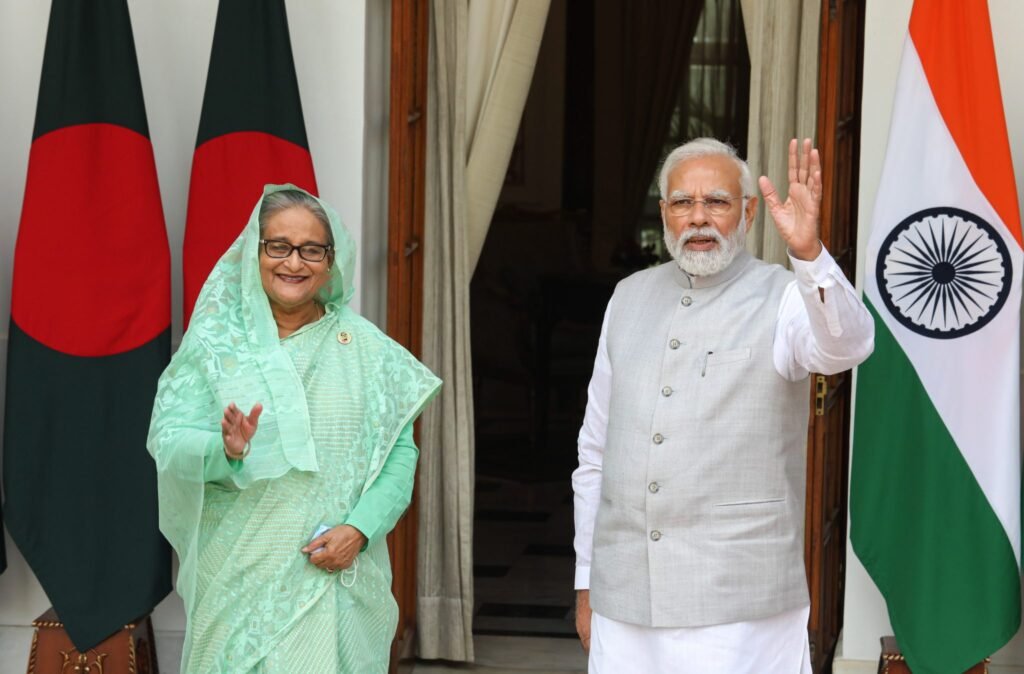
Sheikh Hasina spoke yesterday like someone who has carried the same thought for fifty years. No big speeches, no careful wording. Just the plain truth as she sees it. India has always been a great friend, she said, and it will remain so. She was talking from New Delhi, two years to the day after she left Bangladesh. The country she once led had turned against her. Crowds filled the streets. She had to go. India took her in, the same way it took her in long ago. She went back to those old days without any drama. In 1971, when everything was falling apart and people were running for their lives, India opened its borders. In 1975, after her father and almost her whole family were killed, India gave her and her sister a place to stay. She lived there six years. That memory never left her. Whenever Bangladesh was in real trouble, she said, India stood next to it and gave shelter. Governments come and go, she added, but that friendship stays. It was the first time she had talked properly to the press since she fled. The meeting was private. India made sure everyone knew it had nothing to do with the event. Dhaka had already complained. None of that seemed to matter to her. She just wanted to say what she felt. She has been living quietly under Indian protection all this time. Her son later said the government treated her with the same respect they would give a sitting head of state. The security never slipped. She has not forgotten that kindness either. But the real point of her words was not about staying safe in India. It was about going home. She plans to return in December. She knows what might be waiting. They may lock her up. They may even try to kill her. She said she is ready for that. Fear cannot decide her duty anymore. She cannot sit here while people she still calls her own are suffering. Her return is not about power, she insisted. It is about trying to help put the country back on its feet, back toward development and the values she believes in. She asked for the ban on her party to be lifted. She asked for her people who are in jail to be freed. She said she wants only to stand with ordinary Bangladeshis again. There was no anger in her voice, just that same steady belief. Her son was more direct. He warned that things in Bangladesh are turning dangerous, that militants once locked away are free again, and that this is not only Bangladesh’s problem. India should pay attention. Hasina herself stayed softer. She kept coming back to the older story, the one about a friendship that has lasted through many different governments on both sides. Anyone who has listened to her over the years will know these words. She has said them before, after elections, in interviews from exile, whenever the subject of India came up. India helped Bangladesh come into being. India sheltered her when she had nowhere else. Later the two countries fixed their borders, grew trade, and worked together on security. She has always called that partnership one of the most important things her country has. On this anniversary she simply said it once more, without any decoration. India stood with Bangladesh in its hardest hours, and she believes it will keep doing so. She is still in India for now. She even mentioned wanting to visit Nizamuddin Dargah before she leaves. When December comes, she says she will go. What happens after that, nobody can say for sure. But the friendship she spoke about is the one thing she seems completely sure of. Sources: Contemporary reports from Hindustan Times, NDTV, News18, The Indian Express, Reuters, The Hindu and ThePrint on Sheikh Hasina’s remarks of 5 August 2026. @Rohit Manral