Eyes on Xi’s possible visit, and that ‘early harvest’ talk, as Doval flies to Beijing
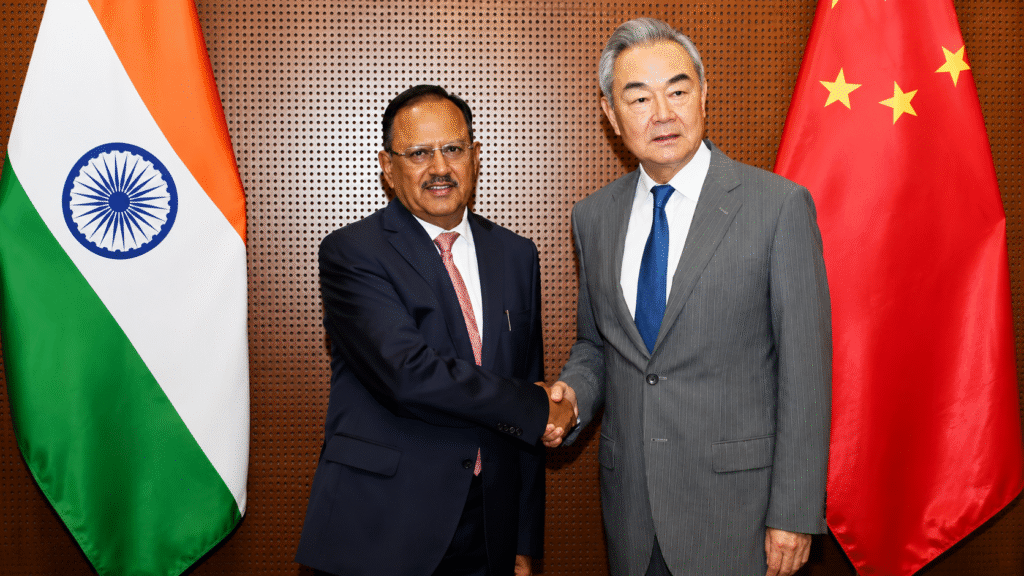
Ajit Doval is heading to Beijing this week. India’s National Security Advisor will sit down with Chinese Foreign Minister Wang Yi for the 25th round of those Special Representatives talks on the border. The formal gatherings are lined up for Monday and Tuesday. The timing feels deliberate. India is hosting the BRICS summit in the middle of September, and a lot of people are watching to see whether Chinese President Xi Jinping finally comes. It would be his first trip to India in seven years. If Doval’s talks go reasonably well, it could help clear the path for that visit and maybe even another meeting between Modi and Xi on the sidelines. This isn’t just about the boundary, though the boundary is the main item. Both sides also want to take a appropriate look at where the overall relationship stands. Things have been inching forward since late 2024, after the long freeze that followed the 2020 clashes in eastern Ladakh. The Modi-Xi meeting in Kazan that year opened a small window. They encountered again in Tianjin last August and both said they saw each other as development partners, not rivals, and that differences shouldn’t turn into open fights. Since then the steps have been careful—flights restarted, some visas eased, the Kailash-Mansarovar yatra back on, border trade through Nathu La and Lipulekh picking up again. The Special Representatives mechanism itself is old. It started in 2003 under the idea of finding a full settlement for the nearly 3,500-kilometre border. Progress has always been slow. After Galwan the talks stopped for almost five years. They only restarted properly in December 2024. Last year’s round in Delhi produced one practical agreement: an expert group under the existing border coordination mechanism to look at what they call an “early harvest”—small, limited agreements in places where the differences aren’t huge, while the bigger framework is still being worked out. That early-harvest idea is expected to come up again this week. Officials from both sides met under the Working Mechanism on 6 August and talked about delimitation, border management, new mechanisms, and cross-border cooperation. Some people point to the middle sector in Uttarakhand and Himachal, and the Sikkim area, as possible spots where something modest might be possible. They’ve also talked about setting up general-level military mechanisms in the eastern and middle sectors to match the one that already exists in the west. Nobody is expecting a big breakthrough. The western and eastern sectors remain complicated, and there have been fresh reports of friction in Arunachal Pradesh this month, with sharp words exchanged publicly. China says the border is “generally stable.” India keeps repeating that peace and quiet along the Line of Actual Control is the basic condition for anything else to improve. External Affairs Minister S. Jaishankar said as much again just the other day. Still, Doval going to Beijing keeps the highest-level channel open. It is his first visit there for these formal talks since the process restarted. He and Wang met more casually in June during the BRICS National Security Advisers meeting in Delhi and both noted that things were moving toward gradual normalisation. Tuesday’s meeting is the first proper boundary round since last August. What comes out of the talks will probably be measured. Quiet, workmanlike language would suggest the stabilisation is holding. Any mention of the expert group making progress, or new confidence-building steps, would be read as small but real movement. The larger questions—the full boundary settlement, the trade imbalance, how the two countries handle their differences in a shifting region—will stay for later. For now the focus is practical. Keep talking, keep the temperature down, and see whether the careful steps taken since 2024 can continue. If the meetings go smoothly, the possibility of Xi coming to Delhi next month stays alive. In a relationship that has swung between deep freeze and cautious thaw, even steady, unspectacular work counts. Sources: Drawn from reporting in The Hindu by Ananth Krishnan, PTI dispatches, Ministry of External Affairs briefings, Chinese Foreign Ministry statements, and coverage in NDTV, India Today, The Statesman and Hindustan Times reports. @Rohit Manral
India Issues Names for 27 Arunachal Locations in Response to China’s Renaming Moves
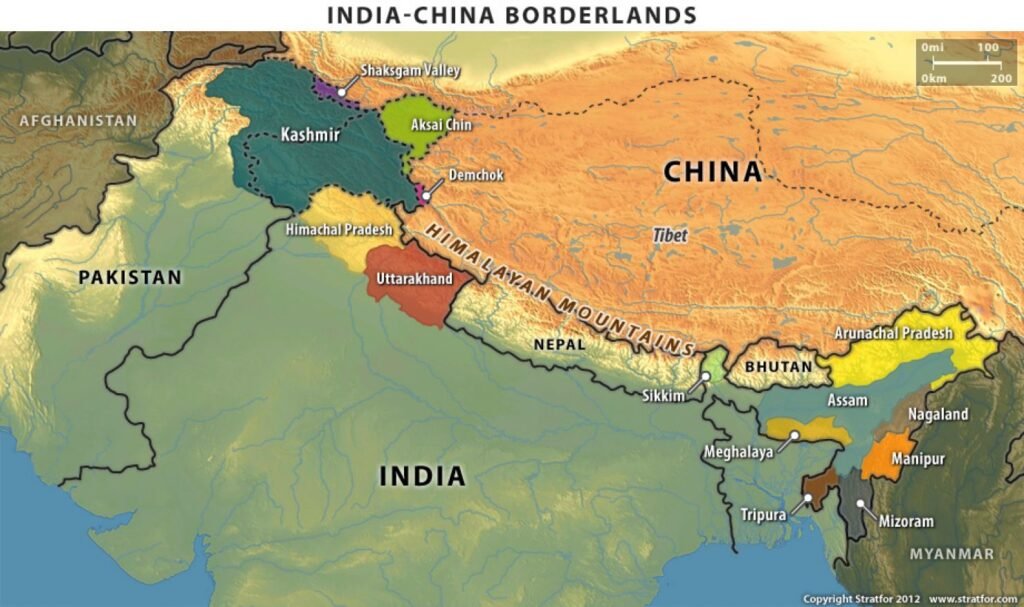
In a clear and deliberate step, India on Friday formally marked 27 locations and geographical features in Arunachal Pradesh on the official maps of the Survey of India. The move, announced by the Union Home Ministry in consultation with the Arunachal Pradesh government, comes as a direct response to China’s repeated attempts over the years to assign its own names to places in the border state. The Home Ministry statement put it plainly: the government has identified these 27 places and features with their standard names on Survey of India maps. The aim, it said, is to ensure accurate recognition and better awareness among the public. Officials familiar with the matter described it as a way to remove any ambiguity that Beijing has tried to exploit by inventing names for Indian territory. Among the locations now clearly marked are Longju, a border area that saw one of the earliest flashpoints between the two countries in 1959 when Chinese forces entered the region; Maja village nearby in Upper Subansiri district; and Bisa. Four high-altitude mountain passes figure on the list – Dzo La, Riza La, Pukur La and Thag La. Thag La holds particular historical weight as the site of one of the opening battles of the 1962 India-China war. The list also includes Sambho Sarovar, a high-altitude lake; Bara Kundun and Chhota Kundun in eastern Arunachal; Dhan Bari; Pritnagar; Buddhamandir; Jairampur in Changlang district, an important logistics hub that supports security force movements towards the eastern border and the Myanmar frontier; Teritnagar; Ramnagar; Jaswant Garh, which houses the memorial of Indian Army soldier Jaswant Singh Rawat on the Tawang Road; Sagar; Padma; Jyotinagar; Baisakhi; the Sher-e-Thapa Memorial honouring 1962 war hero Trilok Singh Thapa; Chhota Ropuk and Bara Ropuk; Shivaji Nagar; Sunpura; and Kamlang Nagar near the Kamlang Wildlife Sanctuary. These are not random spots. Many lie along or near the Line of Actual Control and carry strategic, historical or administrative importance. By placing them formally on official Indian maps with their established names, New Delhi is reinforcing its sovereign and legal jurisdiction over the territory. China has for years periodically released lists of what it calls “standardised” Chinese names for places in Arunachal Pradesh, which Beijing refers to as Zangnan or South Tibet and claims as its own. The first such list covering six places appeared in 2017. Another with 15 names followed in 2021, then 11 more in 2023. Further lists have appeared in subsequent years, including one with 27 names in 2025. Each time, India has rejected the exercise in strong terms, calling it “vain and preposterous” and insisting that inventing names changes nothing on the ground. Arunachal Pradesh “was, is, and will” always remain an integral and inalienable part of India, New Delhi has repeatedly stated. An official involved in the latest Indian decision noted that ambiguity on maps has given China room to push these fictitious names. Putting the 27 locations clearly on Survey of India maps, the official said, provides clarity, strengthens India’s claim status and improves the official documentation of these geographical features. For people living in Arunachal Pradesh and for those who follow the border closely, the practical effect is straightforward. Official maps now carry unambiguous Indian names for these places, reducing any confusion that could arise from competing Chinese labels circulating in some international or Chinese sources. It also serves as a quiet assertion of administrative control and historical continuity. Places like Jaswant Garh and the Sher-e-Thapa Memorial are not just dots on a map; they are reminders of the human cost and the military history of the frontier. The exercise was carried out jointly with the state government, underscoring that this is not merely a central government pronouncement but one rooted in local knowledge and administration. Survey of India maps are the authoritative reference for government use, development planning, security operations and public information. Formal inclusion of these names therefore carries weight beyond symbolism. China’s approach has been consistent: issue lists with Chinese characters, Tibetan script and pinyin, often accompanied by coordinates, and present them as routine standardisation of geographical names within what it claims as its territory. India has treated each instance as an attempt to create facts through nomenclature rather than through any change on the ground. The latest Indian step flips that approach by strengthening the documentary and cartographic record on its own side. Whether this will deter further Chinese renaming lists remains to be seen. Beijing has shown little inclination to stop the practice. What is clear is that India is no longer content to simply issue diplomatic rejections. By systematically marking these locations on its own maps, New Delhi is making the Indian position more visible, more permanent and harder to ignore in the public and official record. The 27 names now stand on the Survey of India maps of Arunachal Pradesh. For a border state that has long lived with competing claims and occasional military tension, it is a small but firm act of cartographic assertion. In the long-running contest over maps, names and narratives along the India-China frontier, clarity on paper still matters. Sources: Union Home Ministry statement; Hindustan Times; India Today; The Times of India; Times Now; Outlook India; India TV; Business Today. @Rohit Manral