Eyes on Xi’s possible visit, and that ‘early harvest’ talk, as Doval flies to Beijing
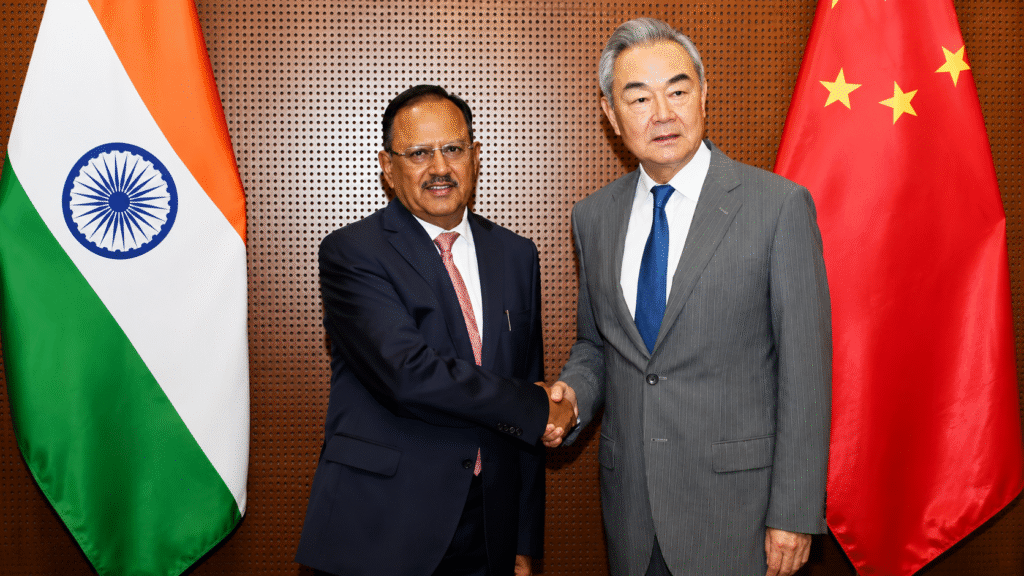
Ajit Doval is heading to Beijing this week. India’s National Security Advisor will sit down with Chinese Foreign Minister Wang Yi for the 25th round of those Special Representatives talks on the border. The formal gatherings are lined up for Monday and Tuesday. The timing feels deliberate. India is hosting the BRICS summit in the middle of September, and a lot of people are watching to see whether Chinese President Xi Jinping finally comes. It would be his first trip to India in seven years. If Doval’s talks go reasonably well, it could help clear the path for that visit and maybe even another meeting between Modi and Xi on the sidelines. This isn’t just about the boundary, though the boundary is the main item. Both sides also want to take a appropriate look at where the overall relationship stands. Things have been inching forward since late 2024, after the long freeze that followed the 2020 clashes in eastern Ladakh. The Modi-Xi meeting in Kazan that year opened a small window. They encountered again in Tianjin last August and both said they saw each other as development partners, not rivals, and that differences shouldn’t turn into open fights. Since then the steps have been careful—flights restarted, some visas eased, the Kailash-Mansarovar yatra back on, border trade through Nathu La and Lipulekh picking up again. The Special Representatives mechanism itself is old. It started in 2003 under the idea of finding a full settlement for the nearly 3,500-kilometre border. Progress has always been slow. After Galwan the talks stopped for almost five years. They only restarted properly in December 2024. Last year’s round in Delhi produced one practical agreement: an expert group under the existing border coordination mechanism to look at what they call an “early harvest”—small, limited agreements in places where the differences aren’t huge, while the bigger framework is still being worked out. That early-harvest idea is expected to come up again this week. Officials from both sides met under the Working Mechanism on 6 August and talked about delimitation, border management, new mechanisms, and cross-border cooperation. Some people point to the middle sector in Uttarakhand and Himachal, and the Sikkim area, as possible spots where something modest might be possible. They’ve also talked about setting up general-level military mechanisms in the eastern and middle sectors to match the one that already exists in the west. Nobody is expecting a big breakthrough. The western and eastern sectors remain complicated, and there have been fresh reports of friction in Arunachal Pradesh this month, with sharp words exchanged publicly. China says the border is “generally stable.” India keeps repeating that peace and quiet along the Line of Actual Control is the basic condition for anything else to improve. External Affairs Minister S. Jaishankar said as much again just the other day. Still, Doval going to Beijing keeps the highest-level channel open. It is his first visit there for these formal talks since the process restarted. He and Wang met more casually in June during the BRICS National Security Advisers meeting in Delhi and both noted that things were moving toward gradual normalisation. Tuesday’s meeting is the first proper boundary round since last August. What comes out of the talks will probably be measured. Quiet, workmanlike language would suggest the stabilisation is holding. Any mention of the expert group making progress, or new confidence-building steps, would be read as small but real movement. The larger questions—the full boundary settlement, the trade imbalance, how the two countries handle their differences in a shifting region—will stay for later. For now the focus is practical. Keep talking, keep the temperature down, and see whether the careful steps taken since 2024 can continue. If the meetings go smoothly, the possibility of Xi coming to Delhi next month stays alive. In a relationship that has swung between deep freeze and cautious thaw, even steady, unspectacular work counts. Sources: Drawn from reporting in The Hindu by Ananth Krishnan, PTI dispatches, Ministry of External Affairs briefings, Chinese Foreign Ministry statements, and coverage in NDTV, India Today, The Statesman and Hindustan Times reports. @Rohit Manral