India Still the Fastest-Growing Big Economy at 7% for the Next Two Years, Says IMF
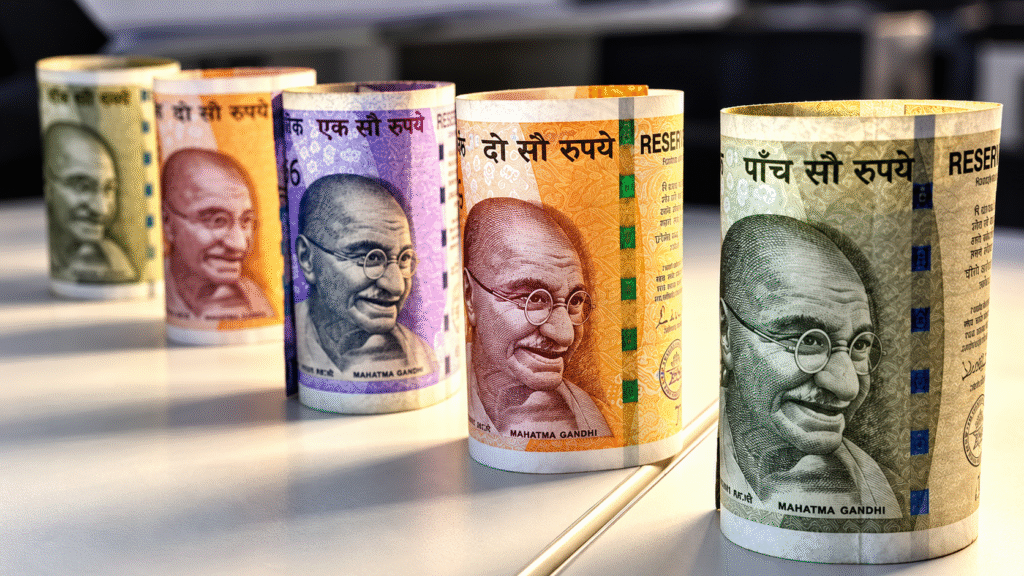
IMF says the economy will grow at 7% in both 2026-27 and 2027-28. That’s up from what they thought a few months ago. Back in July they had us at 6.4% this year and 6.7% next year. Now they’ve pushed both up to a clean 7%. On calendar-year terms it’s even a bit higher—7.4% for 2026 and 7% for 2027. Basically, the economy has been holding up better than they expected. People are still spending, services are doing well, and overall demand inside the country has stayed strong even with oil prices up and all the mess going on in West Asia. The IMF specifically said India’s growth has been “robust, underpinned by domestic demand and services, despite higher oil prices.” They also pointed out the usual strengths we keep hearing about—young population, big domestic market, and the reforms that have been happening over the years. In their words, India “stands out with upward revisions,” and they see growing evidence that the country’s growth potential is actually stronger than people thought. This comes right after the RBI raised its own forecast to 7.1% for this year, and the World Bank did the same. So a few big names are now singing a similar tune. Now, the global picture isn’t as bright. The IMF thinks the world economy will slow to 3.1% growth in 2026, down from 3.5% last year, before recovering a bit to 3.4% in 2027. Conflicts in the Middle East, higher energy prices, and leftover tensions from the Russia-Ukraine situation are weighing things down. For a country that imports a lot of oil, that’s not ideal. But somehow India has managed to keep moving at a good clip. Of course, it’s not all smooth. Oil prices are still high, and that does hit the import bill. Inflation is expected to stay around 4.7% this year. If things get worse in West Asia, energy costs could climb further. Still, the IMF’s baseline view is that our domestic drivers are strong enough to handle a fair amount of that pressure. Looking around the world, most major economies are growing much slower. China is in the mid-4s, the US around 2%, and Europe and Japan even lower. Against that, a steady 7% looks impressive. What does this mean in real life? More growth usually means more jobs, especially in services, which have been carrying a lot of the load. It also gives the government a bit more breathing room for infrastructure and manufacturing pushes. The young population is still a big plus if we keep investing in skills and education. And with a growing middle class, people keep spending even when the outside world gets messy. The IMF isn’t saying there are no risks. Geopolitics, oil prices, and keeping inflation in check will all matter. But the main takeaway is clear: India remains the fastest-growing major economy, and they expect that to continue for the next couple of years. Sources:IMF World Economic Outlook, October 2026Reports from NDTV, The Hindu BusinessLine, Economic Times, Moneycontrol, and CNBC-TV18 covering the IMF release on 13 October 2026 @Rohit Manral
‘World looking at India as bright spot of growth & hope’: PM Modi at Economic Times World Leaders Forum 2026
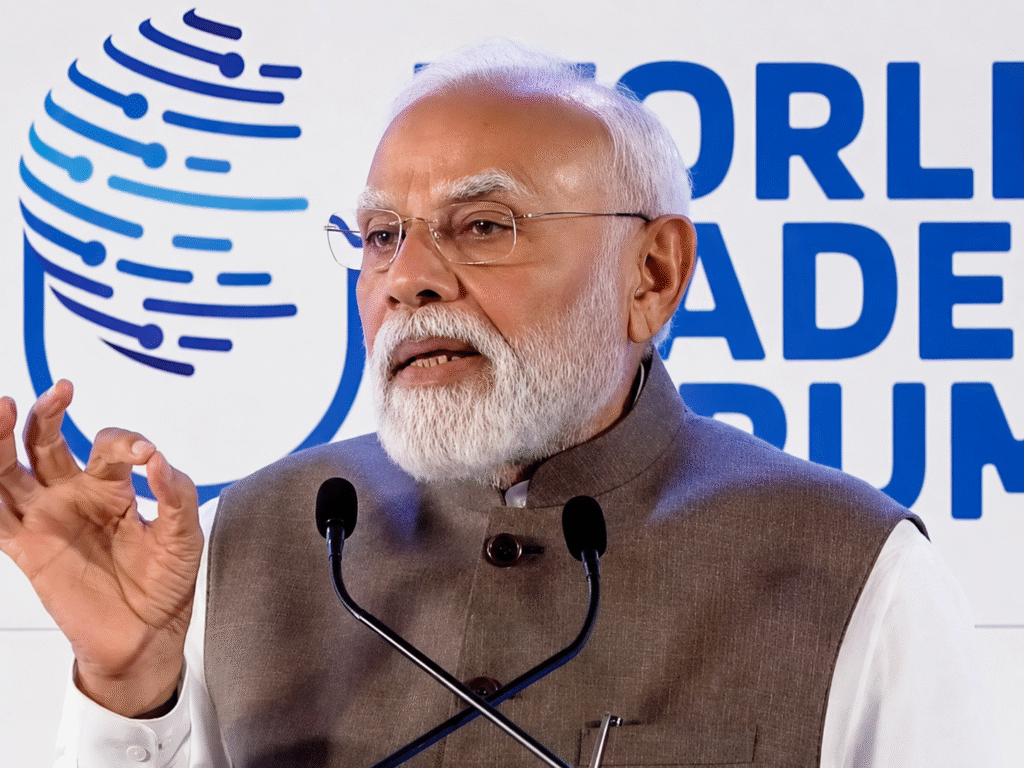
It was one of those evenings in the capital when the air itself seemed to carry a quiet confidence. At the Economic Times World Leaders Forum 2026, held at the Taj Palace, Prime Minister Narendra Modi stood before a hall packed with business leaders, investors and policymakers and said something that felt both simple and significant. The world, he told them, is looking at India as a bright spot of growth and hope. He did not rush into the line. He first spoke about the last few years — the ups and downs, the disruptions, the sense that nothing stays isolated anymore. “Whether one likes it or not,” he said, “the futures of all nations are interconnected. Nothing is possible in isolation.” India’s G20 presidency, he reminded the room, had carried the idea of One Earth, One Family, One Future. That same spirit, he felt, still had answers for the problems of this century. But the present is not easy. Resources are being turned into weapons. Mistrust is spreading. Global growth looks uncertain. And still, Modi said, the world keeps turning its gaze toward India. “Even in such times, the world views India as a bright spot of growth and hope.” He backed the claim with numbers that have become familiar yet still land with weight. In the last 10 to 12 years, about 25 crore people have moved out of poverty. The IMF continues to say India will remain the fastest-growing major economy. On Independence Day, speaking from the Red Fort, he had talked about seven streams of strength — manufacturing, agriculture and food processing, technology, the green economy, the blue economy and more. These, he said, are where the country is putting its energy. Then he turned to the idea of reform itself, and here his tone sharpened. He spoke of the old licence-raj days when companies that produced more than the allowed limit were actually punished. He called it the PLP model — Production Linked Punishment. Today the approach is the opposite. Higher production brings incentives. The government, he said, is not merely changing a few rules. It is changing the entire way regulations are thought about. The old mindset was “prohibited unless permitted.” The new one is “permitted unless prohibited.” If something is not clearly banned by law, there should be no need to keep asking for permission at every step. The relationship between government and people, he insisted, must rest on trust, not suspicion. Policies now are being shaped to be pro-people, pro-growth and pro-development. He pointed to things people actually notice in their daily lives — cheaper data, the quick spread of 5G, changes in the railways, the Delhi Metro, the Namo Rapid Rail. Small reforms on paper, he suggested, but they show a country adjusting itself to the times. Political stability and continuity of policy, he added, give the outside world the confidence that India’s direction will not suddenly reverse. The forum itself was full of people who matter in boardrooms and policy circles. More than 40 global speakers and over 300 Indian CEOs were expected across the two days. Earlier in the day, Times Internet chairman Satyan Gajwani had described Modi as a source of stability in a world that seems to lurch from one crisis to the next. The Prime Minister’s words seemed to answer that description directly. He did not pretend India is untouched by global pressures. He simply argued that the country has chosen a path of continuous reform and that the results are visible. Growth is being protected. The sectors that will matter in the years ahead are receiving focused attention. And the governing idea has shifted from control to enablement. The Economic Times World Leaders Forum continues through Saturday with conversations on technology, geopolitics and the next phase of growth. But Friday evening belonged to that single, clear assertion — that amid everything else, India stands out as a place of growth and hope. Sources: Times of India, Economic Times, ANI, ETV Bharat, New Kerala, The News Mill, Awaz The Voice, Akashvani News, and the official text of the Prime Minister’s address (August 21, 2026). @Rohit Manral