Mohan Bhagwat warns of forces trying to destabilise India: ‘Regime change doesn’t change circumstances’
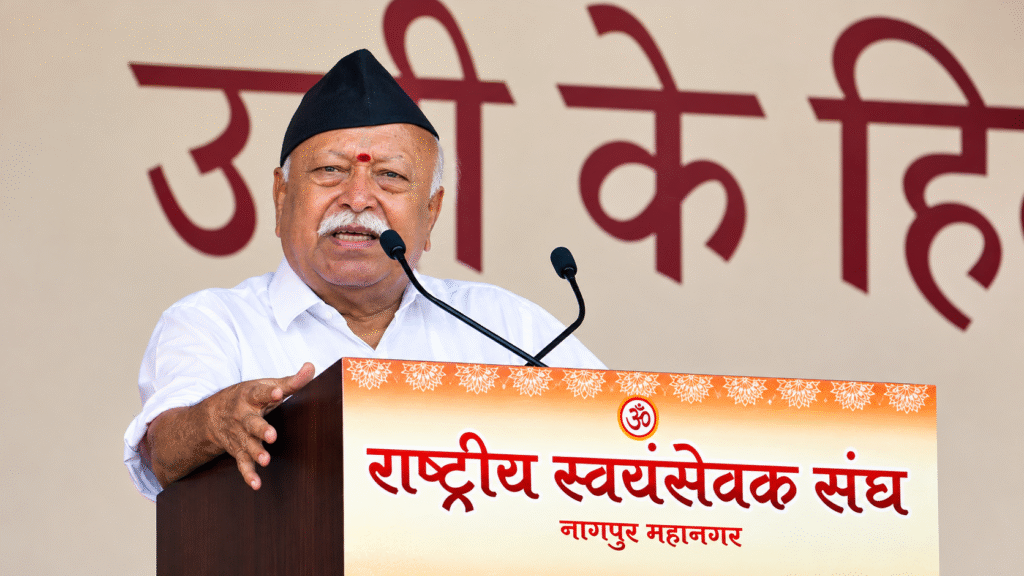
Nagpur, October 20: Rashtriya Swayamsevak Sangh chief Mohan Bhagwat on Tuesday delivered a clear message at the organisation’s annual Vijayadashami Utsav. He said certain forces are actively working to destabilise India, and that the idea of simply changing the government to fix everything is a myth that has never worked. Speaking at Reshimbagh ground, Bhagwat pointed to recent turmoil in other countries. “Look at what is happening in France, Albania, Bangladesh and Nepal,” he said. “They say regime change will change the circumstances of the country but that has never happened. It did not happen earlier, and it will not happen now.” He described a “storm” blowing in from the West — one that opposes order, culture, systems, security and basic human values. According to him, these forces see India’s steady progress over the past few decades as a threat. “India is their main target because India is progressing. These evil forces know that they cannot disrupt India the way it has moved ahead with decisive policies in the last few decades… they are trying dismantling India and the Sangh,” Bhagwat said. He did not stop at external players. Bhagwat noted that some people inside the country, driven by ambition or a simple hunger for power, end up helping these efforts. He called them people of “low intelligence and thirst for power” who reflect what the foreign forces want. The goal, he suggested, is not genuine improvement for ordinary citizens but to keep certain interests dominant by creating chaos. The remarks come against the backdrop of ongoing protests in Delhi and elsewhere demanding the resignation of Chief Election Commissioner Gyanesh Kumar over alleged irregularities in the Special Intensive Revision of electoral rolls. Days earlier, senior lawyer Prashant Bhushan had described the agitation as “really a fight for regime change.” Bhagwat’s speech appeared to address that line of thinking directly without naming anyone. On protests themselves, the RSS chief was measured. He accepted that public demonstrations are a natural part of democracy. Problems will keep arising in a large, developing society like India’s, and people have every right to raise their voice. But the purpose matters. “Protests should seek solutions to problems rather than create further divisions,” he said. Solutions, he insisted, ultimately come from within society through dialogue and constructive effort, not from continuous agitation that sows bitterness or hostility between different sections of people. Bhagwat recalled older history too — how Lord Curzon once tried to divide Bengal, only for the Vande Mataram movement to force a reversal within a few years. The 1947 Partition, he said, happened because people accepted the idea that they looked different and therefore were different. The intended goals of that division were never fully achieved, he added, leaving only restive borders. The lesson he drew was simple: stay united and alert. No one can unsettle a society that refuses to be divided. He also spoke about the younger generation’s growing sense of national pride and responsibility. That awakening, combined with firm policies and steady leadership in recent decades, has already frustrated earlier attempts to weaken the country. These forces know it, which is why India remains their ultimate target. Throughout the address Bhagwat returned to the same practical point. Changing who sits in power does not automatically fix deep-rooted issues. Countries that have gone through sudden regime shifts often find the same problems — or worse ones — still staring at them. Lasting change requires social cohesion, shared purpose, and a willingness to solve problems rather than weaponise them. In a large and still-developing nation, challenges will continue. Bhagwat’s advice was straightforward: stay within constitutional limits and civil decorum, keep protests focused on solutions, and refuse to let ambition or external influence tear the social fabric. Unity and alertness, he said, are the real safeguards. The speech, delivered on the occasion of Vijayadashami, mixed caution with confidence. India’s progress has made it a target, but the same progress and the rising confidence of its people have also made success for those trying to dismantle it far harder than before. Sources:Hindustan Times, The Tribune, The Indian Express, India Today, Moneycontrol, Deccan Herald, ANI reports from the Vijayadashami Utsav in Nagpur on 20 October 2026. @Rohit Manral
Amit Shah Says He’s Ready for Any Question, Rahul Gandhi Says They’re Not Here for His Lecture
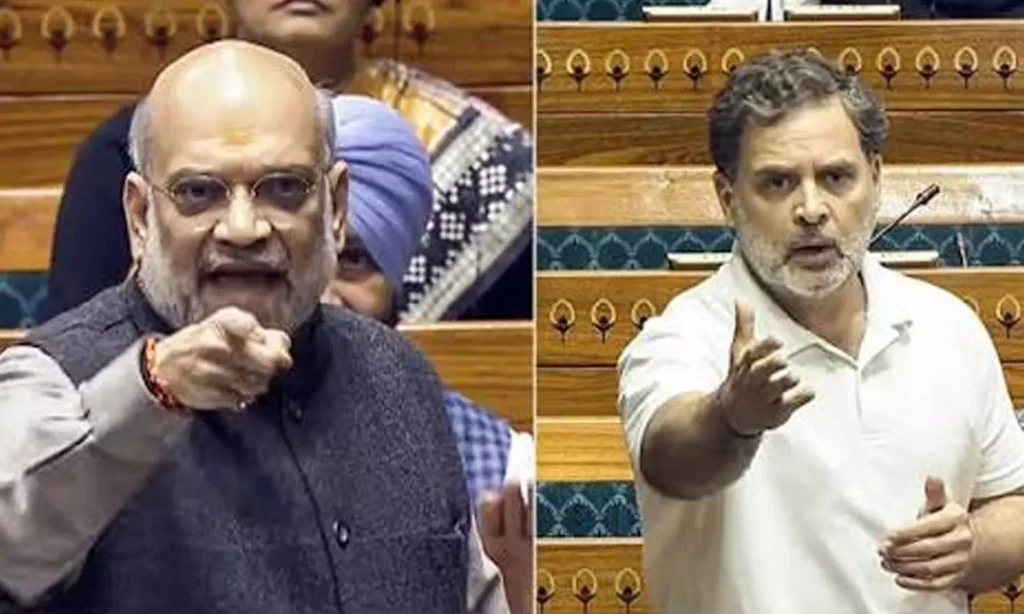
Home Minister Amit Shah came out and basically said, look, we’re ready. We can talk about everything that happened with the students. The ones who marched towards Parliament on July 20 over the NEET paper leak mess. He told reporters outside that the government has nothing to hide. Kiren Rijiju had already said the same thing earlier — the government is fine with a full discussion. Shah went a step further. He said if the Opposition just puts it in writing to the Speaker by around 2 or 3 in the afternoon, they’re ready to start talking from 3 pm that day and keep going till 3 pm the next day. He said he’ll sit there himself the whole time, listen to everyone, take notes, and answer every single point. No running away. “Let the public decide who’s running away,” he said. Pretty direct. He even offered to suspend Question Hour if the Speaker allows it, just so the discussion can go on properly. Under Modi’s government, he said, they’re ready to discuss anything. The ball is in the Opposition’s court. Rahul Gandhi didn’t take long to reply. And he didn’t soften it. He said the Opposition is not interested in listening to Amit Shah give them a lecture. When he says “we,” he meant the younger generation of this country. That’s who he’s speaking for, according to him. He listed out the questions he actually wants answers to. Who shot the students? Who ordered them to be beaten with lathis that had nails in them? Who gave the order that allegedly blinded one student and hit another in the ear? Then he asked the straight question: Did Amit Shah give that order to shoot our children? If he did, he should resign because he’s responsible. If he didn’t, he should resign because he’s incompetent. Either way, resign. Rahul also kept pointing out that Shah had been missing from the House for almost 20 days. “The Home Minister of India has no courage. He cannot come to the House,” he said. He called the sudden offer of a long discussion an attempt to fix a balloon that has already burst. They’re trying to put the gas back in at the last minute, according to him. That’s where the two sides stand, and it’s not moving. The whole thing started with the student protests after the NEET-UG paper leak. On July 20 they tried to march to Parliament. Police stopped them, force was used, and then the stories started — injuries, claims of pellet guns, spiked sticks. The Opposition has been demanding that Shah answer for it because Delhi Police comes under the Home Ministry. The government keeps saying Parliament is the place to discuss it, just let the House function first. For days it’s been the same scene inside. Disruptions, slogans, no real work getting done. Outside, both sides are holding their own protests. One side saying Shah must come and answer. The other saying the Opposition is just not letting Parliament work. Shah’s offer of almost a full day of discussion was unusual. He was putting himself on the line, saying he’ll sit there and reply so the country can see the truth. Rahul’s answer was just as clear: we don’t want the speech. We want the specific answers. Who ordered what happened to those students. As of Wednesday evening, nothing had really changed. No smooth path to an actual debate. The Speaker would still have to handle any formal notice, and the mood in the House stayed the same — tense and stuck. Both men claimed to be speaking for the students and the young people. Both said the public will decide. But the gap between “I’m ready to answer every question” and “we’re not interested in your lecture” is still wide open. And that’s where Parliament is right now. Same fight, same positions, and the questions about what happened on July 20 still hanging over everything. Sources: Times of India, The Indian Express, The Statesman, Rediff, Indiablooms and Economic Times reports from 12 August 2026. @Rohit Manral
Gen Z are our own, protesting doesn’t make them anti-national: Mohan Bhagwat
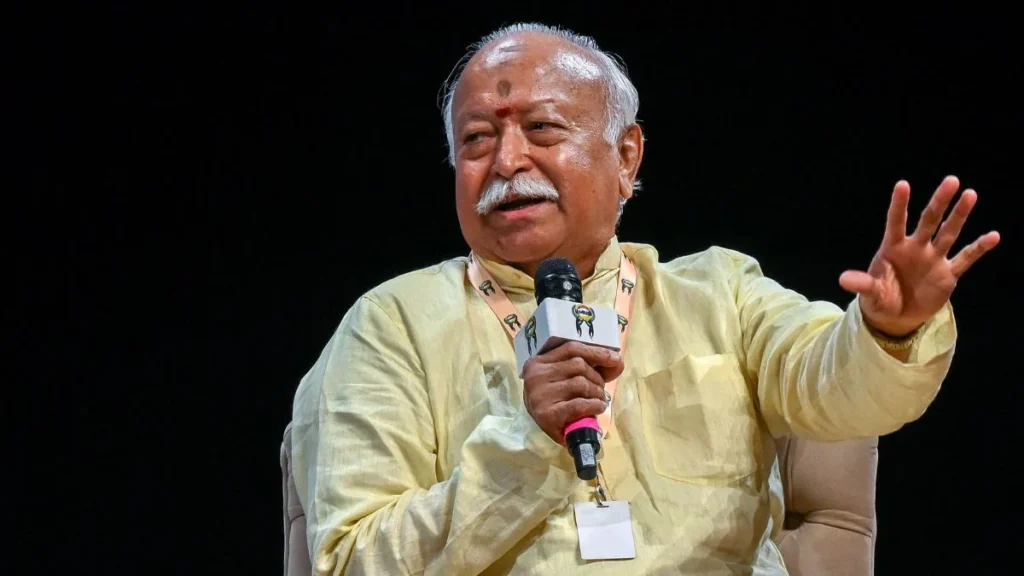
Mumbai, August 6, 2026 — In a candid interaction with young students on Thursday, RSS chief Mohan Bhagwat firmly rejected the idea that India’s Gen Z becomes anti-national simply by raising its voice. Speaking at the 15th anniversary celebrations of India’s International Movement to Unite Nations (IIMUN) at the Nita Mukesh Ambani Cultural Centre, he told a gathering of around 2,000 Gen Z and Gen Alpha participants that the younger generation belongs to the country and that agitation does not erase that belonging. Want to make it clear that if Gen Z engages in any agitation, they are not anti-national. They are our own people; they are our next generation,” Bhagwat said. He stressed that a sense of belonging and mutual respect must form the foundation of any conversation between generations. Only then, he argued, can real dialogue happen — one in which elders understand the concerns of the young and the young, in turn, understand the perspective of those who came before them. The remarks came against the backdrop of recent student-led protests, particularly over alleged irregularities and paper leaks in examinations such as NEET. Those demonstrations had grown intense in the national capital and elsewhere, with reports of police action including the use of tear gas and, in some accounts, pellet guns. Bhagwat was careful not to pronounce judgment on the specific incidents. He said he did not have complete, verified information about what had transpired between the police and the protesters, and therefore preferred not to draw conclusions. At the same time, he made his personal stance clear: “I will trust Gen Z blindly.” He described the grievances being voiced by young people — especially those related to the education system — as genuine. “There is a lot that needs to be done in Indian education; since it’s not happening, it’s being talked about,” he observed. Protest, in his view, is itself a form of dialogue in a democracy. When concerns are not heard through quieter channels, people may turn to agitation. The purpose of that agitation, however, should be to build consensus and correct systems, not to deepen divisions or target individuals. Bhagwat repeatedly returned to the character of the new generation. He said Gen Z and Gen Alpha are more honest than the existing generation. Appeals to patriotism and a spirit of service, he believed, find a genuine response in them. Unlike earlier generations that often accepted the word of elders without question, today’s young people ask for logical answers and also for affection and respect. “When we were at the age of Gen Z, we would listen to our elders. We never used to question. Now Gen Z wants logical answers,” he noted. He was clear that he would never tell young people they should not protest. Democracy, he said, provides ways of going about it. The methods laid out in the Constitution and the ideas of B.R. Ambedkar remain the framework. If youth are shouting, he suggested, it is usually not for the sake of opposition but for improvement. The task before society is to recognise that relationship of belonging and respond with dialogue rather than labels. The interaction itself was freewheeling. Students raised questions on education, jobs, reservation, social media, and even broader issues of national life. Bhagwat engaged with the questions directly, at one point picking up a contemporary expression from the audience and trying it out to laughter and applause. The tone of the evening was not one of lecture but of conversation — an older leader speaking to the generation that will inherit the country’s future. Bhagwat’s comments carry weight because of the organisation he leads and the moment in which they were delivered. In recent weeks, sections of public discourse had begun to question the motives of student protesters, sometimes casting them in an unfavourable light. By stating so plainly that these young people are “our own” and that protest does not make them anti-national, the RSS chief sought to shift the conversation toward understanding and engagement. He also touched on the practical need for better communication. Dialogue should always be the first step, he said. When something goes wrong that should not have happened, there is usually a deficiency somewhere that needs fixing. Whose responsibility it is may be debated later; the more important point is that the deficiency must be addressed. As the interaction drew to a close, the emphasis remained on relationship rather than confrontation. The younger generation asks questions and seeks logical answers. The older generation, Bhagwat suggested, must answer with both reason and warmth. Only then can the dialogue that democracy requires truly take place. Sources: India Today, The Indian Express, The Times of India, LiveMint, The Statesman, Firstpost, Times Now, NDTV, Deccan Herald, Outlook India, The Hindu, PTI, ANI (reports dated August 6, 2026). @Rohit Manral