Sonia Gandhi’s Surprise Entry At INDIA Bloc Meet Sets Off Seating Scramble
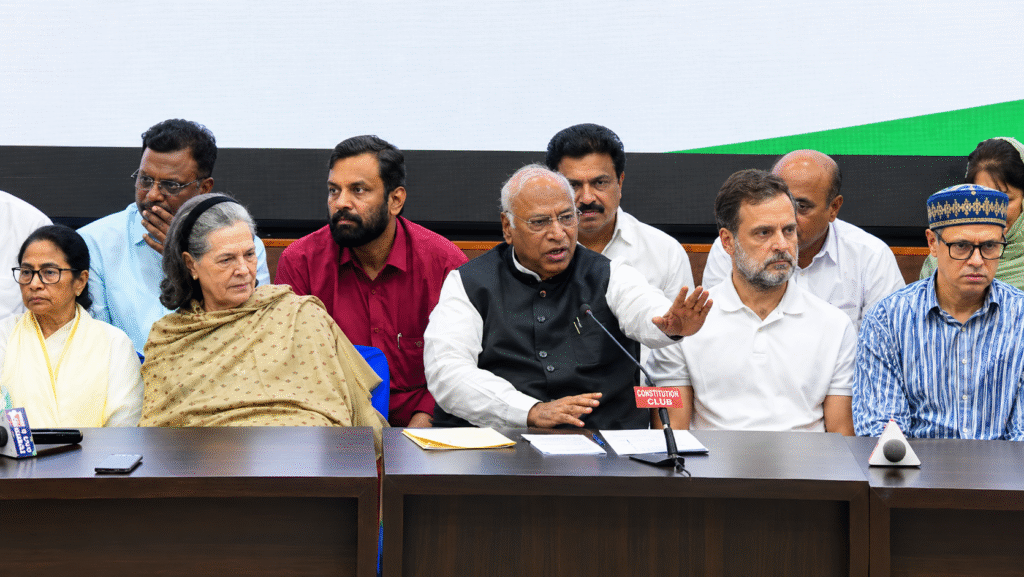
Nameplates set, chairs lined up just so, everyone knowing exactly where they sit so no one feels slighted. Well, that all went sideways on Wednesday at the Constitution Club in Delhi when Sonia Gandhi walked in unannounced right before the INDIA bloc press conference. The whole thing was carefully mapped out beforehand. Congress president Mallikarjun Kharge’s chair sat smack in the middle of that big rectangular table. Rahul Gandhi was meant to be on one side of him, Tejashwi Yadav of the RJD on the other. Mamata Banerjee from Trinamool and CPI(M)’s MA Baby had their spots lined up next. Nameplates were already stuck in place. A few Congress folks and even Trinamool’s Derek O’Brien had checked the arrangement earlier to make sure it looked respectful all around. Everything seemed sorted. Then Sonia showed up. Sources say nobody really expected her. No nameplate waiting, no empty chair marked for the Congress parliamentary party chairperson. Suddenly the room got that awkward shuffle energy. Mamata Banerjee and Supriya Sule from the NCP (Sharadchandra Pawar faction) started looking around, trying to figure out where she should sit. People were gesturing toward Rahul’s empty chair, like “here, take this one.” But Sonia just settled into the one that had been for Tejashwi Yadav. Right around then Kharge walked in, sized up the situation, and asked for a chair to be pulled up right next to him for her. That sorted it. Mamata ended up sitting beside Sonia, then Supriya Sule, and next to her Samajwadi Party MP Harendra Malik. When Rahul finally came in he took the spot on the other side of Kharge. After him it was Omar Abdullah of the National Conference, then MA Baby, CPI(ML) general secretary Dipankar Bhattacharya, and Tejashwi shifted further along with Kapil Sibal. It was a quick scramble, nothing dramatic that held things up for long, but you could feel the little moment of “wait, what?” in the air. These seating plans aren’t just about comfort. In politics they signal hierarchy and mutual respect, especially in a coalition as mixed as the INDIA bloc. One unexpected arrival and the whole visual order shifts. The meeting itself ran about three and a half hours. Leaders from different parties talked strategy, focused a lot on concerns around the Election Commission and the Special Intensive Revision of electoral rolls. They came out swinging at Chief Election Commissioner Gyanesh Kumar, with Mamata Banerjee calling for his removal and talking about restoring democracy and protecting the Constitution. Sonia was right there nodding along, even thumping the desk when Mamata got going with “We will fight; we will win.” After the remarks Sonia gave her a pat on the back and they shared a warm handshake. That bit of camaraderie stood out, especially with cameras rolling. It’s not the first time these two have shown that kind of closeness. They’d met earlier at Sonia’s residence after a previous bloc meeting, talking about strengthening the alliance. Speculation about bigger moves floated around then, though both sides shut that down. Still, seeing them side by side on Wednesday, with the visible support, fed into the narrative that the opposition is trying hard to present a united front heading toward 2029. Rahul was there as Leader of Opposition, Kharge as Congress chief, and the usual mix of regional heavyweights. Not everyone made it—Akhilesh Yadav was busy with a farmers’ event and Rajya Sabha work back in Lucknow, so SP sent Harendra Malik and another MP instead. P. Chidambaram had a nameplate but didn’t show, leaving that spot empty. The surprise seating moment itself became the talking point in reports the next day. It’s the kind of small human detail that sticks because it feels so real. You plan for the big players, check the layout twice, and still someone important walks in and the whole arrangement has to flex on the spot. Organizers adapted fast, chairs moved, people shifted, and the press conference went ahead without any public fuss. But those few minutes of looking around for a seat told their own quiet story about how even carefully staged political events can get thrown by one unexpected arrival. In the end the bloc put out its message of unity and its criticism of the election machinery. Sonia’s presence, unplanned as it was for the seating chart, underlined the Congress weight in the room. Whether it changes anything long-term is another question, but for one afternoon in Delhi it made sure everyone paid attention to the chairs as much as the speeches. Sources: NDTV report on the seating scramble and surprise arrival; Moneycontrol coverage of the reshuffle and press conference dynamics; India Today account of the meeting and Sonia-Mamata interactions; Fact Newsdesk details on the original arrangement and adjustments; additional reporting from ABP Live, Jagran, and Hindustan on the sequence of events and leader positions. @Rohit Manral
Mamata Banerjee Loses Symbol, Party Name, Gains Congress Support, CJP Sympathy
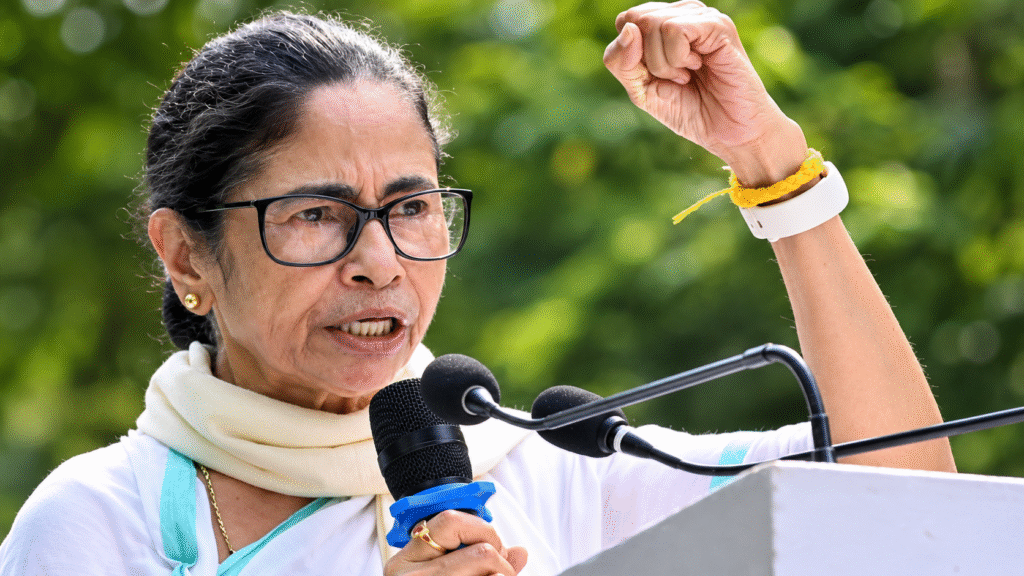
Yesterday felt like one of those days when the ground shifts under your feet in Bengal politics. Mamata Banerjee, the woman who built the Trinamool Congress from scratch nearly three decades ago, woke up to find her party’s name and that familiar grass-and-twin-flowers symbol locked away by the Election Commission. Both her faction and the rebel group led by Ritabrata Banerjee (with Arup Roy in the mix) were barred from using “All India Trinamool Congress” or the old symbol for the upcoming bypolls in Nandigram and Rejinagar on October 6. The Commission then handed out temporary labels. Mamata’s side is now “Mamata All India Trinamool Congress” with a football player as its symbol. The other side got “Democratic Trinamool Congress” and an envelope. Temporary, they say, until the bigger fight over who is the real Trinamool gets settled. But for a party that has lived and breathed that twin-flower logo since Mamata herself sketched it back in 1998, it stings. She called it a black day for democracy—unconstitutional, biased, the interests of another political party being served. She made it clear they only submitted alternative names and symbols because the bypoll process was already rolling. They do not accept this as final. They will fight to get the original back. You could hear the hurt in her voice at that press conference in Kalighat. She accused the rebel faction of betraying the “mother” of the party by letting the symbol be taken. “If anyone really respected the Trinamool Congress, they would not insult its mother like this by snatching away the symbol and make it an orphan,” she said. For her, this is personal. The party was her creation after she walked out of the Congress all those years ago. Losing the name and the mark that voters have associated with her for so long feels like someone is trying to erase that history. But politics rarely hands you pure losses. Almost as soon as the freeze order came, support started arriving from unexpected corners. Rahul Gandhi, Leader of the Opposition in the Lok Sabha, stepped in. The two have never exactly been close—frosty would be putting it mildly over the years—but he framed this as bigger than one party or one leader. He said the battle is not Mamata’s alone. It is the battle for every political party and every voter who wants free and impartial elections. He pointed to a pattern he sees: parties being broken, symbols snatched, the same treatment earlier given to others. Congress leaders across the board echoed the same line. Then came the Cockroach Janta Party, the young, satirical outfit that has been making noise online and on the streets. Their co-convenor Saurav Das called the Election Commission a government stooge and said the time for accountability is coming. The CJP handle backed him up. Mamata has shown warmth toward the group before; now the sympathy was flowing the other way. In a season where opposition parties are looking for common ground, these gestures matter. The bypolls themselves turned messier still. Mamata’s candidate in Nandigram, Sanchita Pradhan Dey, withdrew her nomination. Suddenly her faction had no one on the ballot there. So she announced support for the Congress candidate, calling it a decision for the greater interest of the country and the INDIA alliance. She described Congress as a natural ally—words that carry their own history, given how she once left that party. For Rejinagar she said she would decide later. Nandigram, of course, is no ordinary seat. It is the place that once helped her rise against the Left. Now it is testing her all over again, with Suvendu Adhikari’s shadow still large in the background. This whole episode did not appear out of nowhere. After the Trinamool’s heavy defeat in the 2026 Assembly elections, the party fractured. Most of the MLAs drifted toward the Ritabrata camp. Organisational elections, claims of majority, counter-claims of loyalty to the founder—everything went into the Commission’s files under the Election Symbols Order. The interim freeze is the result. Both sides have been recognised as political parties in West Bengal, Meghalaya and Tripura for now, but the real prize—the original name and the grass-and-flowers mark—remains unresolved. Mamata’s side has already moved the Supreme Court. What does it all mean on the ground? For ordinary workers and voters who have waved the twin-flower flag for years, the sudden change is confusing. Campaign material, wall writings, the emotional attachment to a symbol that stood for “Maa, Maati, Maanush”—all of that has to be rethought overnight. The football player and the envelope will have to do the heavy lifting for these two seats. Whether that carries any weight in Nandigram or Rejinagar is something only the October 6 results will tell. Mamata has been through worse. She has fought the Left, taken on the Centre, rebuilt after setbacks. She is promising to bounce back stronger and keep touring the districts. The rebels insist they are the ones who saved the symbol from disgrace and will ultimately keep it. Congress is offering public solidarity while quietly testing how far the new understanding can go. CJP is adding its own sharp voice from the margins. In the end, this is less about one bypoll and more about what happens when a party that was almost synonymous with one person starts to crack under pressure. The Election Commission has drawn a temporary line. The courts will hear the arguments. The voters will deliver their own verdict. For now, Mamata Banerjee stands without the name and symbol she carried for 28 years, but she is not standing alone. Congress has spoken up. CJP has extended sympathy. And she herself is already talking about the next fight. That is the picture as it stands today in Kolkata. Politics in Bengal has rarely been gentle. This week it simply reminded everyone how quickly the ground can move. Sources:The Hindu, India Today, Mint, Telegraph India, Times of India, NDTV, Economic Times, The Week (reports dated 17–19 September