India Played It Safe with Trump, Skipped the Joint Presser over His Unpredictable Style: Sources
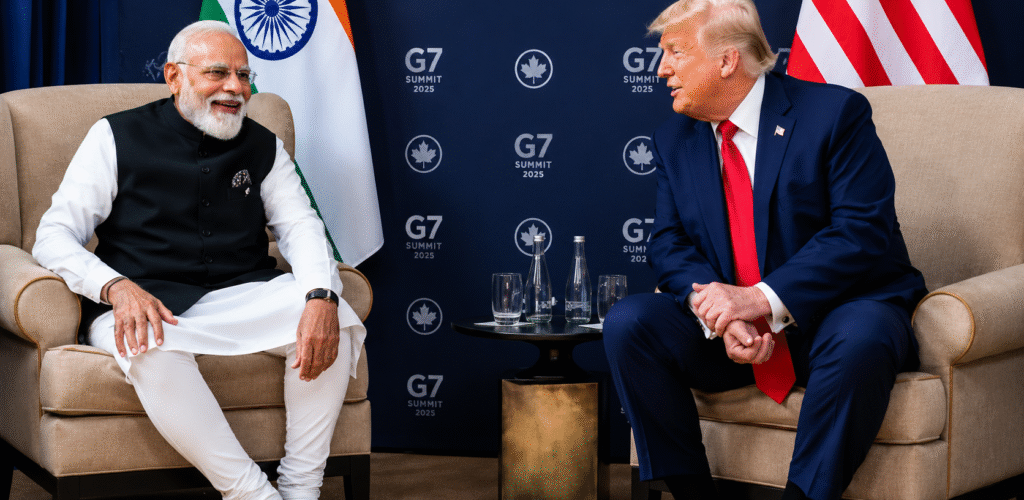
There’s a reason India decided against a full joint press conference after Prime Minister Narendra Modi met US President Donald Trump in France this past June. According to government sources who spoke to PTI on Monday, New Delhi simply didn’t want to take chances with Trump’s well-known unpredictable behaviour in front of the cameras. The two leaders sat down on June 17 in Evian-les-Bains, on the sidelines of the G7 summit. The meeting itself was meant to steady a relationship that had grown strained over the previous year — trade friction, energy differences, the usual list of irritants. But when it came to the media part, India made a quiet request in advance: cameras could come in, the leaders could make their opening remarks, but no open question-and-answer session. US Ambassador Sergio Gor later described what happened next. He said the Indian side had one clear ask. Trump was told the Indians preferred no questions, and he agreed — “sure, no problem.” Then, once the formal statements were done and the room was full of reporters and about fifty cameras, Trump turned and invited questions anyway. What was supposed to stay limited stretched into roughly forty-five minutes, with Modi sitting there while most of the questions went to the American president. Indian sources aren’t pretending this was some dramatic stand-off. They describe it as standard caution. Foreign teams meeting Trump, they say, often stay careful because of how freely he can swing in public settings. They pointed to his past exchanges with the presidents of South Africa and Ukraine as the kind of moments that make people think twice. “Thus, the cautious approach by India,” one source put it. Another official stressed that talking through media arrangements before any big visit is completely normal. India was simply following its usual practice for these situations and shared that preference with the American side ahead of time. No one is claiming the request was extraordinary. It was practical. The clarification only came after Gor spoke about the episode over the weekend. Once his account was out, New Delhi felt the need to explain the thinking behind it. The sources made clear they weren’t trying to snub anyone or hide from the press. They were managing risk in a meeting that already carried weight. Looking back, the June encounter was one of those carefully staged moments aimed at calming things down. Modi reportedly spoke about the importance of keeping shipping lanes open and commerce flowing through places like the Strait of Hormuz, and he acknowledged Trump’s efforts related to the situation in West Asia. The substance of the talks mattered. The format of the media appearance, though, was handled with extra care on the Indian side. Anyone who has watched Trump in joint appearances knows he doesn’t always stick to the script. Questions can go anywhere, answers can land anywhere, and the person sitting next to him has limited control once the microphones are live. For a government that prefers tightly managed public moments with its own leader, that unpredictability was reason enough to keep the arrangement limited from the start. None of this means the relationship is frozen. Both sides have continued talking about trade and other practical issues. But the episode does show how India approaches these high-stakes encounters — with an eye on control and an awareness of the other leader’s style. The sources weren’t dramatic about it. They simply said foreign delegations tend to be wary, and India chose the cautious path. In the end, Trump still held a long media interaction. Modi stayed mostly quiet after his opening remarks. The Indian side later explained why they had preferred it that way. It was never about avoiding the cameras entirely. It was about not handing over an open microphone in a setting where the other person is known for saying whatever comes to mind. That’s the version government sources are putting out now — calm, practical, and rooted in past experience with how these things can unfold. Whether the caution was fully needed is for others to debate. What is clear is that India preferred not to leave it to chance. Sources: PTI reports carried by Times of India, India Today, Hindustan Times, The Wire, Rediff, The Statesman and Deccan Chronicle, 24 August 2026.Public remarks by US Ambassador Sergio Gor at the Economic Times World Leaders Forum, as reported across Indian media, 22–24 August 2026. @Rohit Manral