Amit Shah Says He’s Ready for Any Question, Rahul Gandhi Says They’re Not Here for His Lecture
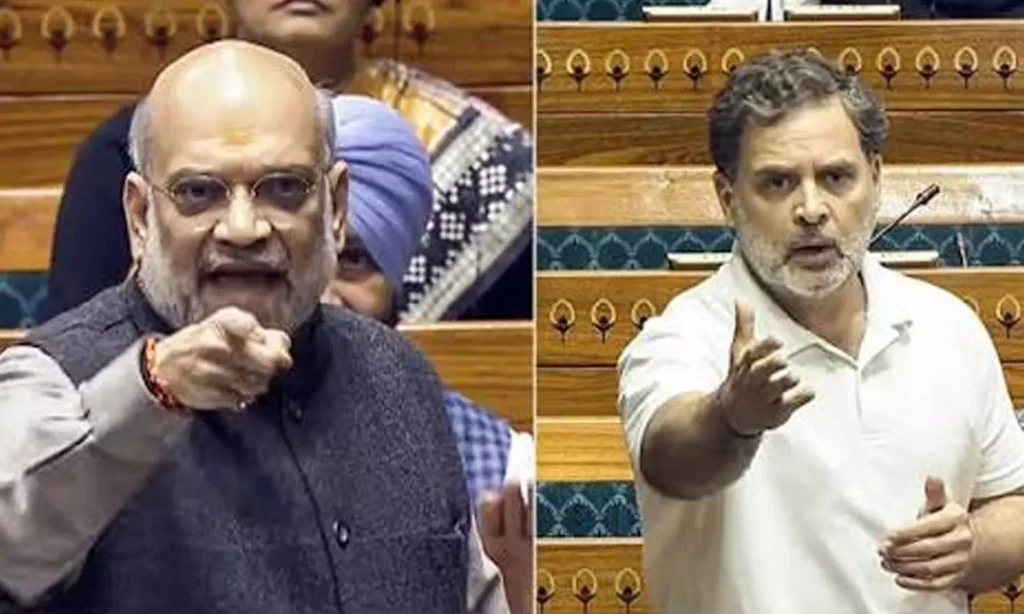
Home Minister Amit Shah came out and basically said, look, we’re ready. We can talk about everything that happened with the students. The ones who marched towards Parliament on July 20 over the NEET paper leak mess. He told reporters outside that the government has nothing to hide. Kiren Rijiju had already said the same thing earlier — the government is fine with a full discussion. Shah went a step further. He said if the Opposition just puts it in writing to the Speaker by around 2 or 3 in the afternoon, they’re ready to start talking from 3 pm that day and keep going till 3 pm the next day. He said he’ll sit there himself the whole time, listen to everyone, take notes, and answer every single point. No running away. “Let the public decide who’s running away,” he said. Pretty direct. He even offered to suspend Question Hour if the Speaker allows it, just so the discussion can go on properly. Under Modi’s government, he said, they’re ready to discuss anything. The ball is in the Opposition’s court. Rahul Gandhi didn’t take long to reply. And he didn’t soften it. He said the Opposition is not interested in listening to Amit Shah give them a lecture. When he says “we,” he meant the younger generation of this country. That’s who he’s speaking for, according to him. He listed out the questions he actually wants answers to. Who shot the students? Who ordered them to be beaten with lathis that had nails in them? Who gave the order that allegedly blinded one student and hit another in the ear? Then he asked the straight question: Did Amit Shah give that order to shoot our children? If he did, he should resign because he’s responsible. If he didn’t, he should resign because he’s incompetent. Either way, resign. Rahul also kept pointing out that Shah had been missing from the House for almost 20 days. “The Home Minister of India has no courage. He cannot come to the House,” he said. He called the sudden offer of a long discussion an attempt to fix a balloon that has already burst. They’re trying to put the gas back in at the last minute, according to him. That’s where the two sides stand, and it’s not moving. The whole thing started with the student protests after the NEET-UG paper leak. On July 20 they tried to march to Parliament. Police stopped them, force was used, and then the stories started — injuries, claims of pellet guns, spiked sticks. The Opposition has been demanding that Shah answer for it because Delhi Police comes under the Home Ministry. The government keeps saying Parliament is the place to discuss it, just let the House function first. For days it’s been the same scene inside. Disruptions, slogans, no real work getting done. Outside, both sides are holding their own protests. One side saying Shah must come and answer. The other saying the Opposition is just not letting Parliament work. Shah’s offer of almost a full day of discussion was unusual. He was putting himself on the line, saying he’ll sit there and reply so the country can see the truth. Rahul’s answer was just as clear: we don’t want the speech. We want the specific answers. Who ordered what happened to those students. As of Wednesday evening, nothing had really changed. No smooth path to an actual debate. The Speaker would still have to handle any formal notice, and the mood in the House stayed the same — tense and stuck. Both men claimed to be speaking for the students and the young people. Both said the public will decide. But the gap between “I’m ready to answer every question” and “we’re not interested in your lecture” is still wide open. And that’s where Parliament is right now. Same fight, same positions, and the questions about what happened on July 20 still hanging over everything. Sources: Times of India, The Indian Express, The Statesman, Rediff, Indiablooms and Economic Times reports from 12 August 2026. @Rohit Manral
Dharmendra Pradhan Steps Down as Education Minister After Weeks of Student Protests at Jantar Mantar; Centre Moves to Clear the Site
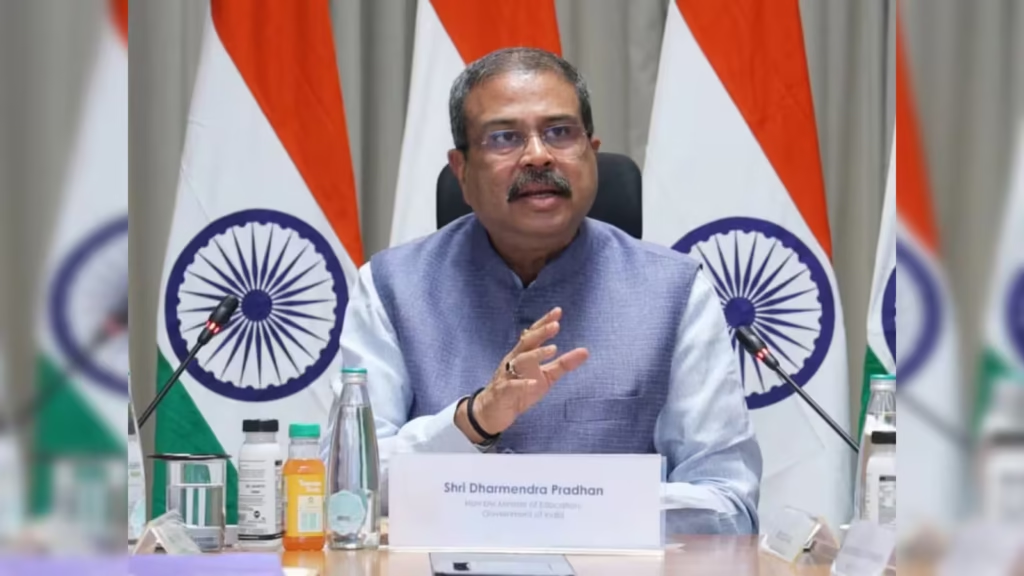
On Saturday in Delhi. After more than a month of students camping out at Jantar Mantar under the banner of the Cockroach Janta Party, or CJP as everyone has started calling them, Union Education Minister Dharmendra Pradhan announced his resignation. And almost right after that, the government began taking steps to clear the protest site that had become the centre of the whole storm. It all started with the NEET-UG paper leaks and the long list of anomalies that followed. The CJP, led by Abhijeet Dipke, turned that furious into a continual sit-in at Jantar Mantar starting around mid-June. What began with a few dozen people grew into thousands. They stayed through the heat, through police action, through rounds of talks with the Centre. Their main demand was simple and stubborn: Pradhan must go. By Friday, after a second meeting at the Constitution Club, the government asked for one more day. The students said they would wait till Saturday afternoon. Then, earlier than anticipate, Pradhan posted on X. He said he was taking moral responsibility. He wrote that he did not want the protests to be used by what he called anti-national forces, and that students should be able to get back to their studies without getting stuck in legal cases or endless perturbation. The President accepted the resignation the same day on the counsel of the Prime Minister. Within hours, Union Minister Pralhad Joshi was given additional charge of the Education Ministry. Dipke told the crowd it was their first big breakthrough, though he made it clear the movement was not over. Later in the day, the CJP said they were calling off the protest “in good faith.” They had secured a few other things too — talk of compensation for families of students who died by suicide, and a promise that FIRs against protesters would be looked at. Activist Sonam Wangchuk, who had been on a hunger strike in support, also ended it. Now the Centre is moving to clear Jantar Mantar. Police presence increased after the resignation announcement. There had already been tear gas earlier in the day when things got tense before the news broke. Officials want the site back to normal as quickly as possible. For the students who spent weeks living there, it feels like a rare moment when the government actually blinked. For the government, it is a way to close a chapter that was becoming politically costly and starting to spread beyond Delhi. Walking around Jantar Mantar in the days leading up to this, you could feel how personal it had become. Kids from Bihar, Uttar Pradesh, Rajasthan, Maharashtra — many of them first-generation students aiming for medical seats — talked about the money their parents had spent on coaching, the pressure, the feeling that one leaked paper could destroy years of work. The “cockroach” name itself started as an insult and was turned into a badge. The government, for its part, had been trying to manage the situation carefully. Talks happened, some concessions were offered, but the resignation demand stayed non-negotiable for the students. Giving Pradhan the exit and handing the portfolio to Joshi looks like an attempt to reset the conversation. Joshi is a senior leader with experience in organisation work. Whether that translates into faster reforms in the testing system is something everyone will be watching. In the end, what happened on 25 July feels like one of those moments when street pressure actually forced a ministerial change in a system that usually moves very slowly. The students are packing up, the tents will come down, and Jantar Mantar will go back to being the usual protest ground for other issues. But the questions they raised about fairness in education will not disappear with them. Sources: The Hindu, BBC News, Al Jazeera, NDTV, Hindustan Times, Indian Express, NPR, reports from July 25, 2026. @Rohit Manral