‘Don’t buy gold, don’t marry abroad’: PM Modi revives swadeshi pitch as India’s economy keeps growing
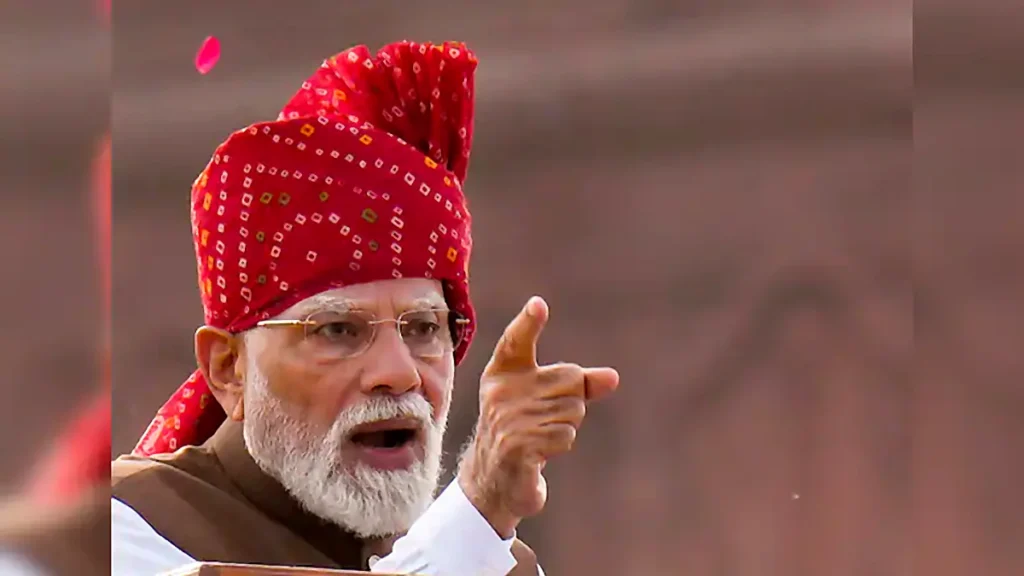
In the middle of a global mess, Prime Minister Narendra Modi has gone back to an old idea that still resonates deeply with many Indians: look after your own house first. Speaking at a public meeting in Hyderabad in May this year, he made a straightforward appeal. Don’t buy gold for a year if you can help it. Don’t hold destination weddings abroad. Cut down on fuel, try working from home where possible, use public transport, and buy more of what is made in India. The message landed with unusual force because of the timing. Tensions in West Asia had pushed crude oil prices sharply higher. India imports most of its oil and almost all of its gold. Both are paid for in dollars. When those bills rise together, pressure builds on the rupee and on the country’s foreign exchange reserves. Modi framed the appeal not as government instruction but as a shared national responsibility. “Gold purchases are another area where foreign exchange is used extensively,” he said. “In the national interest, we must resolve not to purchase gold for a year.” He pointed out that middle-class families were increasingly choosing to celebrate weddings overseas, sending large amounts of money out of the country. Hold the celebrations here instead, he urged. India has plenty of beautiful places. The money stays at home and supports local businesses. This was not an isolated remark. It fitted into a wider set of suggestions he made around the same time: reduce cooking oil use, shift towards natural farming, carpool, prefer metros and public transport, and lean harder on swadeshi products. The language was familiar. It echoed the self-reliance theme he has returned to during earlier crises, including the pandemic years. What made the pitch sharper this time was the backdrop of solid economic numbers. India has continued to post strong growth even as many other large economies have struggled. The latest figures for the April-June quarter of 2026-27 showed real GDP expanding 7.8 per cent, beating the Reserve Bank’s own forecast. Manufacturing and services held up well. Investment activity remained healthy. The country has managed to keep expanding while absorbing external shocks that would have slowed others more sharply. That combination—steady growth at home alongside external pressure—gave Modi room to talk about discipline without sounding defensive. The economy is performing, he implied, but performance alone is not enough if foreign exchange is leaking out through non-essential imports and overseas spending. Ordinary citizens could help by changing a few habits for a while. The cultural side of the gold appeal was never going to be simple. Gold is woven into Indian weddings, festivals and family savings in ways that go far beyond investment. A bride without jewellery still feels incomplete to many families. Destination weddings in Thailand, Dubai or Europe have become status markers for a section of the middle class. Asking people to pause both was asking them to set tradition and aspiration aside, at least temporarily. Yet the response appears to have been more positive than many expected. In his Mann Ki Baat address in late June, Modi thanked people for listening. Families had written to him saying they had decided not to buy new gold for weddings this year and would instead melt and reshape older pieces. Others said they had postponed foreign travel. Small changes, he noted, add up when millions make them. Economists and market watchers saw the logic clearly. Gold imports had climbed to record levels in the previous financial year, running into tens of billions of dollars. Combined with a heavier oil bill, the pressure on the current account and the currency was real. Voluntary restraint could ease that pressure without the need for heavier administrative measures. Higher import duties on gold followed soon after the speech, reinforcing the signal. The swadeshi element runs through all of it. Buying local, celebrating local, spending local—these are not new ideas in Indian political speech. What is different is the attempt to link everyday personal choices directly to macroeconomic stability at a time when the country is still growing at a healthy clip. Growth gives confidence. Restraint is presented as the way to protect that growth from external turbulence. Critics will say appeals of this kind are easier to make than to sustain. Gold demand has deep cultural roots. Destination weddings are unlikely to disappear overnight. Fuel consumption depends on infrastructure as much as individual will. Yet the fact that the Prime Minister chose to make the case publicly, and later acknowledged the response, shows he believes public participation still matters. For now, the message is clear enough. India’s economy has shown resilience. The numbers for the first quarter of the current financial year confirm it. But resilience is not automatic. In a world where supply chains can snap and oil prices can jump, a bit of collective caution on gold, foreign travel and imported goods is being offered as one practical way for citizens to contribute. Whether the habit sticks beyond the immediate crisis will decide how lasting this latest swadeshi push turns out to be. Sources: @Rohit Manral
‘World looking at India as bright spot of growth & hope’: PM Modi at Economic Times World Leaders Forum 2026
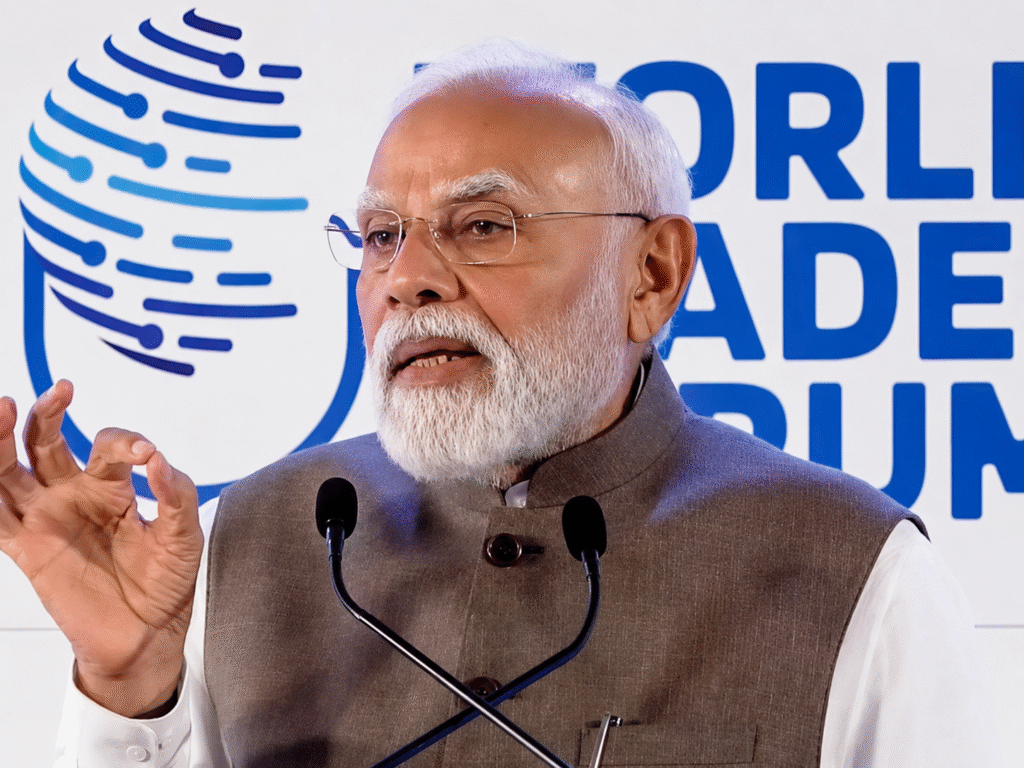
It was one of those evenings in the capital when the air itself seemed to carry a quiet confidence. At the Economic Times World Leaders Forum 2026, held at the Taj Palace, Prime Minister Narendra Modi stood before a hall packed with business leaders, investors and policymakers and said something that felt both simple and significant. The world, he told them, is looking at India as a bright spot of growth and hope. He did not rush into the line. He first spoke about the last few years — the ups and downs, the disruptions, the sense that nothing stays isolated anymore. “Whether one likes it or not,” he said, “the futures of all nations are interconnected. Nothing is possible in isolation.” India’s G20 presidency, he reminded the room, had carried the idea of One Earth, One Family, One Future. That same spirit, he felt, still had answers for the problems of this century. But the present is not easy. Resources are being turned into weapons. Mistrust is spreading. Global growth looks uncertain. And still, Modi said, the world keeps turning its gaze toward India. “Even in such times, the world views India as a bright spot of growth and hope.” He backed the claim with numbers that have become familiar yet still land with weight. In the last 10 to 12 years, about 25 crore people have moved out of poverty. The IMF continues to say India will remain the fastest-growing major economy. On Independence Day, speaking from the Red Fort, he had talked about seven streams of strength — manufacturing, agriculture and food processing, technology, the green economy, the blue economy and more. These, he said, are where the country is putting its energy. Then he turned to the idea of reform itself, and here his tone sharpened. He spoke of the old licence-raj days when companies that produced more than the allowed limit were actually punished. He called it the PLP model — Production Linked Punishment. Today the approach is the opposite. Higher production brings incentives. The government, he said, is not merely changing a few rules. It is changing the entire way regulations are thought about. The old mindset was “prohibited unless permitted.” The new one is “permitted unless prohibited.” If something is not clearly banned by law, there should be no need to keep asking for permission at every step. The relationship between government and people, he insisted, must rest on trust, not suspicion. Policies now are being shaped to be pro-people, pro-growth and pro-development. He pointed to things people actually notice in their daily lives — cheaper data, the quick spread of 5G, changes in the railways, the Delhi Metro, the Namo Rapid Rail. Small reforms on paper, he suggested, but they show a country adjusting itself to the times. Political stability and continuity of policy, he added, give the outside world the confidence that India’s direction will not suddenly reverse. The forum itself was full of people who matter in boardrooms and policy circles. More than 40 global speakers and over 300 Indian CEOs were expected across the two days. Earlier in the day, Times Internet chairman Satyan Gajwani had described Modi as a source of stability in a world that seems to lurch from one crisis to the next. The Prime Minister’s words seemed to answer that description directly. He did not pretend India is untouched by global pressures. He simply argued that the country has chosen a path of continuous reform and that the results are visible. Growth is being protected. The sectors that will matter in the years ahead are receiving focused attention. And the governing idea has shifted from control to enablement. The Economic Times World Leaders Forum continues through Saturday with conversations on technology, geopolitics and the next phase of growth. But Friday evening belonged to that single, clear assertion — that amid everything else, India stands out as a place of growth and hope. Sources: Times of India, Economic Times, ANI, ETV Bharat, New Kerala, The News Mill, Awaz The Voice, Akashvani News, and the official text of the Prime Minister’s address (August 21, 2026). @Rohit Manral