‘Internal Matter’: Supriya Sule on Sunetra Pawar-Led NCP Faction’s Talks with Prashant Kishor
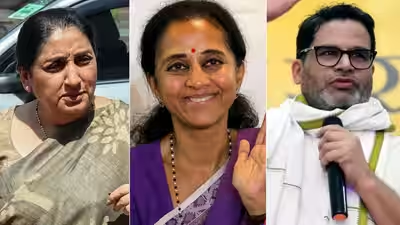
In the always shifting world of Maharashtra politics, where family ties and party lines often blur, a familiar name has once again stirred quiet conversation. Prashant Kishor, the political strategist who has turned politician with his Jan Suraaj Party, recently sat down for a long meeting with Sunetra Pawar, the Nationalist Congress Party chief and Maharashtra’s Deputy Chief Minister, along with her son, MP Parth Pawar. The meeting, held at Sunetra’s official residence Devgiri in south Mumbai, lasted several hours and focused, according to party sources, on ways to strengthen the organisation and ensure government schemes reach the ground level. The timing was hard to miss. Kishor had just scored a notable win in the Bankipur assembly by-election in Bihar, defeating a BJP candidate in a seat linked to the party’s national president, Nitin Nabin. That result, coming against the weight of the BJP’s machinery, gave the meeting extra weight in political circles. Some saw it as a signal that the ruling NCP faction, still finding its footing after the sudden death of Ajit Pawar earlier this year, might be looking for fresh strategic advice. On Saturday, Supriya Sule, working president of the rival NCP (Sharadchandra Pawar) faction and the sitting MP from Baramati, addressed the matter when reporters asked her about it. Her response was measured and personal at the same time. “Prashant Kishor has been a good personal friend of mine for several years. I have closely followed his work and I have never hidden our friendship,” she told them. She made it clear that Kishor works on his own terms in his professional life and chooses his associations freely. Then came the key line: whether the Sunetra Pawar-led NCP wants to work with him or not is their internal matter. Sule went further, offering praise for Kishor’s Bihar performance. She described the Bankipur result as a “very big battle” fought against a strong political machine. She pointed out that the BJP had underperformed even at the booth where its national president is registered as a voter. “Given this situation, we should appreciate Prashant Kishor. He is hardworking and has worked with several political parties over the years,” she said. Drawing a comparison close to home, she added that if her own side had held power from the local level all the way up and still seen a poor result at their booth in Katewadi in Baramati, she would have felt something was seriously wrong. The remarks landed softly. There was no sharp criticism, no attempt to turn the meeting into a larger controversy between the two NCP factions that split in 2023. Instead, Sule kept the focus on friendship and professional independence while firmly placing the decision inside the other camp’s house. In Maharashtra’s charged political atmosphere, that restraint itself carried meaning. The background makes the conversation more interesting. After Ajit Pawar’s death in a plane crash in January, Sunetra Pawar stepped into a more prominent leadership role. She had long been involved in social work in Baramati and only entered active electoral politics more recently. The NCP she heads remains part of the ruling Mahayuti alliance with the BJP and Eknath Shinde’s Shiv Sena. Some within the broader political space have watched closely to see how the party consolidates under her. Kishor’s earlier meeting with the family a few months ago had already raised eyebrows. This latest one, coming right after his Bihar success, added fresh speculation about a possible advisory role, though NCP spokespersons have described the discussions as internal and focused on organisational strengthening. Party functionaries from the Sunetra camp have rejected reports that Kishor expressed unhappiness with the functioning of state president Sunil Tatkare or sought changes in leadership. They insist the talks stayed on practical matters of party building and governance delivery. Still, in a state where alliance equations and organisational strength can shift quickly, any high-profile outsider conversation tends to generate talk. Sule’s comments also serve as a reminder of the complicated personal and political ties that run through the Pawar family and the two NCP groups. The Baramati seat itself has been a focal point of contest in the past, with Sule holding it against challenges from the other side of the family. Yet both sides have, at different moments, spoken of the need to keep personal relations separate from political battles. Sule’s decision to speak warmly about Kishor while drawing a clear boundary around the other faction’s choices fits that pattern. For now, the meeting remains what both sides are calling an internal discussion. Kishor continues to build his own political path through Jan Suraaj, while the ruling NCP works to steady itself under Sunetra Pawar’s leadership. Supriya Sule’s response has neither fuelled the fire nor pretended the conversation never happened. In a political culture that often thrives on sharp exchanges, her calm framing of it as an “internal matter” may be the most telling part of the story. Whether this interaction leads to any formal association or simply remains a private exchange is something only the Sunetra Pawar-led NCP will decide. As Sule put it, that choice belongs to them. Sources: Times of India, NDTV, The Hindu, News18, India Today (reports dated August 7–9, 2026). @Rohit Manral
Bankipur Shock: Prashant Kishor Ends BJP’s 30-Year Grip as Opposition Cheers, Datia and Manjalpur Bring Mixed Results
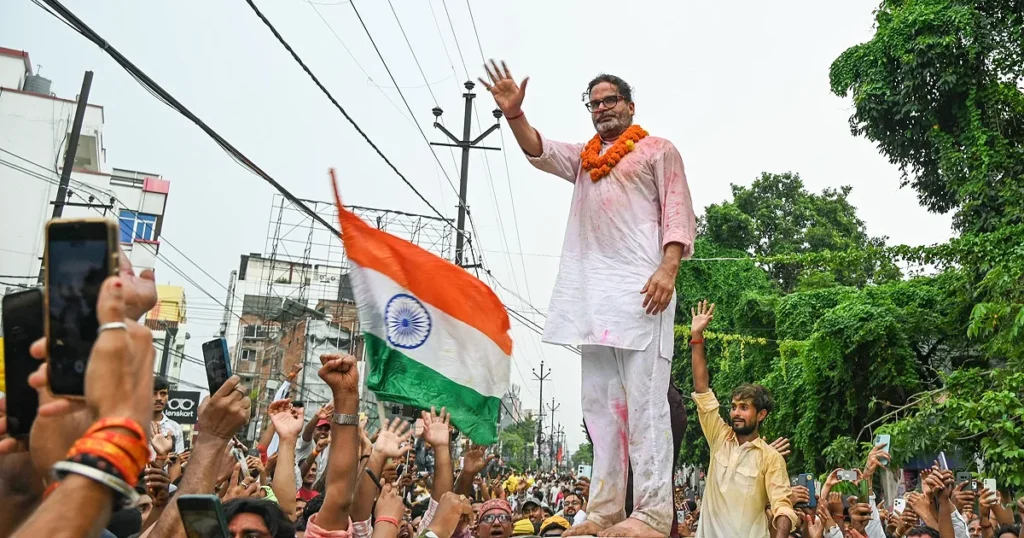
Look, Monday’s bypoll results came in and suddenly everyone was talking. Prashant Kishor, the guy who spent years helping other parties win elections, walked into Bankipur in Bihar and took the seat that the BJP had held since 1995. He beat Neeraj Kumar Sinha by a bit over 19,000 votes. Kishor got around 64,000. That seat belonged to Nitin Nabin, who had become BJP’s national president and then moved to the Rajya Sabha. For three decades nobody had touched Bankipur. Now it’s gone. Kishor was contesting for the first time under his own party, Jan Suraaj. People in Patna’s urban pockets seemed ready for something different. Younger voters, middle-class families, folks tired of the same old promises – they showed up. Kishor himself didn’t act like he’d just solved everything. After the win he said there would be no overnight miracles. He used the moment to take a hard swipe at Bihar Chief Minister Samrat Chaudhary, saying the result showed people hadn’t accepted the current leadership and that Bihar needed better hands at the top, no matter which party. The opposition wasted no time celebrating. They called it a clear message. CPI(ML) Liberation’s Dipankar Bhattacharya congratulated Kishor and said Bihar’s youth had delivered a sharp blow to what he described as an arrogant and incompetent government. Others piled on, saying even the BJP’s strongest urban seats are no longer safe. For a new party still finding its feet, grabbing a BJP fortress in Patna felt bigger than just one seat. It wasn’t a clean sweep against the BJP though. Over in Madhya Pradesh’s Datia, Congress managed to hold on. Ghanshyam Singh beat BJP’s Ashutosh Tiwari by a little more than 6,000 votes. Singh got about 66,757, Tiwari around 60,741. That seat had become vacant after the previous Congress MLA’s conviction. The BJP didn’t field former home minister Narottam Mishra, and that decision had already created some local anger among Mishra’s supporters. Congress was happy to keep what it already had. Gujarat told a different story. In Manjalpur, the BJP stayed comfortable. Satish Patel (some reports call him Satendrabhai Patel) defeated Congress’s Bhikhabhai Rabari by over 30,000 votes. Patel secured 55,481 against Rabari’s 24,851. Turnout was low, around 37.5 percent, but the margin was still solid. The seat had fallen vacant after the death of BJP MLA Yogesh Patel. Even with fewer people voting, the organisation held. These were three different fights in three different states, yet the Bankipur result dominated the conversation. Losing a seat the party had owned for thirty years, and losing it to a political newcomer who used to work behind the scenes, stung. BJP leaders spoke about introspection. They pointed to Manjalpur as proof that their core strength remains, especially in Gujarat. Still, the losses in Bihar and Madhya Pradesh will force some hard questions inside the party. For Kishor the real test starts now. Winning is one thing. Delivering in Bankipur, with all the expectations that come with beating the BJP in its old stronghold, is another. In Bihar’s crowded opposition space, his win also changes the maths a bit. Tejashwi Yadav and the RJD will be watching closely. A new player with a high-profile victory can shift the conversation, even if it’s just one seat for now. Voters in these places sent different signals. In Bankipur they were ready to try someone new. In Datia they stuck with the sitting party. In Manjalpur they stayed with the familiar. Bypolls don’t rewrite the whole political map, but they do act like early warning systems. Monday’s results suggest that in some pockets, especially urban Bihar, patience is running thinner than the BJP expected. Kishor has the seat. The opposition has a talking point. The BJP has some explaining to do in two states and a solid hold in a third. That’s where things stand after a day that felt bigger than three assembly bypolls usually do. Sources: Coverage from Times of India, NDTV, India Today, Hindustan Times, LiveMint, Newsgram, and Election Commission figures reported across these outlets on 3 August 2026. @Rohit Manral