‘Immature and Counterproductive’: Sheikh Hasina Calls Out Bangladesh PM for Skipping BRICS Summit
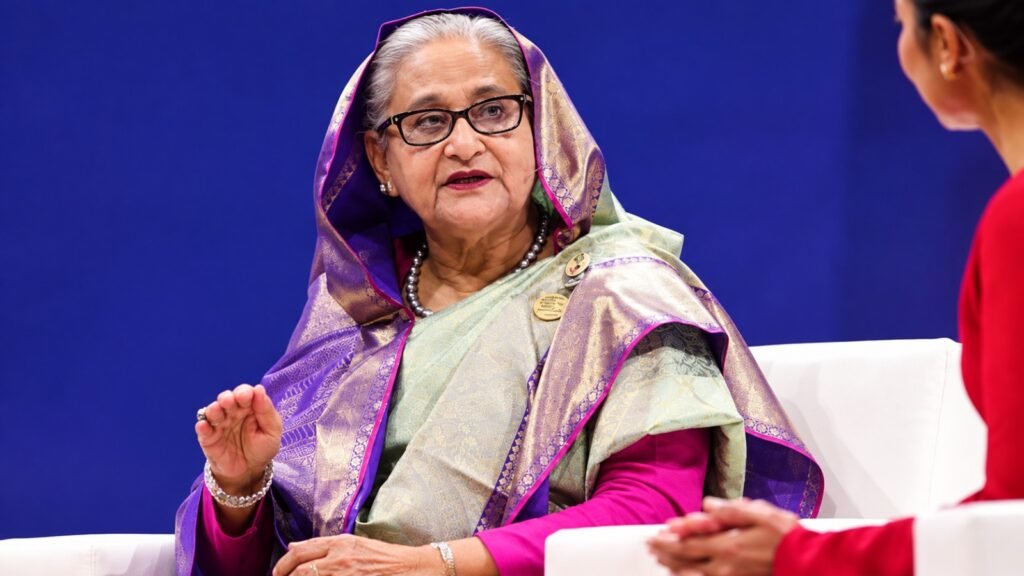
Sheikh Hasina is not happy with Tarique Rahman. In fact, she’s pretty blunt about it. In an interview she gave to PTI, the former Bangladesh prime minister said Rahman’s decision to skip the BRICS Summit in New Delhi last month was immature and ended up hurting the country’s own interests. The summit happened on 12 and 13 September in New Delhi. India had invited Rahman because Bangladesh currently chairs BIMSTEC. He didn’t go. Bangladesh’s side said the invitation was only for the BIMSTEC chair, not for the prime minister as such, and that they preferred to sort out things with India bilaterally first. Hasina doesn’t buy that explanation. “It was deeply unfortunate that Bangladesh chose not to participate,” she said. “In my view, it was an immature decision and one that did not serve Bangladesh’s national interest.” She went on to explain that BRICS isn’t just another talking shop. It’s a group of big emerging economies where countries can talk trade, investment, infrastructure, technology—the kind of things that actually help a country grow. Bangladesh could have picked up useful experience and maybe opened a few new doors. That chance, she said, is gone now. She was clear that foreign policy shouldn’t be run on personal feelings or short-term political scores. “A responsible government should open doors for the country, not close them,” she said. That’s the line that keeps coming up. Hasina also addressed the elephant in the room—her own presence in New Delhi. She’s been living there since her government fell in August 2024. Some people suggest Rahman stayed away because she is in India. She called that idea very unfortunate. “Relations between two countries cannot be determined by personal considerations or political sensitivities involving one individual,” she said. Then she brought up history to make her point. After her father, Sheikh Mujibur Rahman, was killed in 1975, Ziaur Rahman (Tarique’s father) took power. Yet when Ziaur came to Delhi in 1979, Hasina was already living there. When he went to London in 1980, she was in London too. “My presence in either city did not prevent him from travelling there,” she said. “So why should my presence in Delhi prevent Ziaur Rahman’s son, Tarique Rahman, from coming to India today? What is the real reason behind such a decision?” She used the moment to talk about how she handled foreign policy when she was in power. Bangladesh kept good relations with India and still worked with China, Russia, Japan, the US, Europe and others. “Friendship with one country never required hostility towards another,” she said. The country needs a mature, balanced, confident foreign policy, she added—one that opens doors instead of slamming them shut. Hasina didn’t stop at the summit. She painted a pretty dark picture of what’s happening inside Bangladesh right now. She called it a grave national crisis. Democratic space has been closed, she said. The judiciary is being used for political revenge. Media freedom is restricted. Law and order have weakened. Minorities feel unsafe. Extremists have more room than before. The economy is suffering. One of the biggest political parties has been banned, its leaders are in jail or hiding, and millions of supporters can’t take part in normal politics. “This is no longer only an Awami League issue. It is a national crisis,” she said. You can’t stabilise a country by shutting out such a large part of the population. She also spoke about returning to Bangladesh. She knows the risks—there’s a death sentence hanging over her from a Bangladeshi court—but she said personal safety isn’t the biggest worry. She’s faced death before, starting with the 1975 killings of her family, later assassination attempts, and time in prison. What bothers her more is what she sees as the collapse of justice. A death sentence given without a real chance to defend yourself isn’t justice, she said. Her return, she claimed, is about restoring democracy, voting rights and the rule of law. She wants ordinary people to be able to decide their future through a free and fair election. All of this comes while India-Bangladesh relations are already tense. Dhaka keeps asking for Hasina’s extradition. India has said Rahman was invited both for a bilateral visit and for the BRICS outreach as BIMSTEC chair. Still, no senior Bangladeshi leader showed up for the summit, and the home minister also skipped a BIMSTEC meeting in Delhi more recently. Hasina’s interview is her latest public shot from exile. Whether it changes anything in Dhaka is another question. What she’s saying, in plain words, is that skipping BRICS cost Bangladesh more than it gained, and that letting personal or short-term politics decide foreign policy is a bad idea for the country. Sources:PTI interview with Sheikh Hasina, reported on 14 October 2026 by The Tribune, Moneycontrol, India Today, India TV, CNBC-TV18 and other outlets.@Rohit Manral