Supreme Court Clears Air on Form 6 Changes, Issues Notice Amid Protests Against CEC Gyanesh Kumar
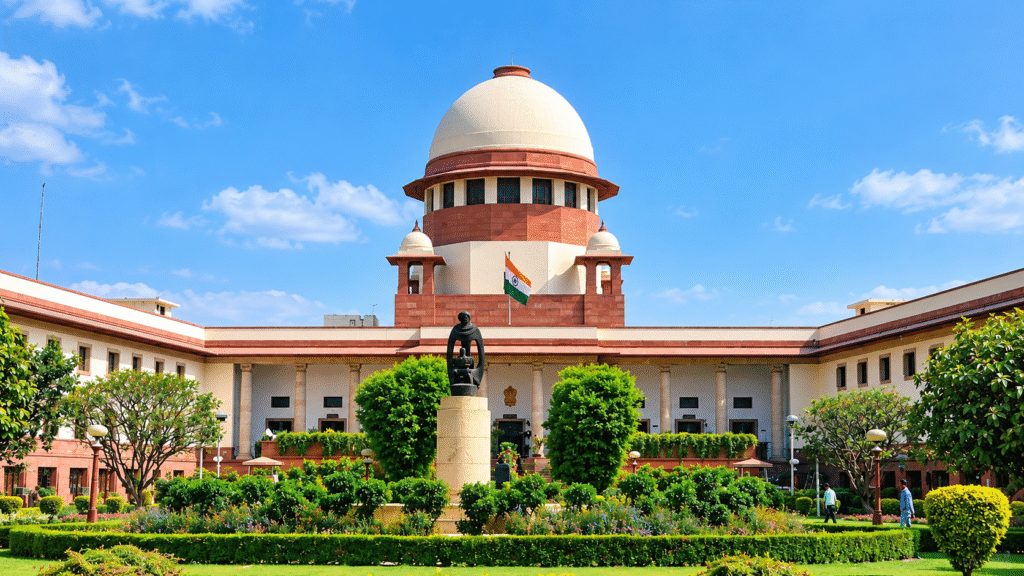
The protests against Chief Election Commissioner Gyanesh Kumar have been heating up across the country for weeks now, with opposition parties taking to the streets demanding his resignation over the Special Intensive Revision of electoral rolls. On Monday, the Supreme Court stepped into the middle of it all and made one thing very clear: the changes to Form 6, the form people fill to get their names added as new voters, were not something the court had ever approved. A three-judge bench headed by Chief Justice of India Surya Kant, along with Justices Joymalya Bagchi and V. Mohana, was hearing petitions that accuse Kumar of taking decisions on his own without proper involvement of the other two Election Commissioners, Sukhbir Singh Sandhu and Vivek Joshi. One of the main points raised was about how Form 6 had been altered online on the ECINET portal. During the hearing, senior advocate Menaka Guruswamy pointed out that the form had been changed in a way that added extra questions about whether the applicant or their parents or grandparents had been on the rolls during earlier SIR exercises. She argued this was done without following the proper legal process. The Chief Justice responded straight away: “Let’s be very clear. Any modified Form 6 has not been approved by us… Let us also be clear that when the record will be produced, we will like to see who has modified what.” That statement cut through a lot of the confusion. Just days earlier, the Election Commission had put out a statement saying the declaration attached to Form 6 for the SIR period had been upheld by the Supreme Court. The court has now said that is not the case. Form 6 is a statutory form under the Registration of Electors Rules, 1960. Any real change to it is supposed to go through proper channels involving the government and parliamentary oversight, not just get added online. The court issued notices to the Election Commission of India, the Centre, CEC Gyanesh Kumar himself, the other two commissioners, a Deputy Election Commissioner and the DG of IT. It wants the full records produced so it can examine what exactly was decided, by whom, and whether those decisions followed the law. The bench made it clear that if any decision turns out to have been taken without unanimity or majority, it can be struck down. “We will examine all the decisions. If any decision is not in accordance with the law, we will annul it. You know the power of the court,” the judges said. At the same time, the court refused to pass any interim order suspending Kumar from his post or stopping him from functioning while the case is pending. The Chief Justice noted that the court cannot act only on newspaper reports and needs to look at the actual records first. These petitions stem from an Indian Express investigation published in late September that detailed how Sandhu and Joshi had put their objections on record at least 14 times over ten months. Their concerns covered changes to Form 6, the way names were being added or deleted from voter lists, access to the electoral roll database, and other steps taken during the SIR exercise. One of them had even called the Form 6 alteration “unauthorised and illegal” and asked for it to be withdrawn, yet it stayed live for some time. The protests against Kumar have been going on in multiple cities. Congress workers and other opposition groups have held marches, tried to reach Election Commission offices, and called for his removal, accusing the process of disenfranchising large numbers of voters. In some places police used water cannons or detained protesters. There have also been attempts by groups of former civil servants and activists to submit what they call a people’s chargesheet to the Commission. The Election Commission has maintained that all major SIR decisions had the approval of the full Commission and that differing views are normal in any institution. After the controversy grew, it announced that the additional declaration would be limited to SIR periods and that the original Form 6 under the 1960 Rules would apply otherwise. Sources in the Commission have also said they did not change a single comma in the original Form 6 itself, only added a separate declaration in some cases. Still, the Supreme Court’s clarification on Monday has given fresh momentum to the criticism. Opposition leaders have seized on the court’s words to argue that the changes lacked proper legal backing. The court has asked for responses within a week or so and indicated it will look closely at the records when they come in. For ordinary people trying to get on the voter list for the first time, especially young voters whose families may not have been on older rolls, the extra questions on the online form had become a practical hurdle. Whether that extra layer was necessary for cleaning up the rolls or whether it went beyond what the law allows is exactly what the court now wants to examine with the full papers in front of it. The case is likely to come up again soon once the replies and records are filed. Until then, the protests continue and the questions around how decisions were taken inside the Election Commission remain very much alive. Sources:The Indian Express (reports dated 5 and 6 October 2026 and earlier investigation of 23 September 2026), India Today, Business Standard, The Hindu BusinessLine, The Wire, News18, Economic Times, Hindustan Times, LiveLaw, Verdictum, Deccan Herald. @Rohit Manral
Hundreds Detained as Delhi Protest Against CEC Gyanesh Kumar Enters Third Day; Journalist Who Alleged Cop Harassment Among Those Held
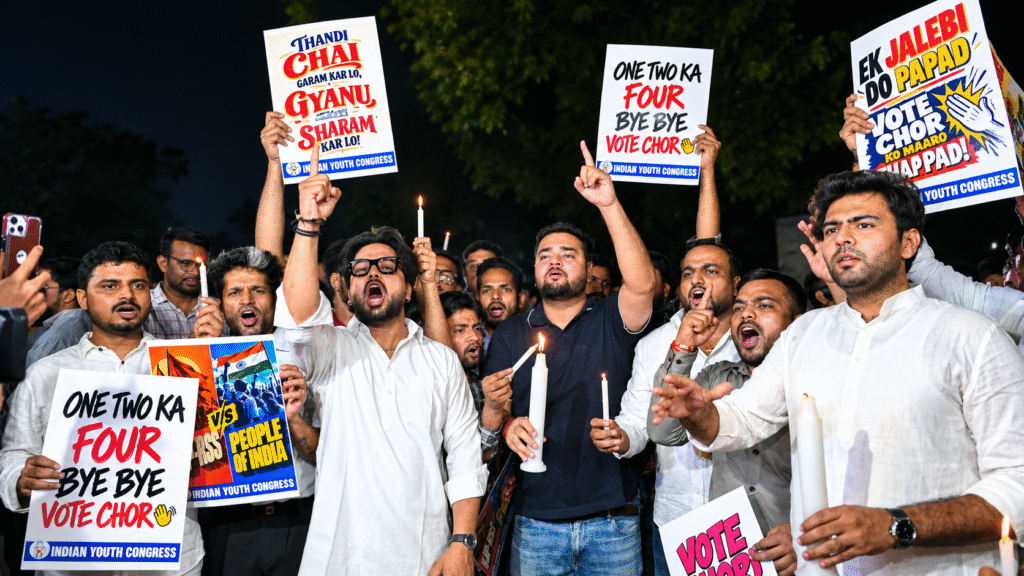
New Delhi, October 4, 2026 – The protest demanding the removal of Chief Election Commissioner Gyanesh Kumar stretched into its third straight day on Sunday, and by evening the streets around Ashoka Road and the Shangri-La intersection looked like a scene of mass detention. Hundreds of students, activists and ordinary citizens were picked up by Delhi Police as they tried to march towards Jantar Mantar. Among those taken away was AISA national president Neha Bora – detained for the third consecutive day – and a woman journalist who only a day earlier had accused a police officer of sexual harassment while covering the same agitation. The march, organised under the banner of the All India Students’ Association and backed by several civil society groups, began from Andhra Bhawan circle in the afternoon. Protesters carried placards calling for Kumar’s resignation and an immediate halt to the Special Intensive Revision of electoral rolls. They alleged that the SIR process had led to large-scale and irregular deletion of voter names. The crowd included students from different universities, members of youth organisations, and a few senior activists who have been part of the stir since Friday. Police had already put up multiple layers of barricades. When the march reached the Shangri-La intersection, officers blocked the road. What followed was a familiar pattern of the past three days: pushing, dragging, and people being forced into buses and private vehicles. Videos circulating later showed male officers handling women protesters, and one clip captured a man being shoved into a bus with his head pressed down. Neha Bora was taken around 5 p.m. AISA claimed she was pulled into a private SUV by male personnel who were not wearing name badges, and that no woman officer was present inside the vehicle. Her colleagues said they did not know her exact location for some time. Police later confirmed she had been detained and taken to Narela Industrial Area police station. She was released in the evening, as were most others. The woman journalist who had alleged sexual harassment on Saturday was also among those detained on Sunday. She had gone to the Parliament Street police station the previous night with her complaint, and on Sunday she joined the march. After being taken away she told people nearby, “Instead of arresting the accused police officer, they have detained me. Is this justice?” Delhi Police has said that three women journalists filed complaints of sexual harassment against officers during Saturday’s protest, and that the complaints have been transferred to the Crime Branch for inquiry. No FIR has been registered so far, according to reports. Estimates of the number detained varied. Some accounts put the figure at around 250, others said nearly 500 people were picked up from different points in central Delhi and shifted in 10 to 15 buses. Police sources later spoke of roughly 110 detentions and claimed 12 to 15 officers were injured during scuffles. Heavy deployment – nearly 5,000 personnel including Rapid Action Force units, drones and CCTV monitoring – was visible throughout the day. Prohibitory orders under Section 163 of the BNSS remain in force in the New Delhi district. The protest itself is part of a wider anger over the ongoing SIR of electoral rolls. Opposition parties and activists have accused the Election Commission of opacity and of allowing deletions that could affect the fairness of future polls. The Commission has maintained that the exercise is meant to clean up duplicate and ineligible entries. Gyanesh Kumar has not issued any public comment on the street protests. On the ground, the mood among those who managed to stay out of police vans was defiant. “We will come again tomorrow,” several young protesters said as they regrouped near the barricades. Similar demonstrations were reported in Mumbai, where the Thackeray brothers led a march on the same issue. By late evening most of those detained had been released. The journalist who alleged harassment was also let go. But the questions she and the other two women raised remain unanswered. The Crime Branch inquiry is yet to begin in earnest, and the demand for Kumar’s removal continues to echo on Delhi’s streets for a third day. Sources:The Hindu, Indian Express, The Wire, Times of India, CNBC-TV18, Telegraph India, Deccan Herald, News18, Hindustan Times (reports dated 3–5 October 2026).
Supreme Court to Hear Next Week Plea Asking for CEC Gyanesh Kumar to Step Aside
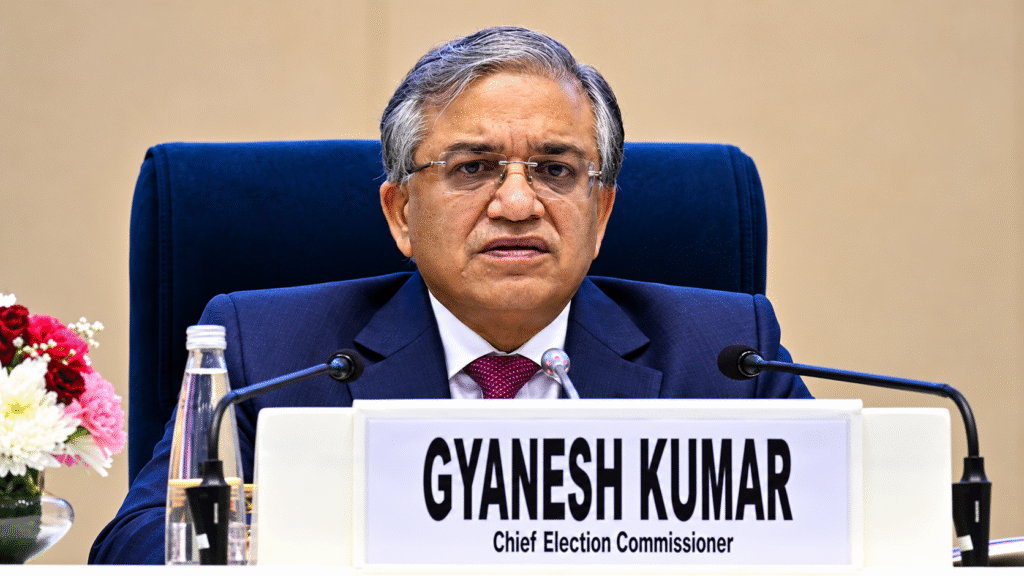
New Delhi: The Supreme Court said on Tuesday that it will take up next week a petition that wants Chief Election Commissioner Gyanesh Kumar stopped from doing his job until the case is fully heard. Senior advocate Vikas Singh stood up before Chief Justice Surya Kant and asked for an early date. He was appearing for the petitioner, Rakesh Kumar Singh. Singh told the court that the Election Commission is supposed to work as a team of three. Decisions should be taken together, either by everyone agreeing or by majority if they don’t. He said the way things have been going, there is real doubt whether that is actually happening. The Chief Justice simply said the matter would be listed next week. The petition asks the court to order that Gyanesh Kumar should not act as Chief Election Commissioner while the case is pending. In the meantime, it wants the other two Election Commissioners — Sukhbir Singh Sandhu and Vivek Joshi — to run the Commission by mutual agreement. If a vacancy comes up, the petition says any new appointment should go through a committee that includes the Chief Justice of India. What triggered all this are reports that roughly 14 decisions were taken in the name of the Election Commission between October last year and August this year, even though Sandhu and Joshi had put their objections on record. The petition talks about written notes and formal communications from the two Commissioners. Those objections cover things like letters and orders that went out without their say-so, meetings that had no proper agenda or minutes, changes made to Form 6 (the form people fill to get on the voter list), control over the big voter databases, shifts in how IT work was assigned, and appeals filed in the Commission’s name before tribunals in West Bengal. The basic argument is simple. The Constitution gives the power to run elections to the Election Commission as a whole, not to one person. The 2023 law that covers the appointment and service of the Commissioners also says decisions should be collective. Where there is disagreement, majority wins. The petition wants the court to ask Kumar to explain under what authority he has been acting as if he alone can exercise those powers. Apart from the temporary stay, the petition asks for the Commission’s original files to be produced. It also wants an independent inquiry — either a judicial commission or a special investigation team headed by a retired Supreme Court judge — to look into how those 14 decisions were taken. This is the second case in the Supreme Court that questions how the Commission has been working under Kumar. An earlier one had asked for criminal action linked to the big Special Intensive Revision of voter lists. That revision has already removed a huge number of names across the country and has been the subject of a lot of political heat. The Election Commission has said that differences among the three members are normal and that the final decisions, including those on the voter-list revision, were taken by everyone together. After the reports came out, the three Commissioners met, issued a joint statement, and even released a photograph of themselves standing together. Still, the petition insists the written objections raise serious questions about whether some of the steps taken in the Commission’s name really had the backing of the full body. It says the whole point of having three Commissioners is to stop one person from running the show alone. When the court hears the matter next week, it will first look at the request to keep Kumar from functioning as CEC for now. It will also have to consider the larger point about how the Commission is supposed to take decisions. The petitioner has asked that all the relevant records be kept safe so nothing disappears while the case goes on. For the moment, the Supreme Court’s decision to list the petition next week means these questions will come up in open court soon. Given how central the Election Commission is to free and fair elections, a lot of people will be watching what happens. Sources: The Tribune, LiveLaw, Deccan Chronicle, The Indian Express, NewsX, WION, Economic Times, Outlook India. @Rohit Manral