Who Is Hamam al-Hammami? The Flydubai Co-Pilot Who Stabbed India’s Smit Machchhar
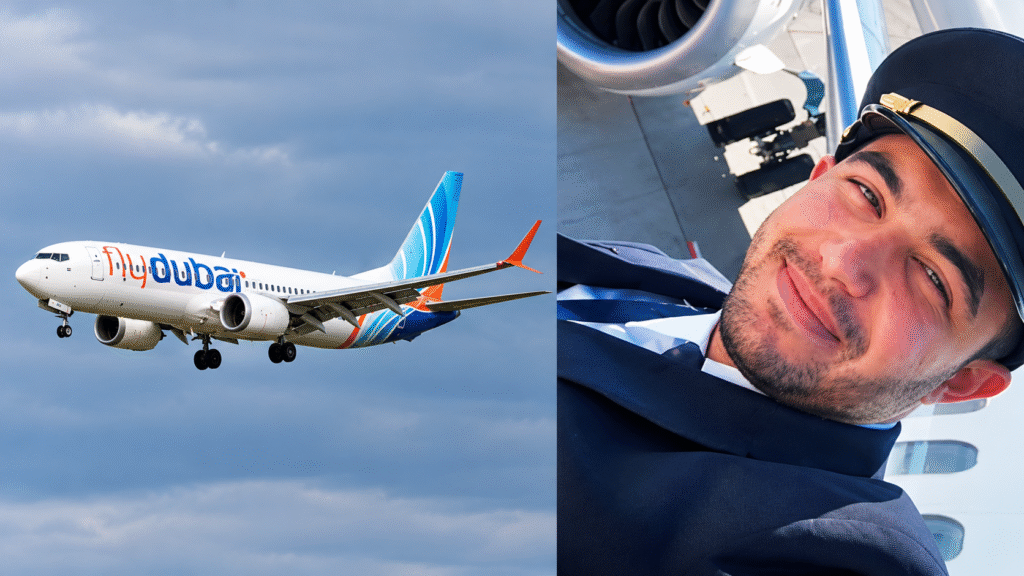
A plane full of people heading from Dubai to Tel Aviv, and suddenly the co-pilot turns on the captain with a crash axe. The guy’s name is Hamam al-Hammami, and people are still piecing together who he really was before all this blew up. Hamam al-Hammami is 29, an Omani national. Reports say he was born in the UAE to an Omani father and a Syrian mother. He spent a good chunk of his life outside Oman, including time in the Emirates and some links back to Syria through his mum. Not the kind of background that jumps out at first, but the more you dig, the more questions pop up. Before Flydubai, he worked at Oman Air. That’s Oman’s national airline. He was training as a co-pilot there, but around 2024 they pulled him off flying duties. Sources familiar with the matter told outlets like ABC and the Wall Street Journal that he was flagged as a security risk. They found extremist materials on him, and there were worries about radical views and visits to certain websites. Instead of kicking him out completely, they shifted him into an administrative role for a while. He left Oman Air sometime in early 2025, according to a LinkedIn profile that has since been taken down. After that, there was a short stint connected to Royal Air Maroc in Morocco — training for a few months, but it didn’t stick as a full hiring. Then he lands at Flydubai. Colleagues there said he’d been with them for about eight months by the time of the flight. He was the first officer on Flight FZ1073 on 30 September 2026, a Boeing 737 heading to Tel Aviv with around 174 passengers, most of them Israeli. Captain was Smit Machchhar, the Indian pilot who’s now being called a hero left, right and centre. According to what Machchhar later told Israeli Prime Minister Benjamin Netanyahu and others, the flight was normal until al-Hammami asked to pray. That’s not unusual. Machchhar looked ahead out of respect. A few minutes later — boom — a heavy blow to the back of the head. Then more blows. Machchhar thought the plane itself was falling apart at first. Then he realised it was the other guy in the cockpit. Al-Hammami had grabbed the emergency crash axe that sits in every cockpit for breaking through panels or windows in a real emergency, and he used it on the captain. Machchhar was stabbed and beaten, blood everywhere, vision going blurry. The plane started dropping hard — something like 16,000 or 17,000 feet in a short time. Emergency codes went out, including the hijack signal. Machchhar, lying on the floor and still under attack, managed to get the cockpit door open somehow. He later said he told himself one last push was needed because people would die otherwise. Passengers and crew rushed in, overpowered al-Hammami, tied him up (zip ties and even headphone cables, from what some passengers described), and kept him restrained. Two reserve pilots who happened to be on board as passengers took over and got the plane down safely in Tabuk, Saudi Arabia. Everyone walked off alive. Machchhar was badly hurt, treated first in Saudi, then airlifted to Abu Dhabi where he’s been recovering in stable condition. He’s spoken to both Netanyahu and Indian PM Narendra Modi, talking about how he was fighting for his own life but refused to let the others die. Al-Hammami was transferred to UAE custody. The Emirati attorney general has called it an attempted terrorist act — the co-pilot attacking the pilot with the crash axe and trying to seize the controls. Sources briefed on the investigation say al-Hammami has been cooperating and indicated his plan was to crash the plane in Israel. Israeli officials have pointed to Islamist radicalisation. There are reports of social media activity linked to accounts in his name showing videos of Israeli planes and images connected to al-Qaeda figures. Australian authorities are looking into his time there — he held a student visa around 2014-2019, studied engineering. He also did a distance-learning aviation management degree from Buckinghamshire New University in the UK, graduating in 2023. The big open questions are how he got hired by Flydubai after being pulled from flying at Oman Air, whether background checks picked up the earlier flags, and if anyone else was involved or if this was a solo act. UAE investigators are still working through motives and any wider links. Oman hasn’t said much publicly. Flydubai hasn’t gone into detail on the hiring process. It’s one of those incidents that makes you think about how thin the line is in a cockpit. Two people up front, the door locked, and everything depends on trust. Machchhar’s quick thinking under pressure, the passengers who piled in without hesitation, the reserve pilots who landed the thing — that part is the bright spot. Al-Hammami’s story, from the earlier warnings at Oman Air to ending up on an Israel-bound flight, is the part that still feels unfinished. Authorities will keep digging. For now, this is what we know about the man who turned a routine flight into a near-disaster. Sources:BBC News, The Times of Israel, Fox News, Newsweek, ABC News reports, Wall Street Journal citations via multiple outlets, CNN reporting, Reuters, Indian Express, India Today, and statements from UAE Attorney General Hamad Saif Al-Shamsi carried by state media. @Rohit Manral
Who is Smit Machchhar? The Indian pilot who kept fighting after getting stabbed and helped save everyone on that flydubai flight
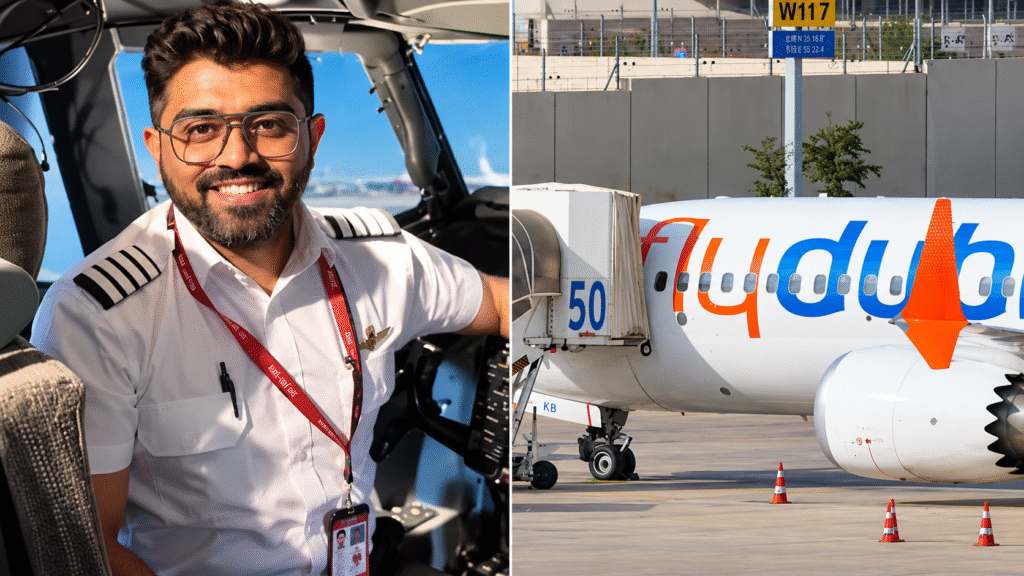
When something like this happens mid-air, you hear a lot of noise. But the name that keeps coming up as the real difference-maker is Captain Smit Machchhar. He’s the Indian pilot who got stabbed by his own co-pilot on a flight from Dubai to Tel Aviv, yet still managed to fight back hard enough that the plane didn’t go down with 174 people on board. Machchhar is from Gujarat originally, grew up around Mumbai way. He’s not some flashy celebrity pilot. Just a solid, experienced guy who’s been flying Boeing 737s for years. He started with SpiceJet back in June 2011 and stuck with them for about 11 years. Climbed the ranks to senior commander, then became a Line Training Captain in late 2020 — meaning he was the one training and checking other pilots, making sure they knew what they were doing. By the time he left, he’d logged more than 9,500 hours, over 6,400 of those as the guy in command. In June 2022 he moved to flydubai as a direct-entry captain. That’s the Emirati low-cost carrier. His LinkedIn and the people who know him say he’s got roughly 9,750 hours total on the 737 family — the regular 800s and the MAX 8 and 9. He’s got a business administration degree from Welingkar Institute of Management too. Nothing fancy on paper, just years of quiet competence. On 30 September the flight was FZ1073, Dubai to Tel Aviv. Routine until it wasn’t. Somewhere over the region the co-pilot — reported as an Omani national — attacked Machchhar in the cockpit. Stabbed him. Israeli officials, including Prime Minister Benjamin Netanyahu, say the attacker then tried to crash the plane. The aircraft dropped hard — flight data shows it losing something like 14,000 feet in under half a minute, maybe more depending on how you count it. Passengers felt the plane go into a dive. Emergency codes went out. Israel scrambled jets for a bit. Here’s where Machchhar comes in. Even with serious wounds — bleeding from the head and hands, according to people who treated him on board — he kept fighting. Passenger accounts that reached Netanyahu say he somehow unlocked or opened the cockpit door before he collapsed. One passenger who spoke to the Israeli PM put it simply: the door was unlocked, and Machchhar was right there, so he must have managed it just before going down. That opening let a crew member and passengers force their way in. They overpowered the attacker. Two other qualified pilots who happened to be travelling as passengers helped stabilise the aircraft and get it down safely. The plane diverted to Tabuk in northwestern Saudi Arabia and landed without further drama. Both pilots went to hospital. Machchhar was in stable condition, according to the Indian Embassy. An Israeli dentist on the flight and others gave him first aid in the air to keep him going until they reached the ground. Netanyahu called him a true hero. Said he fought back despite being stabbed and seriously injured, opened the door, and saved 174 lives — Israelis and others. India’s Prime Minister Narendra Modi also publicly praised him for showing courage under the worst pressure. People who flew with him at SpiceJet just call him a good person, solid pilot. The investigation is still going on — Saudi Arabia, Israel, the UAE looking into exactly what triggered the attack and whether it was a deliberate attempt to bring the plane down. Flydubai itself has been careful not to speculate. Motive isn’t fully clear yet. What is clear is that if Machchhar hadn’t resisted and gotten that door open, the story could have ended very differently. He’s not the only one who acted. The passengers and crew who piled in, the off-duty pilots who took the controls — all of them mattered. But the captain who was already bleeding and still found a way to give them a chance is the one people keep pointing to. In the middle of chaos at 30,000-something feet, with a knife involved and the plane dropping, he did what he could. That’s who Smit Machchhar is. Experienced Indian pilot, former SpiceJet training captain, flydubai commander, and the guy who, even stabbed, helped stop a potential mid-air disaster. Sources:India Today, The Jerusalem Post, Newsweek, NDTV, Ynet News, The Financial Express, News18, Indian Express, Israel National News, and statements from Israeli and Indian officials reported across multiple outlets. @Rohit Manral