‘Open Emergency-Like Situation’ Across the Country, Says CJP; We Will Keep Protesting Till the CEC Goes
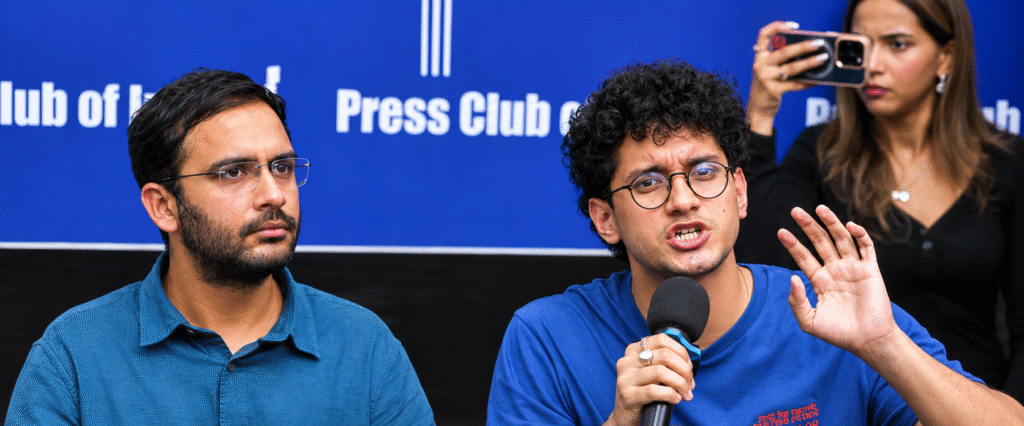
New Delhi: Just a few hours after they walked out of detention, the Cockroach Janta Party leaders stood at the Press Club of India on Sunday and spoke the way people actually speak when they’re angry and tired. Saurav Das looked at the reporters and said the whole country right now feels like an open emergency. The kind we last saw in 1975. “Delhi has been turned into a cantonment,” he said. Thirty to forty thousand security people everywhere. Fifty-seven metro stations shut. Rajdhani trains cancelled. Markets forced closed on a Sunday. Ordinary people made to suffer so that they start blaming the protestors instead of the government. He said the Modi government has put the state against its own citizens. They could have simply called a few of us for talks. Instead they locked the capital down. The CJP wants Chief Election Commissioner Gyanesh Kumar to resign. They say the Special Intensive Revision of voter lists is full of problems and the right to vote itself is under threat. The Election Commission denies everything, of course. Das, Ashutosh Ranka and founder Abhijeet Dipke had been picked up the day before as soon as they landed in Delhi. On Sunday a magistrate let them go after they put up Rs 50,000 surety each and agreed not to “breach the peace” for one year. Das almost laughed when he talked about that condition. “They say we should not breach the peace for one year. The people who breached the peace are Narendra Modi, Amit Shah and Gyanesh Kumar.” Ranka was plain. “This protest will not stop till Kumar resigns.” He said Jantar Mantar is a designated protest site. Peaceful protest there cannot be called a breach of peace. “Protests will happen, not just in Delhi, but across the country,” Das added. Saturday had been heavy. Police say about 2,500 people were detained. Other numbers going around are closer to 7,000. Central Delhi sealed. Mobile networks cut in places. Force brought in from Kashmir, Bengal, Naxal areas. The CJP says phones of detained activists were taken without proper papers and they fear the phones have been compromised. Journalists covering the protests were also hassled, according to them. Opposition leaders are saying the same thing. Congress president Mallikarjun Kharge called it an undeclared emergency. He and Rahul Gandhi plan to meet the Chief Justice of India. Gandhi said the more they try to suppress Gen Z, the angrier the young people will get. Police keep saying everything was done by the book to keep order. The heavy deployment will stay because more protests are expected. The Supreme Court has already said no illegal detention of peaceful protestors and that metro and trains should run normally. The CJP started as a Gen Z response after a court remark about jobless youth and cockroaches. They are not a registered party. They just keep saying the same thing: free and fair elections cannot happen with this CEC. Kumar has to go. The SIR has to be fixed. At the press conference they made it clear. We did not sign any bond that stops us from coming back on the streets. The protest is on. It will not stop until the Chief Election Commissioner resigns. And right now, they say, the country is living through something that looks and feels exactly like an open emergency. Sources: Economic Times, News9live, BBC, New Indian Express, Indian Express, Hindustan Times, Free Press Journal, Deccan Chronicle, PTI. @Rohit Manral
Deep Rot: On the Election Commission of India’s Functioning During Its SIR
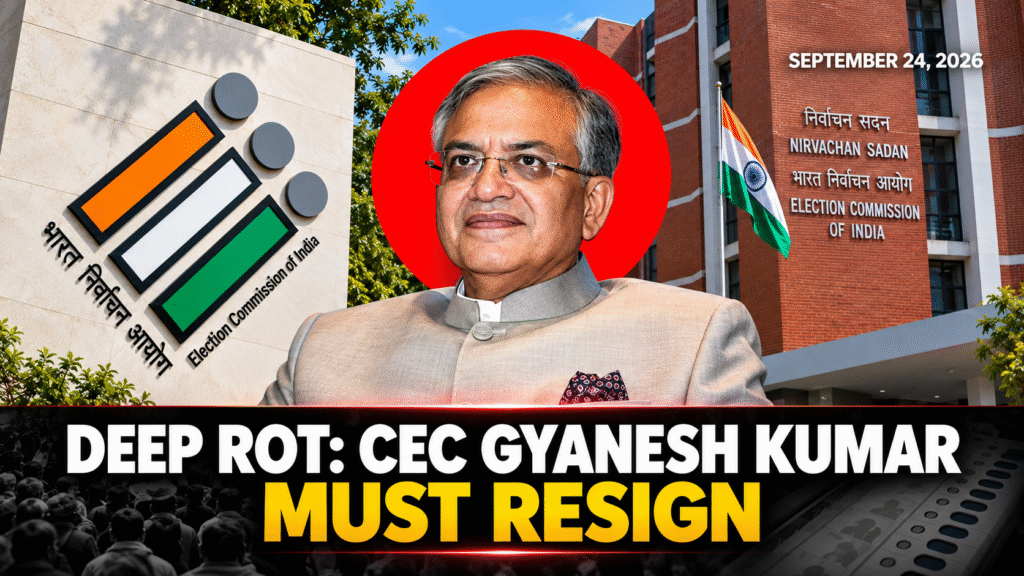
With the SIR thoroughly vitiated, CEC Gyanesh Kumar must resign The Special Intensive Revision of electoral rolls – this big clean-up drive they call SIR – was supposed to be about making the voter lists pure and accurate. No eligible person left out, no ineligible one kept in. That’s the line. But the way it’s been run under Chief Election Commissioner Gyanesh Kumar has left a sour taste that just won’t go away. And now, with reports of deep internal rifts coming out, it’s hard to see how this exercise hasn’t been thoroughly compromised. Back in 2025, they kicked off SIR in Bihar ahead of the assembly polls. House-to-house checks by booth-level officers, forms to fill, draft rolls, claims and objections – the works. Then it spread. Phase after phase across states and union territories. By the time it reached places like West Bengal, Uttar Pradesh, Delhi and beyond, the numbers of deletions started looking huge. Crores of names struck off – some dead, some shifted, some just not matching up. Opposition parties cried foul from day one, saying genuine voters, especially those who might lean their way, were being pushed off the rolls. The Commission kept insisting everything was transparent, multi-party agents were watching, courts had given the go-ahead. Fair enough on paper. But then the cracks inside Nirvachan Sadan itself started showing. Just this week an investigation laid it out. The other two election commissioners – Sukhbir Singh Sandhu and Vivek Joshi – had put their objections on record at least fourteen times over ten months. Decisions and orders going out without them even knowing, they said. Changes to Form 6, the basic application for new voters. Centralised control over the database that field officers use. Questions on how names were being added, deleted, restored. Appeals processes. One report even mentioned four objections on a single day. That’s not normal difference of opinion over tea. That’s a full-blown signal that the three-member body wasn’t functioning as a collegium the way the Constitution expects under Article 324. The Commission’s response? Differing views are part of healthy discussion, final decisions were unanimous. Okay. But when two of the three keep flagging that things are happening behind their backs, the claim of unanimity starts sounding thin. And Gyanesh Kumar sits right at the top of this. He’s the first CEC appointed after the 2023 law that tilted the selection panel towards the government – no Chief Justice in the mix anymore. Came in as Election Commissioner in March 2024, right before the Lok Sabha schedule, then took over as CEC in February 2025. Background is solid IAS, Kerala cadre, important central postings including cooperation ministry. But the manner of functioning during SIR has raised the same old questions about independence that have dogged the institution for years. Think about the scale. Over a crore names removed in some phases, more than five crore in twelve states and UTs alone by one count, and still going in others. In West Bengal the deletions ran into millions; in Delhi notices went out in large numbers. People on the ground – ordinary voters, opposition workers – kept saying the process felt rushed, the verification uneven, the appeals window too tight in places. The Commission points to record turnout in some polls held on revised rolls and says no major court challenges stuck after the Supreme Court upheld the legality. Yet the political temperature never cooled. Rahul Gandhi’s “vote chori” charges, the public back-and-forth, the earlier notices in Parliament seeking the CEC’s removal – all of it kept piling up. Those notices were rejected, but the underlying unease didn’t vanish. What makes this different is that the dissent is no longer just from outside. It’s internal. When the two other commissioners feel the need to formally object to how the SIR is being steered – access to data, form changes, the very process of revision – the exercise loses the moral authority it claims. A clean electoral roll is the foundation. Everyone agrees on that. But if the body preparing it is seen as operating with one person calling most of the shots while the others scramble to catch up, the foundation starts looking shaky. Voters notice. Parties notice. And once trust erodes, it is devilishly hard to rebuild. Gyanesh Kumar has defended the SIR robustly. He’s spoken of unparalleled transparency, of BLOs and BLAs keeping watch, of purest rolls in the world. Fine. But leadership also means ensuring the institution itself doesn’t look fractured. The reported centralisation of database control, the alleged bypassing of colleagues on key orders – these aren’t minor process notes. They go to the heart of collective decision-making that the Commission is supposed to embody. At this point the SIR stands vitiated in the public eye. Too many deletions without enough confidence that every eligible citizen was properly heard. Too many questions about how decisions were taken. The only clean way out is for the man heading it to step aside. CEC Gyanesh Kumar must resign. Not as some political scalp, but because the institution needs to recover its credibility before the next round of polls. Let a full three-member body, functioning without these internal shadows, take charge of whatever remains of the revision and of future ones. Democracy runs on trust more than on perfect lists. Right now that trust is fraying, and the deep rot has to be cut out before it spreads further. Sources: Reports from The Indian Express investigation (September 2026), The Hindu, Economic Times, Tribune, Scroll.in, and Election Commission of India press notes and statements on the Special Intensive Revision process. @Rohit Manral