INDIA Bloc MPs Gear Up for Another Protest Against CEC on October 8
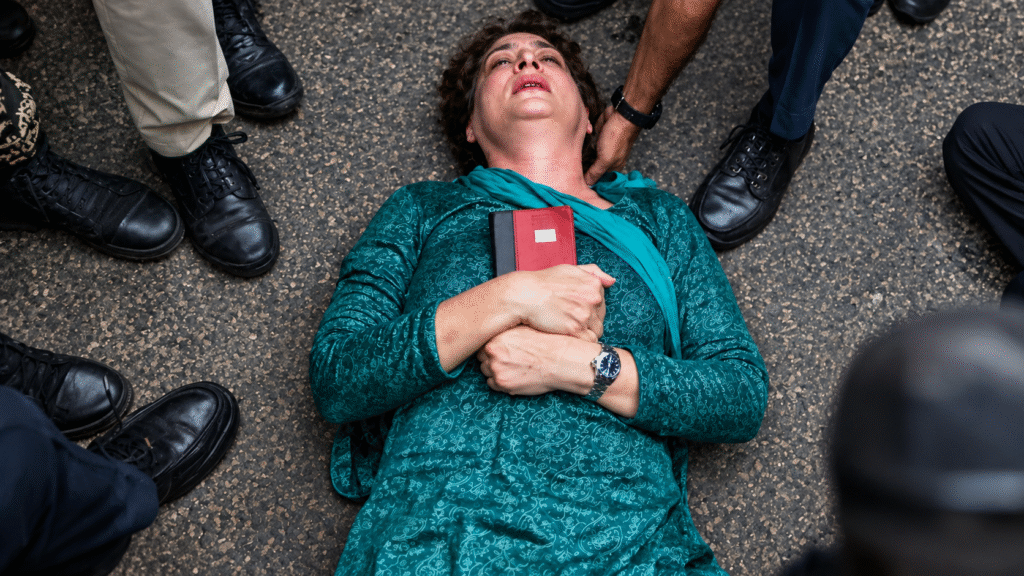
The whole CEC row is heating up again, and the INDIA bloc isn’t letting it cool down for a second. After the big drama on Parliament Street and the sit-in near the Election Commission headquarters on Tuesday, they’re already planning the next round. Congress has called for nationwide protests on October 8, and the larger INDIA bloc is sticking to its “Save Democracy” programme that runs through that date. District-level marches and demonstrations are still on the cards, and MPs are expected to keep the pressure on Chief Election Commissioner Gyanesh Kumar. It all started building after that Indian Express investigation last month. The report said Election Commissioners Sukhbir Singh Sandhu and Vivek Joshi had put their objections on record at least 14 times in ten months. They were unhappy about decisions on adding and deleting voters, changes to Form 6, and the way the voter database was being handled. The opposition jumped on it, calling the Special Intensive Revision (SIR) of electoral rolls a tool for “vote chori.” They want Kumar to resign, the SIR scrapped, deleted voters restored, and, in some cases, a return to paper ballots instead of EVMs. On September 30, leaders from 19 parties sat together for over three hours and finalised a plan. Mallikarjun Kharge announced “Save Democracy” marches in every district from October 2 to 8. MPs from both Houses were to march to the EC office on October 6. They also talked about meeting the President and filing cases in the Supreme Court against the 2023 law that gives the CEC and other commissioners certain protections. Tuesday’s protest was the first big street action. Rahul Gandhi led a few hundred MPs from Parliament towards Nirvachan Sadan. Akhilesh Yadav, Abhishek Banerjee, Supriya Sule, Sanjay Raut, and others walked with him. Police stopped them on Parliament Street. Things got noisy. Slogans like “Vote chor, gaddi chhod” and “Democracy not for sale” filled the air. Some leaders climbed barricades. Rahul even posted “Gyanesh, it’s done bro. Time to resign.” A group of Congress MPs, including Priyanka Gandhi Vadra, managed to enter the Akashvani Bhavan complex next door and sat there for hours. By evening, police detained Rahul, Priyanka, and several others. They were released later. Wednesday saw more of the same. Leaders met for lunch, then tried heading to Jantar Mantar in buses. Police stopped them again and detained a few more people. Rahul made it clear they won’t stop until Kumar resigns. “This is a fight to protect the most sacred thing in this country,” he said. “There is nothing that Narendra Modi and Amit Shah can do that will stop us.” Congress general secretary K.C. Venugopal has now written to state units asking them to organise protests at state, district, and block levels on October 8. They’ve called October 7 a “Black Day for Indian Democracy” after the detentions. The district marches under the original plan are still supposed to continue through the 8th, so expect more local actions across the country tomorrow. BJP has been pushing back hard. Leaders say this is just frustration after electoral losses. They call the opposition’s claims baseless and say the Election Commission is doing its job of cleaning up the rolls. The Commission itself has maintained that decisions were unanimous and that the SIR is a necessary exercise after years without a full revision. They’ve also said no formal meeting request came from the opposition before the October 6 march. What’s interesting is that some parties outside the strict INDIA fold have joined in. BJD MPs walked with the protesters, saying their leader Naveen Patnaik directed them because of concerns over voter deletions in Odisha. AAP has also been seen at some of the actions. The opposition is trying to project a broader front on this one issue even if they don’t always agree on other things. The demands remain the same: Kumar must go, SIR must be rolled back, genuine voters who were struck off should be put back, and some want ballot papers for future elections. They’re also talking about approaching the President and pushing cases in court. Five big rallies are planned for October and November, including one in Delhi on November 1. For ordinary people watching this, the core worry is simple. If the voter list isn’t clean and transparent, faith in the whole process takes a hit. Both sides claim to be defending democracy. One side says the Commission is compromised and lists are being manipulated. The other says the revision is overdue and the opposition is just sore about results. Tomorrow’s protests will tell us how much steam the campaign still has. Local units are being told to hit the streets at every level. In Delhi, the conversation is already about the next steps after the two days of detentions. The INDIA bloc keeps saying this is not about one man but about the institution. The government and the Commission keep saying the process is fair and the protests are political theatre. Whatever happens on October 8, the row is far from over. The MPs who marched on Tuesday and Wednesday have made it clear they intend to keep showing up. The district programmes are still running. And the demand for Kumar’s resignation is not going away quietly. It’s a messy, noisy fight that has put the Election Commission right at the centre of the political battlefield again. Sources:Indian Express, The Hindu, Hindustan Times, The Print, Times of India, NDTV Profit, Outlook India, Frontline, The Diplomat, ANI reports. @Rohit Manral
Rahul and Priyanka Gandhi Detained After Hours-Long Sit-In Against CEC Gyanesh Kumar, Released Later
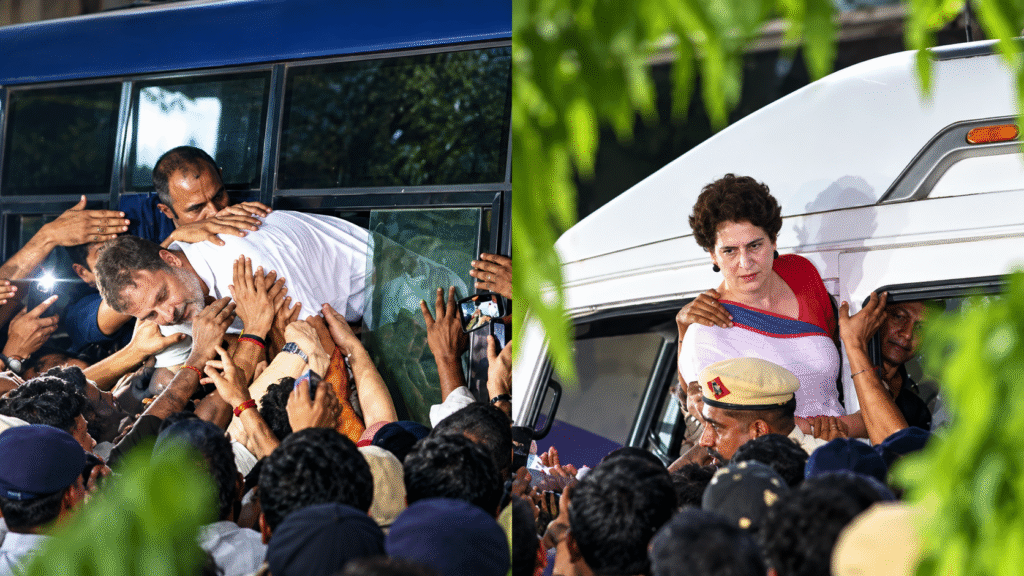
It was one of those days in the capital when the usual parliamentary noise spilled out onto the streets and stayed there for hours. Around 10:30 in the morning, Opposition MPs from the INDIA bloc gathered at Makar Dwar of Parliament House. They carried a simple banner that read “Election Commission is compromised – Sack Gyanesh Kumar.” Their plan was straightforward: walk a few hundred metres to Nirvachan Sadan, the Election Commission headquarters, and demand a meeting with Chief Election Commissioner Gyanesh Kumar. They never made it that far. Delhi Police had already put up layers of barricades near the NITI Aayog office on Parliament Street. The march was stopped. Some leaders sat down on the road. Rahul Gandhi and Trinamool Congress MP Abhishek Banerjee climbed onto the iron barricades and waved the Tricolour. Priyanka Gandhi Vadra was briefly put into a police bus, got down again, and joined her brother. Then, in a move that caught many by surprise, Rahul, Priyanka, K.C. Venugopal and a few other Congress MPs slipped into the compound of Akashvani Bhawan – the All India Radio building that sits just metres away from the Election Commission office. They sat under a tree. White mattresses appeared. Slogans against “vote chori” and the Special Intensive Revision of electoral rolls continued. Rahul kept repeating that all they wanted was to meet the three election commissioners – Gyanesh Kumar, Sukhbir Singh Sandhu and Vivek Joshi – and hand over their demands: resignation of the CEC, scrapping of the SIR exercise, and restoration of deleted voter names. Hours passed. Police kept asking them to leave. Rahul told officers he was comfortable sitting there and would stay as long as needed. “We represent the voice of the nation. If representatives can’t meet the election commissioners, what’s the meaning of democracy?” he said at one point. Later he posted on X: “Gyanesh, it’s done bro. Time to resign.” By late afternoon the sit-in had stretched past eight hours. Around 7:50 in the evening, police moved in. They cleared the premises, forced the leaders into buses, and took them to New Police Lines at Kingsway Camp in north Delhi. Roughly 50 MPs and about 200-250 supporters were detained, according to police sources. Rahul resisted briefly and tried to climb out of a bus window. Priyanka was released first, then reportedly went back toward the area where her brother was being held before she too was let go. Rahul and the others walked free around 10:10-10:15 pm – roughly two hours after detention. Congress called the action heavy-handed. Priyanka said after her release, “The nation has never seen a coward government like this… Staging protest is our right.” Party leaders asked what the government was afraid of. The Opposition has been building pressure for weeks after reports that the two other Election Commissioners had recorded formal objections at least 14 times in ten months over decisions on voter rolls, Form 6 changes, centralisation of data and deletions in states like West Bengal. They allege the SIR process has led to large-scale deletions of genuine voters – figures of over 13 crore have been cited in political speeches – while the government and BJP call the charges baseless and accuse the Opposition of misleading the public. BJP spokespersons dismissed the protest as political theatre. Delhi Police said the MPs had entered Akashvani Bhawan without permission and that action was taken to maintain public order. The Election Commission later said it had received a meeting request late in the evening but the proposed venue did not match protocol. The protest is part of a wider campaign that began after the Indian Express report on internal dissent within the three-member Commission. Opposition parties have already staged nationwide demonstrations, burned effigies in some places, and spoken of moving a formal removal notice in Parliament. AAP and DMK stayed away from Tuesday’s march, while Biju Janata Dal MPs joined. By Wednesday morning the leaders were free, the streets were clear again, and both sides were preparing for the next round. The INDIA bloc has signalled it will continue pressing the same three demands. The government and the Commission maintain that the electoral process remains independent and that the revision exercise is being carried out as per law. What happened on Tuesday was not a quiet petition. It was a public standoff that lasted nearly nine hours, ended with detentions, and left the core questions about the Election Commission’s functioning still hanging in the air. Sources:The Hindu (live updates and reports, 6-7 October 2026)Telegraph India (7 October 2026)India Today (6 October 2026)Indian Express (6 October 2026)News18, Rediff, Statesman, PTI inputs and police statements as reported across outlets. @Rohit Manral
Supreme Court Clears Air on Form 6 Changes, Issues Notice Amid Protests Against CEC Gyanesh Kumar
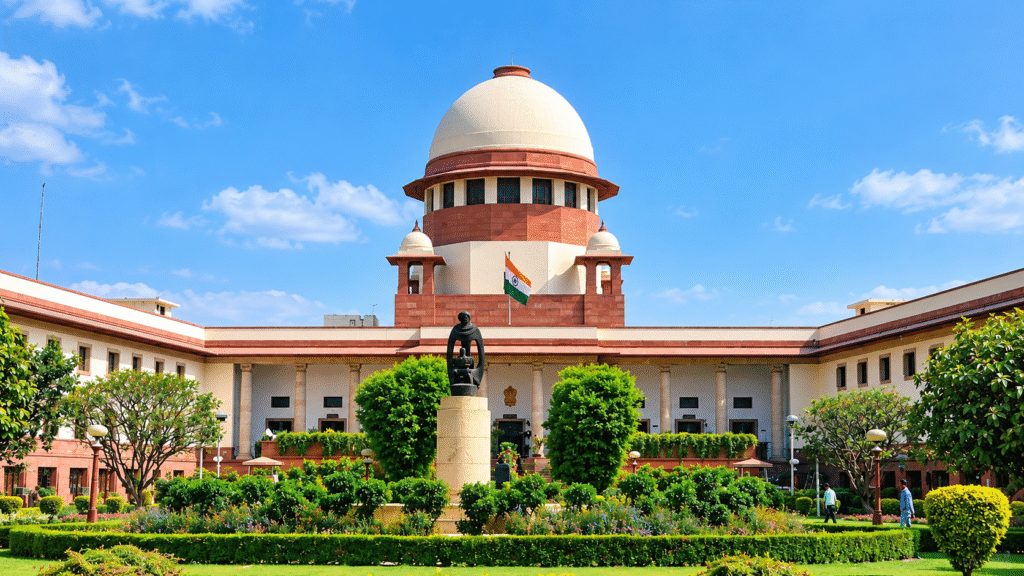
The protests against Chief Election Commissioner Gyanesh Kumar have been heating up across the country for weeks now, with opposition parties taking to the streets demanding his resignation over the Special Intensive Revision of electoral rolls. On Monday, the Supreme Court stepped into the middle of it all and made one thing very clear: the changes to Form 6, the form people fill to get their names added as new voters, were not something the court had ever approved. A three-judge bench headed by Chief Justice of India Surya Kant, along with Justices Joymalya Bagchi and V. Mohana, was hearing petitions that accuse Kumar of taking decisions on his own without proper involvement of the other two Election Commissioners, Sukhbir Singh Sandhu and Vivek Joshi. One of the main points raised was about how Form 6 had been altered online on the ECINET portal. During the hearing, senior advocate Menaka Guruswamy pointed out that the form had been changed in a way that added extra questions about whether the applicant or their parents or grandparents had been on the rolls during earlier SIR exercises. She argued this was done without following the proper legal process. The Chief Justice responded straight away: “Let’s be very clear. Any modified Form 6 has not been approved by us… Let us also be clear that when the record will be produced, we will like to see who has modified what.” That statement cut through a lot of the confusion. Just days earlier, the Election Commission had put out a statement saying the declaration attached to Form 6 for the SIR period had been upheld by the Supreme Court. The court has now said that is not the case. Form 6 is a statutory form under the Registration of Electors Rules, 1960. Any real change to it is supposed to go through proper channels involving the government and parliamentary oversight, not just get added online. The court issued notices to the Election Commission of India, the Centre, CEC Gyanesh Kumar himself, the other two commissioners, a Deputy Election Commissioner and the DG of IT. It wants the full records produced so it can examine what exactly was decided, by whom, and whether those decisions followed the law. The bench made it clear that if any decision turns out to have been taken without unanimity or majority, it can be struck down. “We will examine all the decisions. If any decision is not in accordance with the law, we will annul it. You know the power of the court,” the judges said. At the same time, the court refused to pass any interim order suspending Kumar from his post or stopping him from functioning while the case is pending. The Chief Justice noted that the court cannot act only on newspaper reports and needs to look at the actual records first. These petitions stem from an Indian Express investigation published in late September that detailed how Sandhu and Joshi had put their objections on record at least 14 times over ten months. Their concerns covered changes to Form 6, the way names were being added or deleted from voter lists, access to the electoral roll database, and other steps taken during the SIR exercise. One of them had even called the Form 6 alteration “unauthorised and illegal” and asked for it to be withdrawn, yet it stayed live for some time. The protests against Kumar have been going on in multiple cities. Congress workers and other opposition groups have held marches, tried to reach Election Commission offices, and called for his removal, accusing the process of disenfranchising large numbers of voters. In some places police used water cannons or detained protesters. There have also been attempts by groups of former civil servants and activists to submit what they call a people’s chargesheet to the Commission. The Election Commission has maintained that all major SIR decisions had the approval of the full Commission and that differing views are normal in any institution. After the controversy grew, it announced that the additional declaration would be limited to SIR periods and that the original Form 6 under the 1960 Rules would apply otherwise. Sources in the Commission have also said they did not change a single comma in the original Form 6 itself, only added a separate declaration in some cases. Still, the Supreme Court’s clarification on Monday has given fresh momentum to the criticism. Opposition leaders have seized on the court’s words to argue that the changes lacked proper legal backing. The court has asked for responses within a week or so and indicated it will look closely at the records when they come in. For ordinary people trying to get on the voter list for the first time, especially young voters whose families may not have been on older rolls, the extra questions on the online form had become a practical hurdle. Whether that extra layer was necessary for cleaning up the rolls or whether it went beyond what the law allows is exactly what the court now wants to examine with the full papers in front of it. The case is likely to come up again soon once the replies and records are filed. Until then, the protests continue and the questions around how decisions were taken inside the Election Commission remain very much alive. Sources:The Indian Express (reports dated 5 and 6 October 2026 and earlier investigation of 23 September 2026), India Today, Business Standard, The Hindu BusinessLine, The Wire, News18, Economic Times, Hindustan Times, LiveLaw, Verdictum, Deccan Herald. @Rohit Manral
If Gyanesh Kumar Goes, Modi Will Have to Follow Suit: Dipke
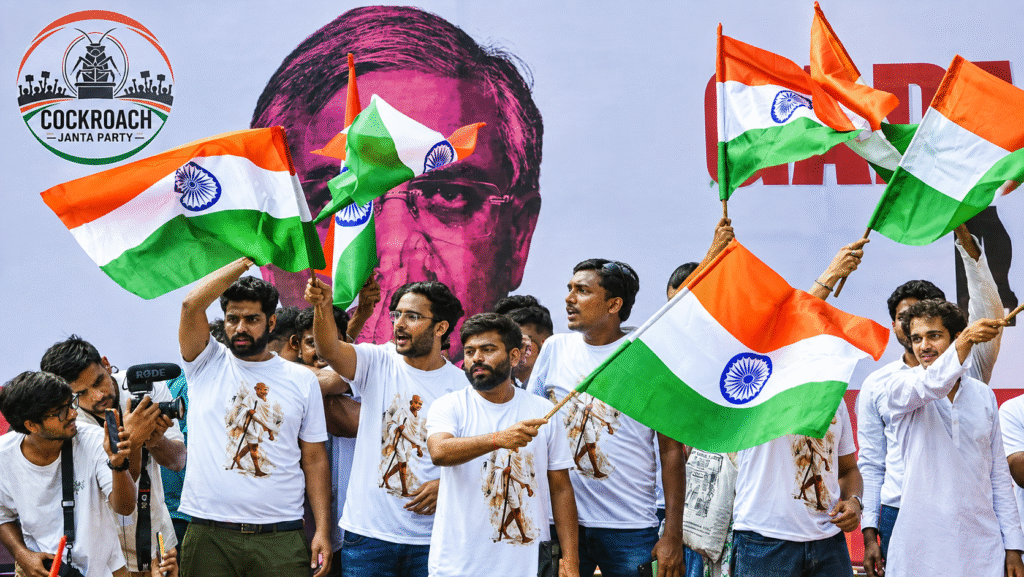
Mumbai, October 3 – Abhijeet Dipke is not mincing words anymore. The Cockroach Janta Party founder stood at Shivaji Park in Dadar and said straight out that if Chief Election Commissioner Gyanesh Kumar does not resign, then Prime Minister Narendra Modi will have to go as well. He called the whole thing “vote chori” on a massive scale. Dipke claimed nearly 13 crore names have been struck off the voter lists in the last couple of years. That number, he said, is no coincidence. It lines up with the difference between the NDA and the opposition in the 2024 Lok Sabha polls. According to him, once Kumar took over as CEC, the government started deciding who gets to vote and who does not. “Is this still democracy?” he asked the crowd. Dipke did not stop at the Election Commission. He pointed the finger directly at the Prime Minister. He said Modi is the one pulling the strings. If the Centre refuses to make Kumar quit, then the protests will demand Modi’s resignation next. “If Gyanesh Kumar does not leave his post, the Prime Minister will have to resign,” he told the gathering. He warned that Jantar Mantar 2.0 is coming, and even if they lock him up for three months, he will come back. The protest itself had a mix of young faces. People held placards, did street plays, sang a bit. Dipke announced the next steps: similar protests in Goa, Karnataka, West Bengal, Uttar Pradesh, Bihar and Jharkhand. If nothing happens by the end of October, they will camp at Jantar Mantar in Delhi. He made it clear CJP will not join the opposition’s planned protest on October 6. They want to stay separate. He put the current mess in a longer story. After 2024 did not go as the BJP hoped, he said they turned to voter-list changes in Maharashtra, Delhi, Tamil Nadu and West Bengal. Leaders like Mamata Banerjee, Stalin and Kejriwal, he claimed, lost because so many voters simply disappeared from the rolls. At the same time, he said the party let opposition governments stay in some places while tightening its grip on the bigger states. He compared it to match-fixing. Dipke also spoke about the constant party-hopping. He said 111 sitting MLAs and MPs switched sides between 2022 and 2026. If legislators can be bought like that, why bother with elections at all? Just auction the seats like IPL players, he said. He brought up the splits in Shiv Sena, NCP and other regional parties, arguing the real aim is one country, one party. There is the internal report hanging over everything. The Indian Express had detailed how Election Commissioners Sukhbir Singh Sandhu and Vivek Joshi put formal objections on record at least 14 times in ten months. Some of those notes said decisions were taken without them even knowing. The Commission’s line has been that different views are normal and every order is legally sound. Kumar is a 1988-batch Kerala cadre IAS officer. He became CEC in February 2025. Earlier he worked in the Home Ministry around the Article 370 decision and the Ram temple trust. He was the first CEC chosen under the 2023 law that changed how the panel is selected. Opposition parties have been after him for months over the Special Intensive Revision. CJP has now raised the stakes by tying his job to the Prime Minister’s. Dipke also made a broader appeal. He said the last twelve years have been spent dividing people on Hindu-Muslim lines. He asked people to put that aside and stand together as Indians first. Support whoever you want, he said, but right now the vote itself is under threat. Whether any of this forces a resignation is another matter. The Election Commission has given no sign that Kumar is leaving. The government has treated the internal notes as ordinary differences. Still, Dipke’s words at Shivaji Park have made the demand sharper. In his telling, Kumar and Modi are now linked. The protests are set to continue, and CJP says it will not back down until the CEC goes. Sources:ETV Bharat report on Dipke’s Mumbai statements, October 3, 2026Deccan Chronicle, Hindustan Times, Outlook India, ThePrint, Moneycontrol and PTI coverage of CJP protests and the SIR row, September 24 to October 2, 2026Indian Express investigation into objections inside the Election Commission @Rohit Manral