Elon Musk’s Blunt Starlink Tweets Shake Up India Talk – Rahul Gandhi’s Sharp Reply and the Back-and-Forth That Followed
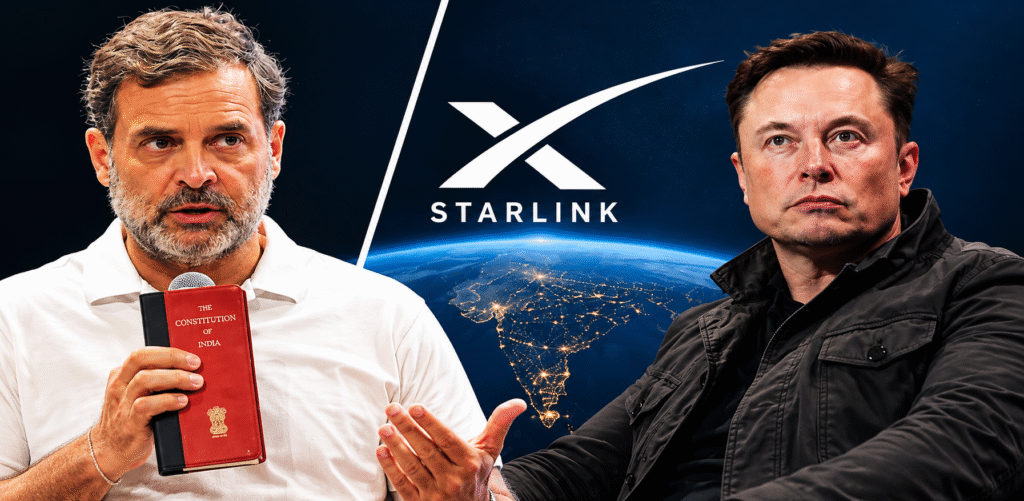
Over the past few days in early October 2026, the SpaceX and Tesla boss has been openly frustrated about Starlink still not getting the full green light to operate commercially here. He’s gone from talking about “oligarchs” blocking progress to directly calling out Mukesh Ambani in pretty pointed language. It’s stirred a big conversation, and Rahul Gandhi jumped in with a reply that got a lot of attention. Here’s the full picture of what’s been said, without the usual spin. It started on 7 October when someone posted stats about rural internet gaps in India – thousands of villages still without proper 4G, lower rural subscription rates, BharatNet progress that hasn’t fully translated to last-mile connectivity. Musk replied that Starlink was being blocked by certain oligarchs to protect a monopolistic chokehold on the Indian people. “You can guess who they are… This is a crime against the people of India!” he wrote. He followed up in other posts saying Starlink would help the least-served areas, fill coverage gaps where mobile and fibre struggle, and even support disaster response when ground networks fail. The next day, 8 October, he got more specific. Quoting a post that talked about protecting crony capitalists, Musk posted: “Starlink is licensed in over 165 countries and has spent five years complying with every single law and requirement of the government of India, so why still no license? Is Ambani the real boss of India?” That line landed hard. Rahul Gandhi, Leader of the Opposition, replied the same day with a short, pointed message: “Welcome to India, Elon. Wait till you discover the other guy.” Musk came back with “Thank you, Rahul. This is indeed troubling.” The exchange quickly became the centre of discussion. Some saw Gandhi’s words as a sarcastic jab at influence in the system (many read “the other guy” as a reference to another powerful business figure often mentioned alongside Ambani in political talk). Congress voices later described it as highlighting monopoly concerns rather than an endorsement of Musk or Starlink. Government side and others pushed back, saying the process is the same for everyone. Musk kept going. On 9 October he posted a longer note addressed “Dear Prime Minister Ambani,” apologising sarcastically for not realising Ambani was “the real boss of India.” He said Ambani would naturally prefer to keep monopolistic control but asked him to consider letting Starlink compete. He pointed out areas without internet access that limit education for kids and market reach for small businesses, adding that Starlink has helped save lives in disasters elsewhere and could do the same in India. He followed with another post stressing the life-saving angle during natural disasters. Background on the regulatory side is important for accuracy. Starlink has been trying to enter India for years (applications going back to around 2021). It received a GMPCS licence from the Department of Telecommunications around June 2025 and IN-SPACe authorisation for its first-generation constellation in July 2025. Reports say it has built gateway sites and worked on India-specific security controls. Distribution partnerships were even signed with Jio and Airtel subject to approvals. But commercial service still needs security assessments (same stage as Jio Satellite and Bharti-backed OneWeb) and spectrum assignment. The Ministry of Communications has said the framework is fair and non-discriminatory, all three licensees are undergoing the same security process, and claims of targeting or unfair treatment are baseless. Spectrum discussions had earlier involved debates over auction versus administrative allocation; the government moved toward a revenue-share model. Reactions have been mixed, as you’d expect. Supporters of faster Starlink entry point to rural connectivity data and the potential for remote education, telemedicine and disaster backup. Critics argue India should prioritise its own rules, digital sovereignty and local players, and that foreign companies must fully clear security and other conditions like everyone else. Some posts defended domestic industry and questioned external pressure. No widely reported reply from a prominent singer named Milan stood out in the main coverage of this specific exchange; the conversation stayed focused on the political and business angles. Musk has talked about India and connectivity before in general terms, and Starlink already operates in many countries. The current flare-up is specifically about the remaining clearances after years of process. As of now (mid-October 2026), the security assessments are ongoing and spectrum steps are pending for the licensed operators. The government maintains the process is level; Musk continues to argue the delays hurt ordinary Indians who need better access. That’s the sequence of the tweets, the direct replies, and the official positions so far. It’s turned into a high-visibility debate about competition, regulation, rural internet and influence in India’s telecom space. People will keep arguing the details – whether it’s procedural caution or something else – but the public posts themselves are clear and on the record. Sources: Direct posts from @elonmusk and @RahulGandhi on X (October 7–9 2026); reporting from Khaleej Times, Livemint, NDTV, TechCrunch, Economic Times, Bloomberg and Ministry of Communications statements on the regulatory status. @Rohit Manral
On Starlink Row, Musk’s “Is Ambani Real Boss Of India” Question
Elon Musk just walked into the middle of India’s power structure, pointed a finger at Mukesh Ambani, and asked the question a lot of people only whisper: Is Ambani the real boss of India? Starlink has been knocking on India’s door for five years. Five years of paperwork, compliance, security assessments, gateway sites already built. Musk says the company is licensed in over 165 countries. Yet in India, the green light still hasn’t come. On Wednesday he started with the vague version: “certain oligarchs” are blocking Starlink to protect their “monopolistic chokehold.” He called it a crime against the people of India. By Thursday he dropped the pretense and named the biggest name in the room. “Is Ambani the real boss of India?” The government hit back fast. The Department of Telecommunications said the process is fair, non-discriminatory, and that Starlink, Jio Satellite, and Bharti-backed OneWeb are all at the same stage — waiting for security clearances before they can even talk spectrum. No special treatment, no favourites. Official line: everything is by the book. But here’s the thing about “by the book” in a country this size. The book is thick, the process is slow, and the people who already dominate the market have very strong reasons to keep new competition waiting. Reliance Jio and Airtel together control the overwhelming majority of India’s mobile and broadband users. They spent fortunes on spectrum auctions. Starlink doesn’t need towers. It drops high-speed internet from space. For villages that still struggle with connectivity, for people paying high prices in cities, that is not a small threat. It is a direct challenge to the existing order. Musk is not subtle. He never is. He frames this as the ordinary Indian versus the oligarchs. Starlink, he says, will help the least-served. Affordable high-speed internet where fibre and towers never reached properly. Whether you buy the pure public-service pitch or not, the commercial reality is obvious: satellite broadband can undercut terrestrial pricing and reach places the big players have treated as secondary markets for years. Rahul Gandhi jumped in with the classic opposition line: “Welcome to India, Elon. Wait till you discover the other guy.” Musk replied that it was indeed troubling. The political layer is now fully activated. One side sees a foreign billionaire complaining about rules that apply to everyone. The other side sees the usual pattern — powerful domestic interests slow-walking anything that threatens their dominance, while the government insists the process is neutral. This is not the first round. Earlier battles over whether satellite spectrum should be auctioned or allocated administratively already showed the fault lines. Local players wanted auctions to create a level (and expensive) playing field. Musk wanted administrative allocation, the global norm for satellite spectrum. The government largely went the allocation route. Still the final operational clearance for Starlink has dragged on. Security is the official reason now. Fair enough. A foreign-controlled satellite constellation over Indian territory raises real questions. But when the same security process is cited while the domestic giants prepare their own satellite offerings, the optics get messy. People notice who moves faster and who waits longer. The pure human truth is this: India has created some of the most successful telecom businesses on the planet. Jio’s impact on data prices was transformative. That success also concentrates enormous power. When someone with Musk’s resources and reach starts asking whether that power now shapes regulatory outcomes, the question lands hard because it touches a deeper anxiety. Who actually decides the pace of competition in India — the formal state, or the largest private players who have become almost infrastructural themselves? Musk is not a neutral observer. He wants market access and he is using the only weapon he has always preferred — public pressure and social media escalation. Ambani and the Indian system are not required to roll over for him. National interest, security reviews, and orderly spectrum policy are legitimate. The problem is the appearance of endless process while the incumbents get ready. For ordinary Indians the practical question is simpler. Will satellite internet actually arrive at prices that matter in the places that need it most, or will it remain stuck in regulatory limbo while the existing players consolidate further? Musk’s blunt question forces that conversation into the open. Whether Ambani is the “real boss” or not, the fact that a global figure can ask it out loud and make the establishment scramble shows how concentrated economic power has become visible. India needs better connectivity. It also needs rules that are seen to apply evenly. Right now both claims are in the air, and Musk just made sure no one can pretend the tension does not exist. The next move belongs to the regulators. Clear the process for everyone at the same speed, or watch the accusation harden into a permanent narrative. That is the real stake in this row. Sources:Bloomberg, TechCrunch, Times of India, Indian Express, Livemint, India Today, Forbes, Scroll.in, Economic Times, National Herald (reports dated 7–9 October 2026 covering Musk’s posts, government response, and related reactions). @Rohit Manral