Supreme Court Clears Air on Form 6 Changes, Issues Notice Amid Protests Against CEC Gyanesh Kumar
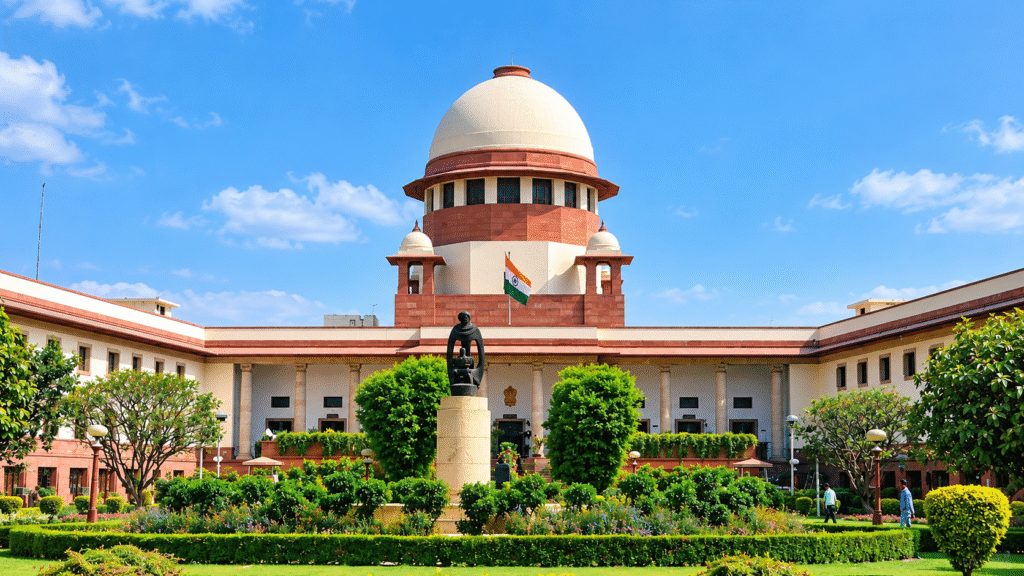
The protests against Chief Election Commissioner Gyanesh Kumar have been heating up across the country for weeks now, with opposition parties taking to the streets demanding his resignation over the Special Intensive Revision of electoral rolls. On Monday, the Supreme Court stepped into the middle of it all and made one thing very clear: the changes to Form 6, the form people fill to get their names added as new voters, were not something the court had ever approved. A three-judge bench headed by Chief Justice of India Surya Kant, along with Justices Joymalya Bagchi and V. Mohana, was hearing petitions that accuse Kumar of taking decisions on his own without proper involvement of the other two Election Commissioners, Sukhbir Singh Sandhu and Vivek Joshi. One of the main points raised was about how Form 6 had been altered online on the ECINET portal. During the hearing, senior advocate Menaka Guruswamy pointed out that the form had been changed in a way that added extra questions about whether the applicant or their parents or grandparents had been on the rolls during earlier SIR exercises. She argued this was done without following the proper legal process. The Chief Justice responded straight away: “Let’s be very clear. Any modified Form 6 has not been approved by us… Let us also be clear that when the record will be produced, we will like to see who has modified what.” That statement cut through a lot of the confusion. Just days earlier, the Election Commission had put out a statement saying the declaration attached to Form 6 for the SIR period had been upheld by the Supreme Court. The court has now said that is not the case. Form 6 is a statutory form under the Registration of Electors Rules, 1960. Any real change to it is supposed to go through proper channels involving the government and parliamentary oversight, not just get added online. The court issued notices to the Election Commission of India, the Centre, CEC Gyanesh Kumar himself, the other two commissioners, a Deputy Election Commissioner and the DG of IT. It wants the full records produced so it can examine what exactly was decided, by whom, and whether those decisions followed the law. The bench made it clear that if any decision turns out to have been taken without unanimity or majority, it can be struck down. “We will examine all the decisions. If any decision is not in accordance with the law, we will annul it. You know the power of the court,” the judges said. At the same time, the court refused to pass any interim order suspending Kumar from his post or stopping him from functioning while the case is pending. The Chief Justice noted that the court cannot act only on newspaper reports and needs to look at the actual records first. These petitions stem from an Indian Express investigation published in late September that detailed how Sandhu and Joshi had put their objections on record at least 14 times over ten months. Their concerns covered changes to Form 6, the way names were being added or deleted from voter lists, access to the electoral roll database, and other steps taken during the SIR exercise. One of them had even called the Form 6 alteration “unauthorised and illegal” and asked for it to be withdrawn, yet it stayed live for some time. The protests against Kumar have been going on in multiple cities. Congress workers and other opposition groups have held marches, tried to reach Election Commission offices, and called for his removal, accusing the process of disenfranchising large numbers of voters. In some places police used water cannons or detained protesters. There have also been attempts by groups of former civil servants and activists to submit what they call a people’s chargesheet to the Commission. The Election Commission has maintained that all major SIR decisions had the approval of the full Commission and that differing views are normal in any institution. After the controversy grew, it announced that the additional declaration would be limited to SIR periods and that the original Form 6 under the 1960 Rules would apply otherwise. Sources in the Commission have also said they did not change a single comma in the original Form 6 itself, only added a separate declaration in some cases. Still, the Supreme Court’s clarification on Monday has given fresh momentum to the criticism. Opposition leaders have seized on the court’s words to argue that the changes lacked proper legal backing. The court has asked for responses within a week or so and indicated it will look closely at the records when they come in. For ordinary people trying to get on the voter list for the first time, especially young voters whose families may not have been on older rolls, the extra questions on the online form had become a practical hurdle. Whether that extra layer was necessary for cleaning up the rolls or whether it went beyond what the law allows is exactly what the court now wants to examine with the full papers in front of it. The case is likely to come up again soon once the replies and records are filed. Until then, the protests continue and the questions around how decisions were taken inside the Election Commission remain very much alive. Sources:The Indian Express (reports dated 5 and 6 October 2026 and earlier investigation of 23 September 2026), India Today, Business Standard, The Hindu BusinessLine, The Wire, News18, Economic Times, Hindustan Times, LiveLaw, Verdictum, Deccan Herald. @Rohit Manral
Plea in Supreme Court Seeks Suspension of CEC Gyanesh Kumar, Says Election Commission Decisions Must Be Collective
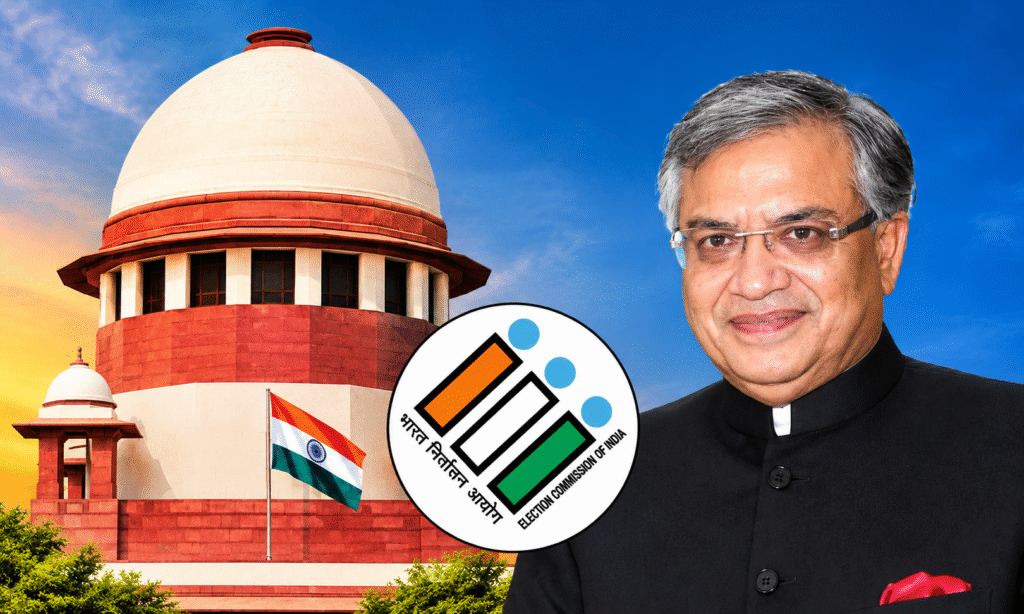
A petition is asking the top court to suspend Chief Election Commissioner Gyanesh Kumar right away and make it clear that the Election Commission of India cannot run on one man’s word alone. The plea, filed by Rakesh Kumar Singh under Article 32 of the Constitution, comes against the backdrop of reports that around 14 decisions were taken in the name of the three-member Election Commission between October 2025 and August 2026 even though the other two Election Commissioners, Sukhbir Singh Sandhu and Vivek Joshi, had put their objections down in writing. According to the petition, those objections kept coming up over months, sometimes more than once on the same day, and yet steps were still carried out as if the full Commission had signed off. What the petitioner is basically saying is this: Article 324 of the Constitution vests the superintendence, direction and control of elections in “a Commission,” not in one individual. Yes, the Chief Election Commissioner is the Chairman under Article 324(3), but that does not turn him into the Commission itself. The plea asks for a writ of quo warranto — basically forcing Kumar to explain under what authority he has been acting as if the collective power belongs to him alone. It also wants him suspended while the court looks into the matter, the original institutional records of the Commission produced, and an independent judicial inquiry commission or special investigation team headed by a retired Supreme Court judge set up to examine how those 14 decisions were taken. This is not the only petition on the subject. A few days earlier, advocate Shailendra Mani Tripathi had already approached the Supreme Court after The Indian Express reported the written objections by Sandhu and Joshi. That petition focuses more on the Special Intensive Revision of electoral rolls. It seeks a declaration that any decisions, guidelines, directives or software changes made without the full Commission’s concurrence, or against the majority view, are unconstitutional and void from the start. It also asks for criminal proceedings under Section 32 of the Representation of the People Act and for an SIT to look into the alleged deletion of a large number of names from the rolls. Both petitions point to the same legal provision: Section 18 of the Chief Election Commissioner and Other Election Commissioners (Appointment, Conditions of Service and Term of Office) Act, 2023. That section says that when there is a difference of opinion among the members, the majority view prevails. The argument is simple — if two out of three are objecting on record, how can decisions still go out in the name of the entire Commission? The issues raised go beyond procedure. The earlier petition talks about changes to statutory Form 6 used for voter registration, the centralisation of powers that used to rest with local Electoral Registration Officers, software modifications that allegedly introduced new requirements without proper rule amendments, and specific problems reported in states like West Bengal. The newer plea by Rakesh Kumar Singh keeps the focus tighter on the institutional question: can the Chairman alone exercise powers that the Constitution gives to the Commission as a body? People who follow these things will remember that the Supreme Court has already dealt with the relative positions of the CEC and the other Commissioners. In the T.N. Seshan case years ago, the court made it clear that once Election Commissioners are appointed, the body becomes multi-member and the CEC does not enjoy a veto. The 2023 Act simply put the majority principle into statute. The current petitions are testing whether that principle was actually followed in practice over the past year. The Election Commission has maintained that its decisions were taken properly. But the existence of written objections by two Commissioners is now a matter of public record through media reports, and the petitioners are asking the court to look at the original files, notings, approvals and server logs to settle the question. For ordinary voters, the stakes are straightforward. The electoral rolls decide who gets to vote. If the process of revising those rolls or changing the software that manages them is happening without the full Commission on board, questions of fairness and institutional integrity naturally arise. That is why the petitions are asking not only for declarations about past decisions but also for a proper inquiry so that the same pattern, if it exists, does not continue. The Supreme Court has not yet listed or issued notice on the latest petition seeking suspension. Courts usually move carefully on matters involving constitutional bodies. Still, the filing itself puts the issue of collective versus unilateral decision-making squarely on the judicial table. At the end of the day, the Election Commission is meant to be an independent multi-member body that inspires confidence across the political spectrum. When two of its three members are recording repeated objections and decisions are still going out under the Commission’s name, it is only natural that someone will ask the highest court to examine whether the constitutional and statutory scheme is being followed. That is exactly what these petitions are doing. Whether the court grants interim suspension, orders production of records, or sets up an independent inquiry remains to be seen. What is clear is that the demand for transparency and collective functioning of the Election Commission has now reached the Supreme Court in formal petitions. Sources:LiveLaw (28 September 2026)The Indian Express (25 September 2026)Business Standard (25 September 2026)India Today (26 September 2026)WION (28 September 2026)The Tribune (28 September 2026) @Rohit Manral