Ritika from India got no chill, gets Israel PM and Fox News to swallow fake Iran pill
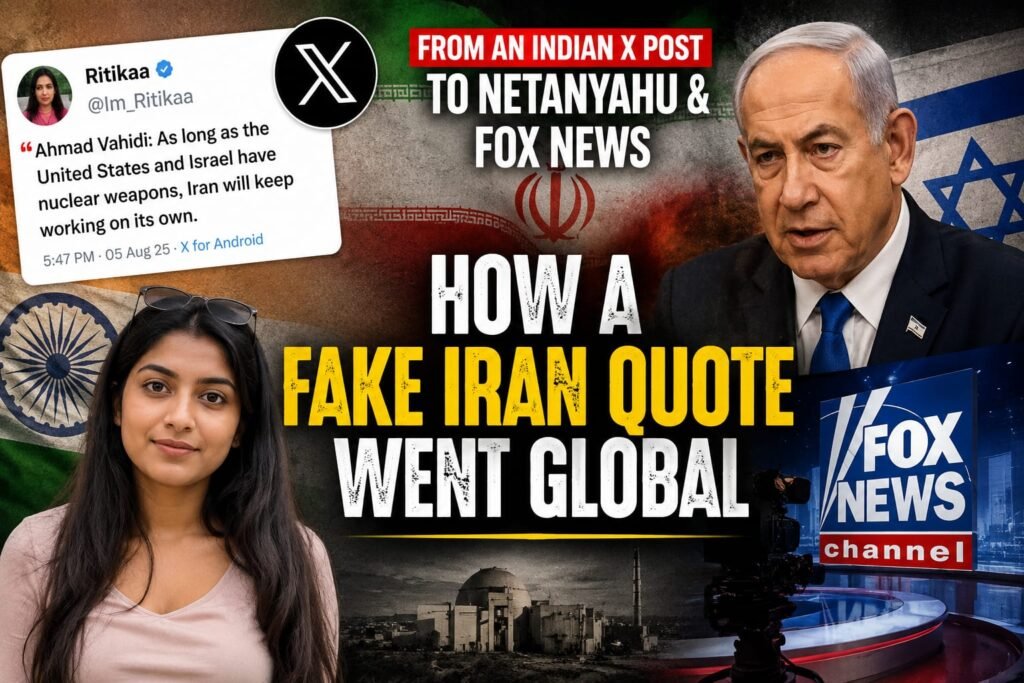
It started with a verified X account called @Im_Ritikaa, display name Ritikaa. She’s based in India, posts a lot of pro-Israel, Hindu nationalist content, and by all accounts keeps a busy feed. On 5 August, she put out a claim that Ahmad Vahidi, the commander of Iran’s Islamic Revolutionary Guard Corps, had said something along the lines of: as long as the United States and Israel have nuclear weapons, Iran will keep working on its own. No video, no audio, no official Iranian statement, no transcript. Just the words, attributed to him. That was enough. Within hours the quote started bouncing around Israeli social media. An account that styles itself “Mossad Commentary” picked it up. Then Channel 14, the right-leaning Israeli channel that tends to stay close to Netanyahu’s line, ran with it as if it were a straight news development — the first time a senior Iranian official had openly admitted the country was building nuclear weapons. Yair Netanyahu, the prime minister’s son, amplified it. And then, at a ceremony on Mount Herzl, Benjamin Netanyahu himself referenced the supposed statement in his speech. He treated it as confirmation of what Israel has been saying for years about Iran’s intentions. From there it crossed the Atlantic. US Ambassador to the UN Mike Waltz shared a version of it, saying Iran was finally admitting what everyone already knew, before later deleting the post. Conservative commentator Mark Levin pushed it further. Fox News reported it, complete with an on-screen headline about Vahidi’s declaration. The claim even made it into the orbit of Republican Senator Rick Scott. For a short window, the fake quote looked like solid international news. The problem, of course, is that Vahidi never said it. Iranian sources and later reporting found no primary record of the remarks. No speech, no interview, no official communiqué. Israeli journalist Ronen Bergman, writing in Yedioth Ahronoth and later discussed widely on Ynet, traced the entire chain back to that single Indian account. What began as an unverified social-media post was given the appearance of legitimacy by Israeli media, repeated by the prime minister, echoed in the United States, and then reported back in India by agencies citing “Israeli media.” A perfect circular citation loop. Fox News eventually clarified that the remarks had been taken out of context and amplified as if they were new. Channel 14 and others adjusted their framing after the fact. But by then the damage, or at least the illustration of how fragile the information environment is, was done. A made-up sentence had travelled from an Indian X handle to the highest levels of Israeli politics and into American cable news in a matter of hours. There’s a certain dark humour in it. An Indian account with a strong pro-Israel tilt manages to feed a narrative that Israeli and American conservative media were already primed to accept. No one seems to have stopped to ask for the original source. In the current climate around Iran’s nuclear programme, the quote was simply too useful to check carefully. It fitted the existing story too well. Bergman and others have pointed out that this is not an isolated incident. Similar patterns have appeared before — claims that travel quickly, gain official repetition, and only later face scrutiny. In this case the original poster was not some sophisticated intelligence operation. It was a prolific Indian user posting in the open. That somehow makes it more striking. The system that is supposed to filter noise from signal failed at multiple stages: social media amplification, partisan media, political speech, and mainstream American coverage. Iran, for its part, denied the statement. Vahidi remains a senior figure, but there is no evidence he delivered the lines attributed to him. The episode has been used by critics of Netanyahu to argue that Israeli messaging on Iran sometimes relies on convenient material rather than hard verification. Supporters of the prime minister might counter that the broader concern about Iran’s nuclear ambitions is real and longstanding, and that one bad quote does not change the underlying assessment. Both things can be true at once. The specific claim was false. The larger strategic worry is not invented. What stands out most is the speed and the lack of friction. One person in India posts. Israeli accounts boost. A television channel reports. The prime minister speaks. American officials and media follow. Indian agencies then report the story back home as if it originated in Israel. The entire circuit closed in less than a day. In an age when anyone with a verified account can inject material into global information flows, this episode is a useful reminder. Verification still matters. Primary sources still matter. And the willingness of powerful people and large media organisations to repeat convenient claims without checking them remains a vulnerability. Ritika from India, whoever she is and whatever her motivations, just demonstrated that vulnerability in real time. The system swallowed the pill. It did not taste the fake until after the fact. Sources: India Today reporting by Shounak Sanyal (10 August 2026); Ronen Bergman’s investigation in Yedioth Ahronoth / Ynet; Middle East Eye summary of the same reporting; contemporaneous X posts and subsequent clarifications by Fox News and related accounts. @Rohit Manral
After Talks With Jharkhand Government, Students Say Protests To Continue
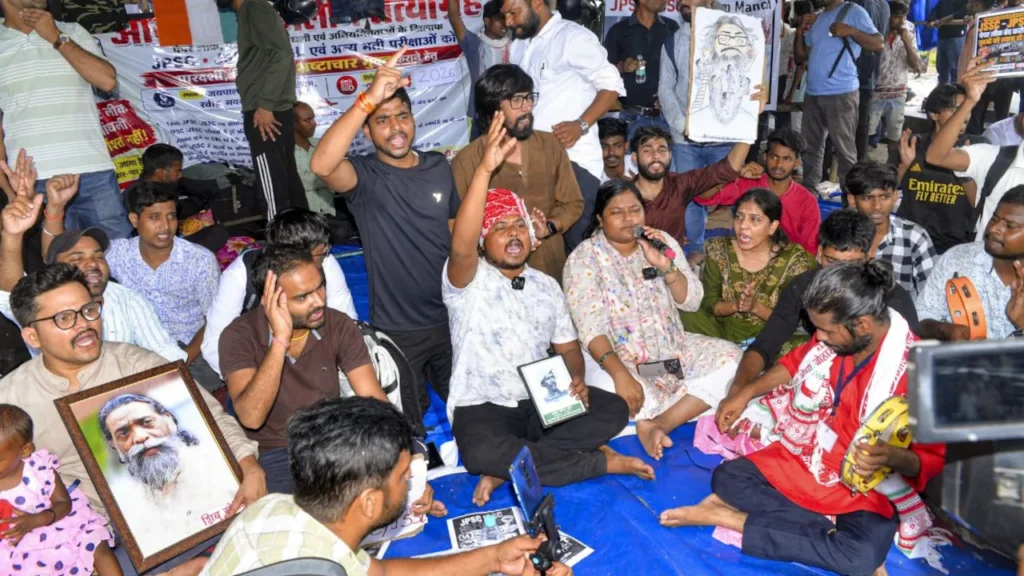
These students in Ranchi are not backing down. For more than two weeks now they’ve been sitting at Jaipal Singh Munda Stadium. Some are sleeping on the ground, a few have stopped eating completely. They’re angry about the same old story – paper leaks, delayed exams, private agencies handling papers like it’s a business, and the feeling that government jobs in Jharkhand are being sold instead of earned fairly. Yesterday the government and the students sat down for the sixth round of talks. Minister Sudivya Kumar and a few others met them. After the meeting the minister came out and said, “We’ve accepted almost 98 percent of their demands.” They agreed to cancel the 14th JPSC prelims and the 2023 and 2025 backlog exams. They promised CID investigation, ED for the money side, fast-track courts, chargesheets in 90 days, and even bringing experts from IIM and XLRI to clean up the system. Three JPSC members also resigned the same day. On paper it looks like a big win for the students. But the students themselves don’t feel that way. Ravindra Paswan, one of their leaders, said clearly – yes, some exams are being cancelled and reforms are being talked about, but the main thing we asked for is still missing. We want a CBI probe. No compromise on that. Another student, Kunal, said the same thing – the march to the Assembly tomorrow will happen, and the protest will continue until we get CBI. You can see why they’re sticking to it. These students have seen state-level inquiries before. Many of them simply don’t trust it anymore. They feel only an outside agency can dig properly. The government is offering a retired judge to monitor things and CID-ED combination, but the students say that’s not enough. Meanwhile some of them are getting weaker by the day. Devendra Nath Mahto has been on hunger strike for days. Doctors are checking them, blood sugar is dropping for a few, yet they refuse to leave. Their parents are worried, friends are bringing food and water for those who are still eating. The stadium has become like a temporary home for hundreds of aspirants who feel their future has been stolen. Chief Minister Hemant Soren has said justice will be done and that political parties should not mislead the youth. He has kept the door open. But the students keep saying verbal promises are not enough. They want it in writing and they want action, especially the CBI part. Tomorrow, 10th August, they plan to go towards the Assembly. Police say they are ready. Students say it will be peaceful. Whether it stays peaceful depends on how both sides handle the next few hours. This is not just about one or two exams anymore. It’s about trust. When so many young people in one state start believing that hard work doesn’t matter and only money or connections do, something is seriously broken. The government has moved more than many expected. Cancelling three exams is not small. But until the students get the CBI probe they’re asking for, the tents are not coming down and the hunger strikers are not eating. That’s where things stand right now. Sources: NDTV, Hindustan Times, The Hindu, India TV, The Tribune, Times Now and ground reports from Ranchi, 9 August 2026. @Rohit Manral
‘Internal Matter’: Supriya Sule on Sunetra Pawar-Led NCP Faction’s Talks with Prashant Kishor
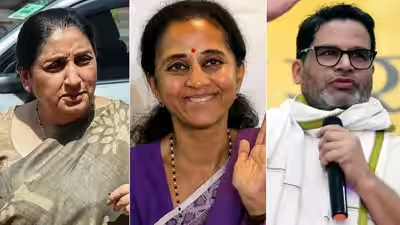
In the always shifting world of Maharashtra politics, where family ties and party lines often blur, a familiar name has once again stirred quiet conversation. Prashant Kishor, the political strategist who has turned politician with his Jan Suraaj Party, recently sat down for a long meeting with Sunetra Pawar, the Nationalist Congress Party chief and Maharashtra’s Deputy Chief Minister, along with her son, MP Parth Pawar. The meeting, held at Sunetra’s official residence Devgiri in south Mumbai, lasted several hours and focused, according to party sources, on ways to strengthen the organisation and ensure government schemes reach the ground level. The timing was hard to miss. Kishor had just scored a notable win in the Bankipur assembly by-election in Bihar, defeating a BJP candidate in a seat linked to the party’s national president, Nitin Nabin. That result, coming against the weight of the BJP’s machinery, gave the meeting extra weight in political circles. Some saw it as a signal that the ruling NCP faction, still finding its footing after the sudden death of Ajit Pawar earlier this year, might be looking for fresh strategic advice. On Saturday, Supriya Sule, working president of the rival NCP (Sharadchandra Pawar) faction and the sitting MP from Baramati, addressed the matter when reporters asked her about it. Her response was measured and personal at the same time. “Prashant Kishor has been a good personal friend of mine for several years. I have closely followed his work and I have never hidden our friendship,” she told them. She made it clear that Kishor works on his own terms in his professional life and chooses his associations freely. Then came the key line: whether the Sunetra Pawar-led NCP wants to work with him or not is their internal matter. Sule went further, offering praise for Kishor’s Bihar performance. She described the Bankipur result as a “very big battle” fought against a strong political machine. She pointed out that the BJP had underperformed even at the booth where its national president is registered as a voter. “Given this situation, we should appreciate Prashant Kishor. He is hardworking and has worked with several political parties over the years,” she said. Drawing a comparison close to home, she added that if her own side had held power from the local level all the way up and still seen a poor result at their booth in Katewadi in Baramati, she would have felt something was seriously wrong. The remarks landed softly. There was no sharp criticism, no attempt to turn the meeting into a larger controversy between the two NCP factions that split in 2023. Instead, Sule kept the focus on friendship and professional independence while firmly placing the decision inside the other camp’s house. In Maharashtra’s charged political atmosphere, that restraint itself carried meaning. The background makes the conversation more interesting. After Ajit Pawar’s death in a plane crash in January, Sunetra Pawar stepped into a more prominent leadership role. She had long been involved in social work in Baramati and only entered active electoral politics more recently. The NCP she heads remains part of the ruling Mahayuti alliance with the BJP and Eknath Shinde’s Shiv Sena. Some within the broader political space have watched closely to see how the party consolidates under her. Kishor’s earlier meeting with the family a few months ago had already raised eyebrows. This latest one, coming right after his Bihar success, added fresh speculation about a possible advisory role, though NCP spokespersons have described the discussions as internal and focused on organisational strengthening. Party functionaries from the Sunetra camp have rejected reports that Kishor expressed unhappiness with the functioning of state president Sunil Tatkare or sought changes in leadership. They insist the talks stayed on practical matters of party building and governance delivery. Still, in a state where alliance equations and organisational strength can shift quickly, any high-profile outsider conversation tends to generate talk. Sule’s comments also serve as a reminder of the complicated personal and political ties that run through the Pawar family and the two NCP groups. The Baramati seat itself has been a focal point of contest in the past, with Sule holding it against challenges from the other side of the family. Yet both sides have, at different moments, spoken of the need to keep personal relations separate from political battles. Sule’s decision to speak warmly about Kishor while drawing a clear boundary around the other faction’s choices fits that pattern. For now, the meeting remains what both sides are calling an internal discussion. Kishor continues to build his own political path through Jan Suraaj, while the ruling NCP works to steady itself under Sunetra Pawar’s leadership. Supriya Sule’s response has neither fuelled the fire nor pretended the conversation never happened. In a political culture that often thrives on sharp exchanges, her calm framing of it as an “internal matter” may be the most telling part of the story. Whether this interaction leads to any formal association or simply remains a private exchange is something only the Sunetra Pawar-led NCP will decide. As Sule put it, that choice belongs to them. Sources: Times of India, NDTV, The Hindu, News18, India Today (reports dated August 7–9, 2026). @Rohit Manral
India Issues Names for 27 Arunachal Locations in Response to China’s Renaming Moves
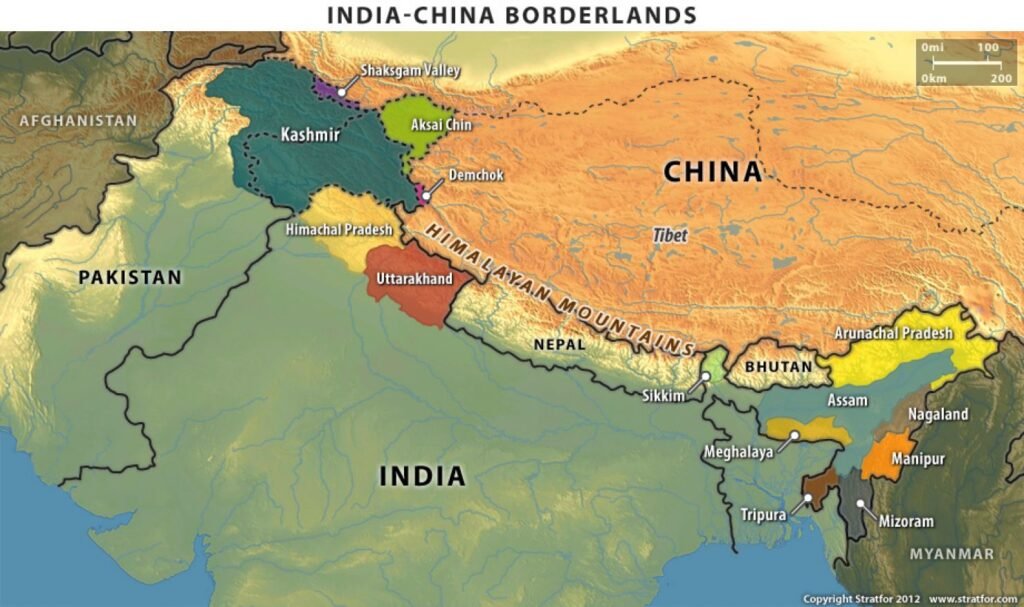
In a clear and deliberate step, India on Friday formally marked 27 locations and geographical features in Arunachal Pradesh on the official maps of the Survey of India. The move, announced by the Union Home Ministry in consultation with the Arunachal Pradesh government, comes as a direct response to China’s repeated attempts over the years to assign its own names to places in the border state. The Home Ministry statement put it plainly: the government has identified these 27 places and features with their standard names on Survey of India maps. The aim, it said, is to ensure accurate recognition and better awareness among the public. Officials familiar with the matter described it as a way to remove any ambiguity that Beijing has tried to exploit by inventing names for Indian territory. Among the locations now clearly marked are Longju, a border area that saw one of the earliest flashpoints between the two countries in 1959 when Chinese forces entered the region; Maja village nearby in Upper Subansiri district; and Bisa. Four high-altitude mountain passes figure on the list – Dzo La, Riza La, Pukur La and Thag La. Thag La holds particular historical weight as the site of one of the opening battles of the 1962 India-China war. The list also includes Sambho Sarovar, a high-altitude lake; Bara Kundun and Chhota Kundun in eastern Arunachal; Dhan Bari; Pritnagar; Buddhamandir; Jairampur in Changlang district, an important logistics hub that supports security force movements towards the eastern border and the Myanmar frontier; Teritnagar; Ramnagar; Jaswant Garh, which houses the memorial of Indian Army soldier Jaswant Singh Rawat on the Tawang Road; Sagar; Padma; Jyotinagar; Baisakhi; the Sher-e-Thapa Memorial honouring 1962 war hero Trilok Singh Thapa; Chhota Ropuk and Bara Ropuk; Shivaji Nagar; Sunpura; and Kamlang Nagar near the Kamlang Wildlife Sanctuary. These are not random spots. Many lie along or near the Line of Actual Control and carry strategic, historical or administrative importance. By placing them formally on official Indian maps with their established names, New Delhi is reinforcing its sovereign and legal jurisdiction over the territory. China has for years periodically released lists of what it calls “standardised” Chinese names for places in Arunachal Pradesh, which Beijing refers to as Zangnan or South Tibet and claims as its own. The first such list covering six places appeared in 2017. Another with 15 names followed in 2021, then 11 more in 2023. Further lists have appeared in subsequent years, including one with 27 names in 2025. Each time, India has rejected the exercise in strong terms, calling it “vain and preposterous” and insisting that inventing names changes nothing on the ground. Arunachal Pradesh “was, is, and will” always remain an integral and inalienable part of India, New Delhi has repeatedly stated. An official involved in the latest Indian decision noted that ambiguity on maps has given China room to push these fictitious names. Putting the 27 locations clearly on Survey of India maps, the official said, provides clarity, strengthens India’s claim status and improves the official documentation of these geographical features. For people living in Arunachal Pradesh and for those who follow the border closely, the practical effect is straightforward. Official maps now carry unambiguous Indian names for these places, reducing any confusion that could arise from competing Chinese labels circulating in some international or Chinese sources. It also serves as a quiet assertion of administrative control and historical continuity. Places like Jaswant Garh and the Sher-e-Thapa Memorial are not just dots on a map; they are reminders of the human cost and the military history of the frontier. The exercise was carried out jointly with the state government, underscoring that this is not merely a central government pronouncement but one rooted in local knowledge and administration. Survey of India maps are the authoritative reference for government use, development planning, security operations and public information. Formal inclusion of these names therefore carries weight beyond symbolism. China’s approach has been consistent: issue lists with Chinese characters, Tibetan script and pinyin, often accompanied by coordinates, and present them as routine standardisation of geographical names within what it claims as its territory. India has treated each instance as an attempt to create facts through nomenclature rather than through any change on the ground. The latest Indian step flips that approach by strengthening the documentary and cartographic record on its own side. Whether this will deter further Chinese renaming lists remains to be seen. Beijing has shown little inclination to stop the practice. What is clear is that India is no longer content to simply issue diplomatic rejections. By systematically marking these locations on its own maps, New Delhi is making the Indian position more visible, more permanent and harder to ignore in the public and official record. The 27 names now stand on the Survey of India maps of Arunachal Pradesh. For a border state that has long lived with competing claims and occasional military tension, it is a small but firm act of cartographic assertion. In the long-running contest over maps, names and narratives along the India-China frontier, clarity on paper still matters. Sources: Union Home Ministry statement; Hindustan Times; India Today; The Times of India; Times Now; Outlook India; India TV; Business Today. @Rohit Manral