Welcomed Him Like a Superstar: Priyanka Gandhi Hits Out at BJP MPs for Felicitating Pradhan
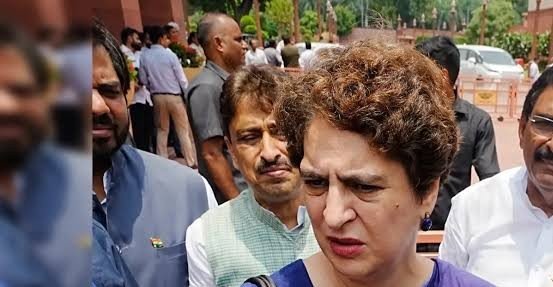
Yesterday, Congress leader Priyanka Gandhi Vadra was speaking about on Tuesday when she tore into BJP MPs for the way they welcomed Dharmendra Pradhan back into Parliament. Just two days after Pradhan resigned as Education Minister, some of his party colleagues in the Parliament complex greeted him with a traditional cap, a stole, and loud slogans of “Pradhan Zindabad.” They treated him like he’d just returned from winning a big match. Priyanka didn’t hold back. “Don’t you think it is shameful?” she asked. “Everyone saw the circumstances under which Dharmendra Pradhan resigned, but yesterday in the Parliament premises, he was welcomed as if he were a superstar!” Those circumstances weren’t some quiet office decision. For weeks, young people—students who had prepared for years for exams that decide their entire future—had been out on the streets. The NEET paper leak controversy and a string of exam irregularities had left thousands feeling cheated. Protests at Jantar Mantar and across the country grew louder and more determined. Families of students who took their own lives after being forced to retake exams were still grieving. The pressure finally forced Pradhan to step down on 25 July. He said he was doing it so that “anti-national forces” wouldn’t take advantage and so students could focus on their studies again. Many in the opposition and among the protesters saw it differently—they called it a victory for the youth who refused to stay quiet. And then, barely 48 hours later, the same man walks into Parliament and gets a hero’s reception from his own side. Opposition MPs weren’t having it. They shouted “Chor, chor, paper chor” right back. The contrast was hard to miss. Priyanka didn’t stop at the welcome. She pointed out that even now, students are still being targeted. She spoke about Instagram posts showing photographs of young women being accused of things, and she asked a simple question: Are you actually trying to talk and fix the mess, or are you still more interested in suppressing the students? “This is wrong,” she said. “No one can trust the Modi government.” Her brother Rahul Gandhi had already said his piece the day before. In a post on X, he called Pradhan a lasting symbol of corruption and of an education system that has failed India’s children. He reminded everyone that the system had claimed the lives of 26 young people and pushed lakhs of others onto the streets. Pradhan didn’t resign out of any sudden moral awakening, Rahul said—he resigned because the anger of the youth scared the government. And now the BJP was putting a garland on that same person inside Parliament. “This is not an honour,” Rahul wrote. “It is a celebration of the ruined futures of lakhs of children. Every student in the country is watching this, and will remember every face involved.” There’s something deeply uncomfortable about the whole scene. On one side you have students who exhausted months studying, only to find the exam paper had been leaked, their hard work wasted, their mental health bone-tired. On the other side you have politicians inside the highest temple of democracy treating the man who presided over that mess like a returning champion. It sends a message, whether intentional or not: the real power still belongs to those who can manage the optics, not to those who suffer the consequences. Of course politics is full of these moments. One day a minister is under fire, the next day the party closes ranks and puts on a show of strength. But when the issue involves the future of an entire generation of students—kids who trusted the system enough to put their dreams on the line—the performance feels especially tone-deaf. The “Cockroach Janta Party” protests may have quietened after the resignation, but the bitterness hasn’t disappeared. Young people are still watching. Parents are still watching. And the families who lost children are still carrying a grief that no slogan can erase. Priyanka’s words cut through the usual political noise because they were plain. She didn’t need long speeches or complicated arguments. She simply pointed at what everyone could see and asked if it wasn’t shameful. In a country where education is still the biggest hope for jumping out of poverty and building a better life, the way leaders treat a crisis in that system matters more than any temporary show of loyalty inside the Parliament gates. Sources: @Rohit Manral
‘No legal action, FIRs being withdrawn’: Bihar govt assures protesters in big win for students, CJP
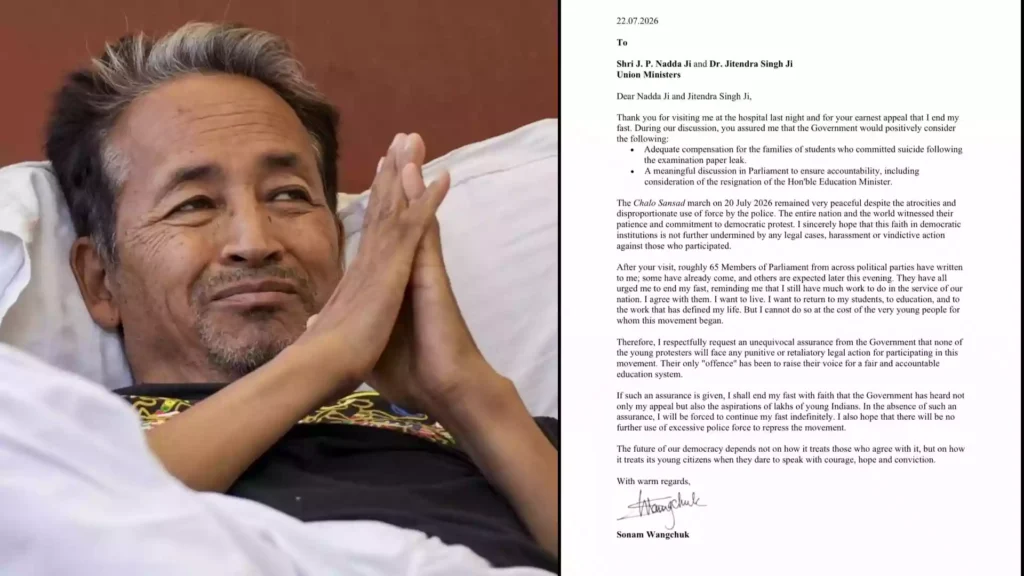
Look, sometimes the system actually listens. Not always, and not perfectly, but every now and then something shifts, and you feel it in the air. That’s what’s happening in Bihar right now. On Monday evening, the Bihar government put it in writing. The Home Department issued a notification saying it is withdrawing all FIRs, complaints and show-cause notices linked to the protests over the NEET paper leak — specifically for incidents that took place before 6 am on 26 July. People who were arrested in connection with those events will be released “forthwith.” No more legal action on those cases. Just like that. For the students who spent weeks on the streets, for the families who spent sleepless nights wondering if their kids would have a police record hanging over them for years, this is huge. It’s the kind of relief that doesn’t come with fireworks or victory marches. It comes quietly, in the form of a government order that finally matches what was promised. You remember how this started. The NEET paper leak allegations exploded across the country. Students who had prepared for years felt cheated. Trust in the examination system took a beating. Protests grew, first in pockets, then into a nationwide movement. The Cockroach Janta Party, or CJP, became the loudest voice. They sat at Jantar Mantar, they organised, they kept the pressure on. The agitation went on for more than a month. It got messy in places — stone-pelting, police action, injuries, even firing in Siwan. But the core demand was simple: fix the system, hold people accountable, and stop treating students like criminals for raising their voices. Then came the talks in Delhi. Union ministers JP Nadda and Jitendra Singh sat down with CJP representatives. The government accepted the demand for Dharmendra Pradhan’s resignation as Education Minister. That happened. They also gave verbal assurances that no punitive action would be taken against peaceful protesters, that existing FIRs would be withdrawn, and that no fresh cases would be filed for the agitation. CJP, in good faith, suspended the nationwide protest. But the ground reality in the states lagged behind. Reports started coming in of students still being detained or facing cases in Assam, West Bengal and Bihar. CJP leaders got angry. They called it a breach of trust. They said they had withdrawn the agitation only because of the clear assurance that no one would face coercive action. They warned that if the promises weren’t kept — if detainees weren’t released and FIRs weren’t pulled back — they would be forced to hit the streets again. Kapil Sibal even stepped in with legal support and a fund. The tension was real. In Bihar, opposition voices, including Tejashwi Yadav, added pressure. He gave the state government a 24-hour ultimatum: withdraw the cases, release the students, or face a bigger movement. Student organisations like AISA kept the heat on. The situation looked like it could spiral again. And then Bihar moved. The notification came. Cases linked to the protests before that specific cut-off time are being withdrawn. Those in jail will walk free. It’s not a complete clean slate for every single incident that happened after, and the Centre still has to fully deliver on the written guarantee CJP is waiting for by Tuesday. But for Bihar, this is a clear step. Officials have said no legal action will follow on these matters. That assurance matters. Think about what this means for the students. Many of them are first-generation learners, kids from small towns and villages who poured everything into clearing NEET. A police case against your name doesn’t just disappear from records. It follows you into jobs, into higher education, into the way people look at you. Having those FIRs withdrawn is not a small technicality. It’s dignity restored. It’s the state saying, “We hear you, and we’re not going to punish you for speaking up.” CJP has called this a big win, and it is. The organisation may have started as an online movement with a quirky name, but it forced a national conversation on exam integrity and the treatment of student protesters. The fact that a state government is now formally rolling back cases is validation of that pressure. At the same time, CJP leaders are still watching the other states closely. They have made it clear that the Centre’s written commitment is still pending, and any fresh harassment will bring them back to the streets. This doesn’t magically fix the deeper problems. Paper leaks, coaching mafia influence, the immense pressure on young people — those issues remain. The government has talked about considering CJP’s five-point charter on examination reforms and providing compensation to families of students who died by suicide linked to the crisis. Those conversations need to continue. Real change will take more than withdrawn FIRs. But for now, in Bihar, the immediate threat of legal harassment has been lifted for hundreds of young people. Parents can breathe a little easier. Students who were sitting in lock-ups or living under the shadow of cases can step back into their lives. That is not nothing. Politics will keep spinning. Opposition parties will claim credit, the ruling side will say they acted with maturity, and social media will argue over who “won.” The students themselves just wanted a fair system and the freedom to protest without permanent punishment. On that last point, Bihar has finally delivered the words they needed to hear: no legal action, FIRs being withdrawn. Sometimes the system does listen. Not always gracefully, not always completely, but it listens. And when it does, the kids who stood in the sun and the rain for weeks get to go home without a case hanging over their heads. That feels like a win worth noting. Sources: @Rohit Manral
Why Choose a Conversion Focused Digital Marketing Agency for Business Growth?

In today’s competitive digital world, getting website traffic is no longer enough. The real success of any business depends on converting visitors into paying customers. This is where a Conversion Focused Digital Marketing Agency like Kedar Beyond Creation makes a real difference. At Kedar Beyond Creation, we believe that every marketing campaign should generate measurable business results. Instead of only increasing website visitors, our strategies are designed to improve lead generation, customer engagement, and overall revenue. Whether you are a startup, local business, or established brand, our team creates customized digital marketing solutions that help you achieve long-term growth. Our conversion-focused approach begins with understanding your business goals, target audience, and industry competition. We perform detailed market research and keyword analysis to create marketing campaigns that attract high-intent customers. Every strategy is data-driven, ensuring maximum return on investment (ROI). Search Engine Optimization (SEO) is one of our strongest services. We optimize your website structure, improve page speed, create high-quality content, and build authoritative backlinks that help your business rank higher on Google. Better rankings bring more qualified traffic, increasing your chances of generating sales and enquiries. Google Ads and PPC campaigns are another important part of our marketing strategy. Our certified experts create highly targeted advertising campaigns that reach potential customers at the right time. From keyword selection to ad copy optimization and landing page improvements, every step is designed to maximize conversions while reducing advertising costs. Social Media Marketing plays a crucial role in building brand awareness and customer trust. Kedar Beyond Creation develops engaging content, manages advertising campaigns, and builds strong online communities across Facebook, Instagram, LinkedIn, and other major platforms. Our goal is to transform social media followers into loyal customers. A high-converting website is equally important. We design modern, mobile-friendly, and SEO-optimized websites that provide an excellent user experience. Fast loading speed, clear call-to-action buttons, and conversion-friendly layouts encourage visitors to take action, whether it’s filling out a contact form or making a purchase. Content Marketing is another key component of our strategy. Our team creates informative blogs, landing pages, service pages, and marketing content that not only ranks well in search engines but also builds customer confidence. Valuable content establishes your business as an industry authority and improves conversion rates over time. Analytics and continuous optimization are at the heart of our digital marketing process. We monitor campaign performance using Google Analytics, Google Search Console, and other advanced tools to identify opportunities for improvement. Every campaign is refined regularly to deliver better performance and higher ROI. Choosing Kedar Beyond Creation means partnering with a team that focuses on real business growth rather than vanity metrics. We believe in transparency, performance, and measurable success. Our customized digital marketing solutions help businesses increase visibility, generate quality leads, improve conversion rates, and achieve sustainable growth. If you are looking for a reliable Conversion Focused Digital Marketing Agency, Kedar Beyond Creation is ready to help your business reach new heights. Contact our experts today and discover how data-driven digital marketing can transform your online presence into a powerful revenue-generating machine.
Talks with Pakistan? Only if it’s about PoK, says Rajnath Singh
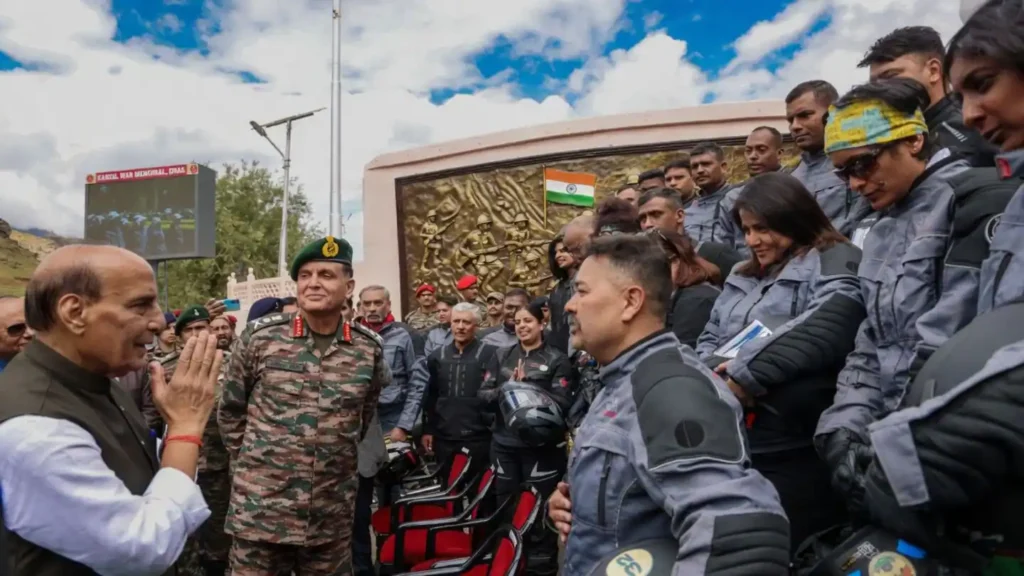
Honestly, sometimes these statements just cut through all the noise. Yesterday up in Drass, at the Kargil War Memorial, Defence Minister Rajnath Singh made it pretty clear where things stand with Pakistan. He said if there are going to be any talks at all, they’ll only be about Pakistan-occupied Kashmir. Nothing else. No other topics, no side deals, just PoK. He was there for the 27th Kargil Vijay Diwas. You know that day, right? The one that marks when our forces finally pushed the intruders back in 1999 and took those heights back. The place itself is heavy with memory. Soldiers who never came home. Families who still feel it. And there he was, standing at that memorial, saying straight out: “There will be no talks with Pakistan other than on Pakistan-Occupied Kashmir, a part of India which it occupied illegally.” No raised voice, no big drama. Just that quiet firmness that lands harder sometimes. He called the 1999 victory a diamond in Bharat Mata’s crown and saluted the men who showed what real courage looks like in those freezing, thin-air conditions. People like Captain Vikram Batra and Captain Manoj Pandey still get mentioned every year for a reason. Their stories stick with you. But he didn’t just stay in the past. He brought it right up to now. He talked about Operation Sindoor from last year, after that terrible attack in Pahalgam. Said it showed everyone what happens when someone tries to hit India with terrorism. The message was basically: we can hit back harder than they expect, and we will. Any move against our sovereignty gets the same treatment. Then he did this quiet comparison that felt almost personal. While we’re over here designing ships, building data centres, making semiconductors and growing startups, Pakistan is still stuck in the same old loop — new ways to infiltrate, radical centres, terror networks. He put it pretty bluntly: India is building a start-up ecosystem, Pakistan is building a terror ecosystem. After 27 years since Kargil, the gap has only gotten wider. He was clear about how he sees Pakistan’s military and the terror groups now. Said the line between them has basically disappeared. Terrorism isn’t some fringe thing there anymore; it’s part of how the state operates. That’s why, during Sindoor, India stopped treating terrorists and the people who protect them as two separate problems. And that’s why normal talks just aren’t happening. This isn’t a brand-new line from him. He’s said similar things before. But saying it right there in Drass, with those mountains watching and the memory of 1999 still fresh in everyone’s mind, gave it extra weight. India’s position has been consistent for a long time: the whole of Jammu and Kashmir, including the parts Pakistan has held since 1947, is ours. If we’re going to talk, that has to be the only subject. He also made a point about the political side of it. The government, he said, gives the forces a free hand when they need to respond. Border roads are getting better, equipment is being updated, and the basic message to anyone looking at us the wrong way is simple: don’t. Not while our soldiers are standing watch. What I liked about the whole thing was how calm it felt. No chest-thumping, no trying to score cheap points. Just a clear statement of the line. Talks aren’t banned forever. But the table has only one item on it. Everything else — especially anything that pretends terrorism doesn’t exist or tries to reopen questions about Kashmir that India considers settled — is off the table. So as the country marks another Kargil day, this speech felt like both a remembrance and a reminder. The soldiers in 1999 showed what resolve looks like when the odds are ugly. The current leadership is saying that same resolve is still there. Pakistan can choose to talk if it wants. But it’ll have to talk about the land it holds that India still claims. Anything less, according to Rajnath Singh, simply isn’t worth discussing. That’s the message from Drass yesterday. Straightforward. Hard to twist. And pretty hard to ignore. Sources: Rediff.com (PTI, 26 July 2026)The Statesman (26 July 2026)The New Indian Express (26 July 2026)ANI and Ministry of Defence coverage of the event in Drass @Rohit Manral