Air India to Test Every Pilot for Banned Substances After Phuket Flight Scare

Air India has decided enough is enough. Starting today, every pilot working for the airline and its budget sister company Air India Express will have to undergo mandatory testing for banned substances and medications that aren’t allowed under aviation rules. That’s more than 5,000 pilots in total. No exceptions. The move follows a frightening incident last week. On 4 August, flight AI2379 from Phuket to Delhi suddenly dropped about 300 feet while cruising. Around 20 passengers and a few crew members were hurt. The plane, an Airbus A320, eventually landed safely in Delhi, but the scare was real enough. Both pilots were taken off flying duties straight away while investigators looked into what happened. Then came the drug tests. Sources say the captain tested positive for marijuana in the confirmatory lab check. The airline hasn’t officially confirmed the substance, but the reports have been consistent. In a memo sent out to staff this morning, Air India made its position plain. The company already follows the DGCA’s rules, which require random testing of at least 10 percent of flight crew every year. Those rules are similar to what you see in Europe and the US. But after this incident, the airline decided that wasn’t enough. “We nevertheless now feel that it is important to go further,” the memo said. The full screening of every pilot in the group is meant to show the airline is serious about safety and to give passengers some peace of mind. The tests started today, 13 August. They’re being done during training sessions at the Gurugram academy, after flights at the briefing centres, at airline offices, or at whatever location each pilot’s base arranges. The idea is to get through the whole pilot force without bringing operations to a halt. This comes at a tough time for Air India. The airline is still living with the fallout from the June 2025 crash of the Ahmedabad-to-London flight that killed 260 people. Only one passenger walked away. Trust has taken a beating, and the company knows it. The memo even called trust its most important asset. Under the current DGCA rules, a first positive drug test doesn’t automatically mean a pilot loses their licence. They’re usually sent for rehabilitation, then have to pass another clean test and get medical clearance before they can fly again. A second offence can mean a three-year suspension. A third can end the licence for good. Air India’s own internal rules are said to be stricter, so the captain involved in the Phuket flight could face tougher company action once the internal inquiry finishes. The tests look for the usual list of psychoactive substances — cannabis, cocaine, amphetamines, opiates, and certain medications that pilots simply aren’t allowed to take while flying. Initial checks are done with urine samples. If something shows up, the pilot is grounded immediately and a more thorough lab test follows. Safety people in the industry have pointed out for years that testing only 10 percent of the crew leaves room for problems to slip through. Checking everyone is a bigger, more expensive step, but it sends a clear message. For passengers still nervous after recent incidents involving Indian airlines, it might feel like the right call. The investigation into the altitude drop is still going on. Early talk mentioned turbulence, but later details suggested there may have been hydraulic and control system warnings just before the plane lost height. Whether the captain’s condition played any part is still an open question. Both pilots remain grounded until the probe is finished. The Ministry of Civil Aviation is already looking at the rules again. There is talk of increasing the percentage of random tests and toughening the penalties. Air India hasn’t waited for new regulations. It has simply decided to act. For the pilots, it means another layer of scrutiny in an already demanding job. For the airline, it’s an attempt to draw a line and start rebuilding confidence. Whether the testing programme runs smoothly and what the full investigation into the Phuket flight finally reveals will shape how this story is remembered in the weeks ahead. Right now, every pilot knows they will be tested. And passengers can at least see that the airline is treating the issue with the seriousness it deserves. Sources: BBC News, The Hindu Business Line, The Straits Times, The Indian Express, The Tribune, India Today, Business Standard, Times of India, and related reports from 11–13 August 2026. @Rohit Manral
Amit Shah Says He’s Ready for Any Question, Rahul Gandhi Says They’re Not Here for His Lecture
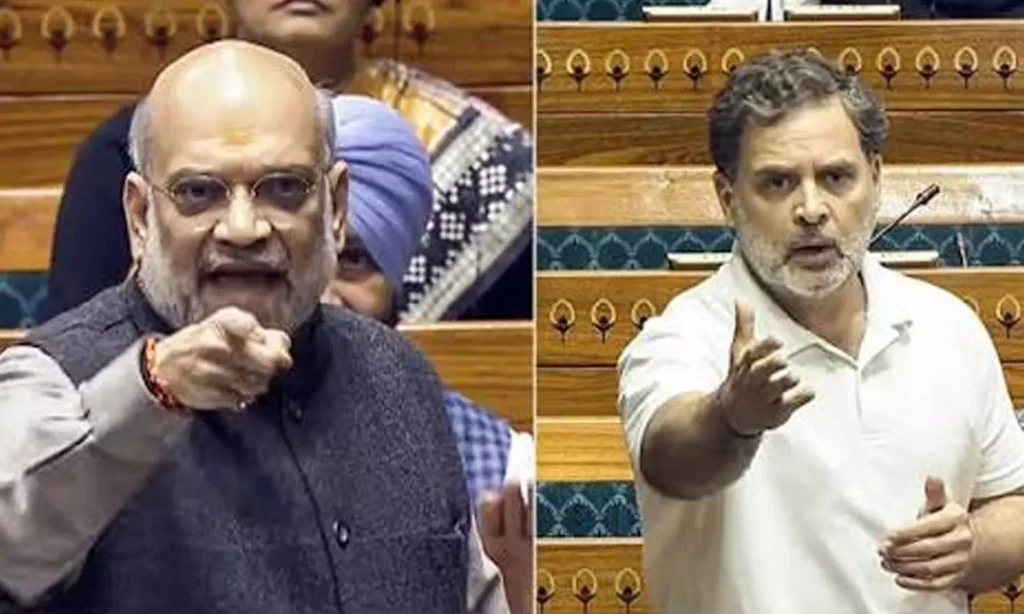
Home Minister Amit Shah came out and basically said, look, we’re ready. We can talk about everything that happened with the students. The ones who marched towards Parliament on July 20 over the NEET paper leak mess. He told reporters outside that the government has nothing to hide. Kiren Rijiju had already said the same thing earlier — the government is fine with a full discussion. Shah went a step further. He said if the Opposition just puts it in writing to the Speaker by around 2 or 3 in the afternoon, they’re ready to start talking from 3 pm that day and keep going till 3 pm the next day. He said he’ll sit there himself the whole time, listen to everyone, take notes, and answer every single point. No running away. “Let the public decide who’s running away,” he said. Pretty direct. He even offered to suspend Question Hour if the Speaker allows it, just so the discussion can go on properly. Under Modi’s government, he said, they’re ready to discuss anything. The ball is in the Opposition’s court. Rahul Gandhi didn’t take long to reply. And he didn’t soften it. He said the Opposition is not interested in listening to Amit Shah give them a lecture. When he says “we,” he meant the younger generation of this country. That’s who he’s speaking for, according to him. He listed out the questions he actually wants answers to. Who shot the students? Who ordered them to be beaten with lathis that had nails in them? Who gave the order that allegedly blinded one student and hit another in the ear? Then he asked the straight question: Did Amit Shah give that order to shoot our children? If he did, he should resign because he’s responsible. If he didn’t, he should resign because he’s incompetent. Either way, resign. Rahul also kept pointing out that Shah had been missing from the House for almost 20 days. “The Home Minister of India has no courage. He cannot come to the House,” he said. He called the sudden offer of a long discussion an attempt to fix a balloon that has already burst. They’re trying to put the gas back in at the last minute, according to him. That’s where the two sides stand, and it’s not moving. The whole thing started with the student protests after the NEET-UG paper leak. On July 20 they tried to march to Parliament. Police stopped them, force was used, and then the stories started — injuries, claims of pellet guns, spiked sticks. The Opposition has been demanding that Shah answer for it because Delhi Police comes under the Home Ministry. The government keeps saying Parliament is the place to discuss it, just let the House function first. For days it’s been the same scene inside. Disruptions, slogans, no real work getting done. Outside, both sides are holding their own protests. One side saying Shah must come and answer. The other saying the Opposition is just not letting Parliament work. Shah’s offer of almost a full day of discussion was unusual. He was putting himself on the line, saying he’ll sit there and reply so the country can see the truth. Rahul’s answer was just as clear: we don’t want the speech. We want the specific answers. Who ordered what happened to those students. As of Wednesday evening, nothing had really changed. No smooth path to an actual debate. The Speaker would still have to handle any formal notice, and the mood in the House stayed the same — tense and stuck. Both men claimed to be speaking for the students and the young people. Both said the public will decide. But the gap between “I’m ready to answer every question” and “we’re not interested in your lecture” is still wide open. And that’s where Parliament is right now. Same fight, same positions, and the questions about what happened on July 20 still hanging over everything. Sources: Times of India, The Indian Express, The Statesman, Rediff, Indiablooms and Economic Times reports from 12 August 2026. @Rohit Manral
“Extremely Unhygienic”: Raid Exposes Filth In Zepto’s Bengaluru Warehouse
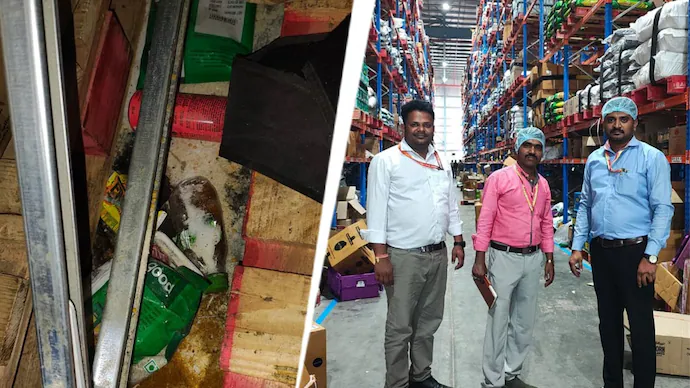
Food safety officials walked into a Zepto warehouse out in Hoskote, on the rural edge of the city, and what they saw stopped them cold. Organic waste just lying around. Discarded wrappers and empty bottles scattered across the floor. Dirt built up in places it shouldn’t be. Empty cardboard boxes left wherever. The whole place looked neglected. Officials didn’t mince words. They called the conditions “extremely unhygienic.” The warehouse is run by Nippon Express for Zepto, the quick-commerce app people use to get groceries and snacks in minutes. The inspection was part of a special drive by the Food Safety Division of the Food Safety and Drug Administration Department. They went in to check how food was being stored, handled, labelled, and kept safe. What they found was a list of problems: non-compliant labelling, misbranding, unhygienic handling, and storage that clearly didn’t meet the standards. All of it under the Food Safety and Standards Act and the FSSAI rules that are supposed to protect people. They sealed the place right away. Issued a notice. And recommended that a case be filed against the facility. The department’s statement was straightforward. Strict action will be taken against anyone found breaking the rules. These drives will keep happening so people can actually trust the food that reaches them. Pictures that came out later showed packets of food items just sitting around, soft drink cans and milk products kept in no particular order, and garbage mixed in with everything. It’s the kind of mess that makes you wonder what else is going on behind the scenes of those 10-minute deliveries. This wasn’t a one-off raid. The same day, officials were checking Indira Canteen kitchens across the city. They sealed the central kitchen at Gottigere after finding similar unhygienic handling and storage issues. Notices went out to other canteens too. Samples of pulses, turmeric, oil, jaggery, salt, sugar and cooked food were taken for lab tests. The whole push is happening under the watch of Karnataka’s Health and Family Welfare Minister UT Khader. On top of that, the Bengaluru North City Corporation slapped a ₹25,000 fine on Zepto at its Thanisandra spot for not keeping the place clean. So the pressure is coming from more than one direction. Zepto’s response was measured. A spokesperson said the company had noted the observations and the suggestions from the officials and was taking steps to fix things. No big argument, just an acknowledgement that work needs to be done. For a lot of people in Bengaluru who order milk, fruits, snacks or packaged food through the app without thinking twice, this hits differently. You tap a button, the bag arrives, and you assume everything along the way was handled properly. Seeing organic trash next to food packets and dirt on the floors of a warehouse that supplies those orders changes the picture. It forces you to ask how carefully the system is really being watched. The food safety department has been busy in recent days. Hotels and restaurants have already been under the scanner. Expired items, fungal growth on vegetables, poor separation of veg and non-veg food — all of it has turned up. Now the net has widened to the warehouses and dark stores that keep the quick-commerce machine running. The officials are making it clear this isn’t going to stop. They want the public to get food that’s actually safe and clean. Whether this particular sealing and the recommended case lead to lasting changes is something only time will show. What is obvious right now is that the authorities are not looking the other way. And for the people who rely on these apps every day, the images from that Hoskote warehouse are a reminder that convenience should never come at the cost of basic hygiene. That’s the story as it stands. A sealed warehouse, a list of violations, and a push for cleaner practices in a sector that has grown faster than the oversight in some places. Sources: NDTV, The Hindu BusinessLine, India Today, Moneycontrol, Times of India, LiveMint, Hindustan Times, News18, Free Press Journal, Times Now (reports from 11–12 August 2026). @Rohit Manral
Ritika from India got no chill, gets Israel PM and Fox News to swallow fake Iran pill

It started with a verified X account called @Im_Ritikaa, display name Ritikaa. She’s based in India, posts a lot of pro-Israel, Hindu nationalist content, and by all accounts keeps a busy feed. On 5 August, she put out a claim that Ahmad Vahidi, the commander of Iran’s Islamic Revolutionary Guard Corps, had said something along the lines of: as long as the United States and Israel have nuclear weapons, Iran will keep working on its own. No video, no audio, no official Iranian statement, no transcript. Just the words, attributed to him. That was enough. Within hours the quote started bouncing around Israeli social media. An account that styles itself “Mossad Commentary” picked it up. Then Channel 14, the right-leaning Israeli channel that tends to stay close to Netanyahu’s line, ran with it as if it were a straight news development — the first time a senior Iranian official had openly admitted the country was building nuclear weapons. Yair Netanyahu, the prime minister’s son, amplified it. And then, at a ceremony on Mount Herzl, Benjamin Netanyahu himself referenced the supposed statement in his speech. He treated it as confirmation of what Israel has been saying for years about Iran’s intentions. From there it crossed the Atlantic. US Ambassador to the UN Mike Waltz shared a version of it, saying Iran was finally admitting what everyone already knew, before later deleting the post. Conservative commentator Mark Levin pushed it further. Fox News reported it, complete with an on-screen headline about Vahidi’s declaration. The claim even made it into the orbit of Republican Senator Rick Scott. For a short window, the fake quote looked like solid international news. The problem, of course, is that Vahidi never said it. Iranian sources and later reporting found no primary record of the remarks. No speech, no interview, no official communiqué. Israeli journalist Ronen Bergman, writing in Yedioth Ahronoth and later discussed widely on Ynet, traced the entire chain back to that single Indian account. What began as an unverified social-media post was given the appearance of legitimacy by Israeli media, repeated by the prime minister, echoed in the United States, and then reported back in India by agencies citing “Israeli media.” A perfect circular citation loop. Fox News eventually clarified that the remarks had been taken out of context and amplified as if they were new. Channel 14 and others adjusted their framing after the fact. But by then the damage, or at least the illustration of how fragile the information environment is, was done. A made-up sentence had travelled from an Indian X handle to the highest levels of Israeli politics and into American cable news in a matter of hours. There’s a certain dark humour in it. An Indian account with a strong pro-Israel tilt manages to feed a narrative that Israeli and American conservative media were already primed to accept. No one seems to have stopped to ask for the original source. In the current climate around Iran’s nuclear programme, the quote was simply too useful to check carefully. It fitted the existing story too well. Bergman and others have pointed out that this is not an isolated incident. Similar patterns have appeared before — claims that travel quickly, gain official repetition, and only later face scrutiny. In this case the original poster was not some sophisticated intelligence operation. It was a prolific Indian user posting in the open. That somehow makes it more striking. The system that is supposed to filter noise from signal failed at multiple stages: social media amplification, partisan media, political speech, and mainstream American coverage. Iran, for its part, denied the statement. Vahidi remains a senior figure, but there is no evidence he delivered the lines attributed to him. The episode has been used by critics of Netanyahu to argue that Israeli messaging on Iran sometimes relies on convenient material rather than hard verification. Supporters of the prime minister might counter that the broader concern about Iran’s nuclear ambitions is real and longstanding, and that one bad quote does not change the underlying assessment. Both things can be true at once. The specific claim was false. The larger strategic worry is not invented. What stands out most is the speed and the lack of friction. One person in India posts. Israeli accounts boost. A television channel reports. The prime minister speaks. American officials and media follow. Indian agencies then report the story back home as if it originated in Israel. The entire circuit closed in less than a day. In an age when anyone with a verified account can inject material into global information flows, this episode is a useful reminder. Verification still matters. Primary sources still matter. And the willingness of powerful people and large media organisations to repeat convenient claims without checking them remains a vulnerability. Ritika from India, whoever she is and whatever her motivations, just demonstrated that vulnerability in real time. The system swallowed the pill. It did not taste the fake until after the fact. Sources: India Today reporting by Shounak Sanyal (10 August 2026); Ronen Bergman’s investigation in Yedioth Ahronoth / Ynet; Middle East Eye summary of the same reporting; contemporaneous X posts and subsequent clarifications by Fox News and related accounts. @Rohit Manral