‘U-turn in a week’: DMK hits out at Vijay over his delimitation stand after meeting Amit Shah
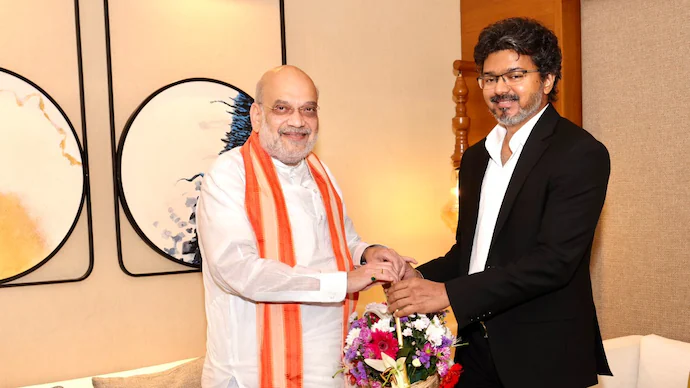
Politics in Tamil Nadu can turn on a dime, and Thursday was one of those days. The DMK came out swinging against Chief Minister C. Joseph Vijay, accusing him of doing a full U-turn on the delimitation issue within a week. The spark? Vijay’s meeting with Union Home Minister Amit Shah at the Southern Zonal Council in Chengalpattu. Only a few days ago, the Tamil Nadu Assembly had passed a clear resolution. It said the number of Lok Sabha seats should stay frozen at 543 and the present share of each state should not be touched. Vijay’s government had pushed it hard. His party, TVK, had even called an all-party meeting of MPs earlier in the month and got a similar demand on the table. Many people thought the message was loud and clear: no redrawing of seats that could weaken the South’s voice in Parliament. Then came Thursday. Speaking at the council meeting that his own government was hosting, Vijay took a softer line. He asked the Centre for a firm legal assurance that no state would lose its percentage of seats in Parliament just because it had managed to control its population better. He spoke about how southern states had done well on population stabilisation, human development and economic growth, and said those achievements should not be punished by cutting their representation. What he did not say was as important as what he did. He never repeated the demand to keep the total number of seats locked at 543. That difference did not go unnoticed. The DMK’s IT wing was quick on social media. One post said, “Chief Minister Vijay, who took a firm stand against Amit Shah on delimitation… who passed a resolution the same week saying do not increase the 543 seats… has now changed his stance.” Another asked, “Has Chief Minister Vijay done a U-turn in a week on the constituency redrawing issue? Is this the same man who once called supporters of redrawing ‘eight-footers’?” They also needled TVK’s alliance partners, asking if anyone would call out what they saw as double-speak. DMK spokesperson Saravanan Annadurai put it simply: the Chief Minister had flipped on the issue. AIADMK’s IT wing joined in, saying the TVK government had completed a full U-turn and was now sounding a lot like the Union government itself. AMMK leader T.T.V. Dhinakaran called the whole sequence political theatre meant to distract from other problems in the state. The setting made the criticism sharper. Amit Shah was chairing the Southern Zonal Council meeting. Chief ministers and senior officials from Tamil Nadu, Karnataka, Andhra Pradesh, Kerala and the southern Union territories were present. Vijay used the platform to raise three main points: protection on delimitation, exemption from NEET for Tamil Nadu students, and tougher action against drug trafficking and illegal online medicine sales. On delimitation, the anxiety in the South is old and real. The freeze based on the 1971 Census is coming to an end. If seats are redistributed purely on today’s population numbers, states in the North that grew faster could gain more seats. States like Tamil Nadu, which brought their population growth under control, could end up with a smaller share. Right now Tamil Nadu holds roughly 7.18 per cent of Lok Sabha seats. Losing even a bit of that is seen as a blow not just to numbers but to the state’s weight on language, culture and federal issues. Vijay’s new wording — protect the percentage, not necessarily freeze the total number — leaves room for the overall size of the Lok Sabha to grow, as long as no state is penalised for doing well on population control. His ministers later insisted there was no change in the government’s position that seats should stay at 543. Energy and Law Minister C.T.R. Nirmalkumar said as much outside the meeting. But the difference in language was hard to miss, and the opposition made full use of it. This episode shows how carefully Tamil Nadu’s parties are treading. Delimitation is not just about maps and numbers. It goes to the heart of federal balance and regional pride. For years, governments here have resisted anything that could shrink the South’s say in Parliament. Vijay himself had spoken strongly against it earlier, saying Tamil Nadu would not let anyone take away its place. Now, with the Centre not rushing a new bill and with earlier assurances that southern representation would not be cut, the room for careful language has grown. Some see Vijay’s remarks as practical engagement. Others, especially the DMK, call it a climbdown after the strong assembly resolution. As the day ended, one thing stood out. The delimitation debate is nowhere near settled. It will keep testing whether Tamil Nadu’s leaders can hold a common line when the state’s long-term interests are on the line. For the moment, the DMK has drawn a sharp line, saying the Chief Minister changed course in the space of a single week. Whether that change is real or just careful wording in front of the Union Home Minister is something the political class will keep arguing over in the days ahead. Sources: Times of India, Hindustan Times, Mathrubhumi, Moneycontrol, India Today, The Federal, The Week, ABP Live. @Rohit Manral
‘Modi is absolutely wrong… I’m grateful to Rajiv Gandhi’: Shehzad Poonawalla’s latest jabs right after walking out of the BJP
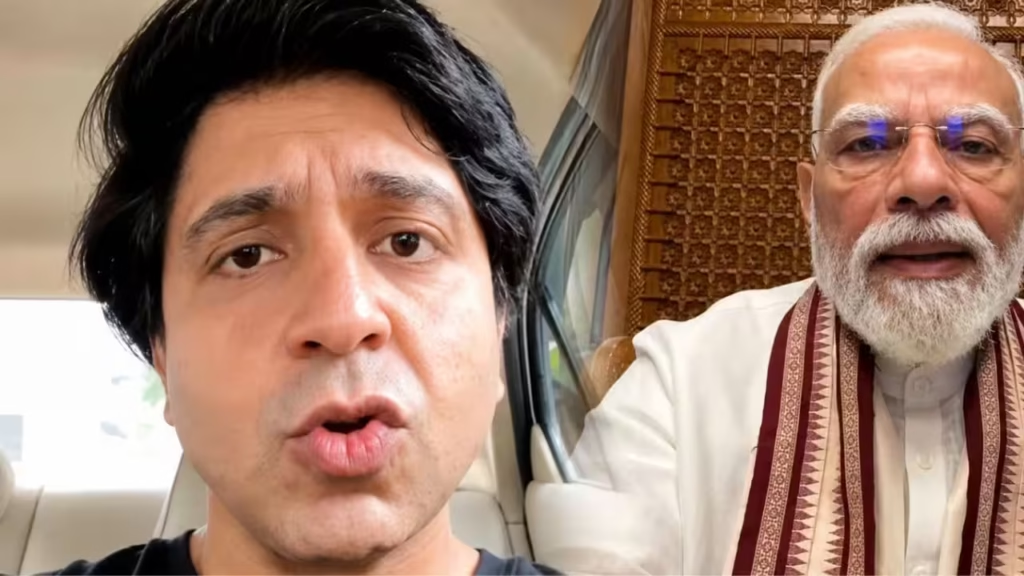
Honestly, some people just can’t switch off. Shehzad Poonawalla is one of them. The man spent years as the BJP’s national spokesperson, the one who’d show up on every debate channel and throw sharp lines without blinking. A few days ago he finally quit the party. And barely 48 hours later, he’s back on X doing what he does best — taking digs, twisting the knife a little, and somehow still sounding like he’s on Modi’s side. On Wednesday he posted a video of his old TV clips and wrote something that made a lot of people stop scrolling. He said he would always remain grateful to Rajiv Gandhi. Why? Because Rajiv gave India Rahul Gandhi, and Rahul, according to Shehzad, is the real reason Narendra Modi became prime minister in 2014, 2019 and 2024 — and will become PM again in 2029. “Forever indebted to Shri Rajiv Gandhi ji. He gave us @RahulGandhi who ensured PM @narendramodi became PM in 2014, 19, 24 and will become PM again in 2029. Inshallah. Rajiv Gandhi is therefore the biggest Modi ji supporter like me.” That’s pure Shehzad. He’s basically saying, “Thank you Rajiv, for giving us the best campaign manager Modi could ever have.” You can almost hear the half-smile. He didn’t stop there. Just a day earlier the Prime Minister had used the phrase “dimagi Naxal” in his Independence Day speech — people with a Naxal mindset who, Modi said, still try to create trouble even after the armed ones have been largely cleared out. Shehzad’s reply was classic: “Modi is absolutely wrong to categorise folks as DIMAGI NAXAL. They should have been called बददिमगी Naxal.” Brainless Naxals, basically. And just to keep the old habit alive, he also reminded everyone that Rahul Gandhi was a Pappu, is a Pappu, and will forever remain a Pappu. Now, let’s be clear about the resignation itself. Shehzad had first written to the party at the end of July saying he needed to quit because of money and personal issues. The BJP told him to think it over. On 17 August he wrote again, this time firmly: please accept it. He thanked Modi, Amit Shah, Rajnath Singh, Nitin Nabin, BL Santhosh — the whole lot — and said he was leaving only the “vyavastha”, not the “vyakti” or the “vichar”. In simple words, the organisation, not the people or the ideology. He still calls himself a lifelong Modi follower. He just needs a proper job again because the spokesperson post doesn’t pay a salary and the rent doesn’t wait. He’s been saying for a while that he had been planning this exit since 2024. Politics had become a full-time unpaid job and he had bills to clear. Fair enough. He also made it clear he isn’t going back to the Congress. The only way he’d even consider it, he joked, is if Sonia, Rahul and Priyanka are removed and someone apologises for Nehru. Which is his polite way of saying “never”. What feels different now is the freedom. When he was official spokesperson he still had to stay within certain lines. Now those lines are gone. So the same man who used to defend every government decision is freely telling the Prime Minister that “dimagi Naxal” is the wrong phrase, while still calling Rajiv Gandhi Modi’s biggest unintentional supporter. It’s the same old style, just without the party filter. People who’ve watched him for years know this is classic Shehzad. The sarcasm, the wordplay, the ability to attack the opposition while sounding like he’s still firmly in the Modi camp. He joined the BJP in 2017 as a young Pasmanda Muslim, non-dynast, and rose to national spokesperson. He keeps saying no other party would have given a guy like him that kind of platform. Even after quitting, that gratitude is still there. So where does he go from here? He says private sector, while continuing to support Modi’s vision in whatever way he can. Whether that means quieter days or more of these sharp posts, nobody knows yet. But if Wednesday’s messages are any sign, the man hasn’t lost his edge. He’s just changed the room he’s speaking from. The badge is gone. The microphone, it seems, is still on. Sources: Hindustan Times coverage of Shehzad Poonawalla’s 19 August posts and resignation letter; Live Hindustan and Navbharat Times reports on the same social media comments; India Today, The Print and Moneycontrol on the resignation process and his “vyavastha not vyakti” statement; multiple outlets reporting PM Modi’s Independence Day reference to “dimagi Naxals”. @Rohit Manral
Can India Extradite Sheikh Hasina Under the 2013 Treaty with Bangladesh?
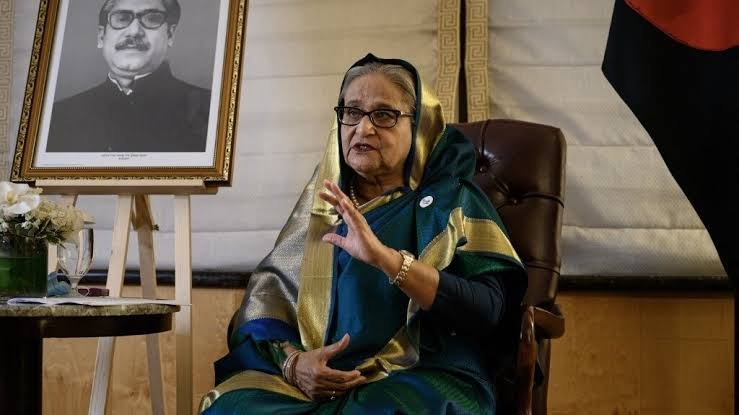
Sheikh Hasina off back to Bangladesh under that extradition treaty they signed in 2013? It sounds straightforward on paper, but once you sit with it, it’s anything but simple. Let me walk you through it the way I’d explain it to a friend over coffee. Hasina’s been living in India since August 2024. She left Dhaka when those huge student protests forced her out. Since then she’s stayed here under some special arrangement. Then in November last year a special tribunal in Bangladesh sentenced her to death in her absence for what they call crimes against humanity during the crackdown on the protests. The Bangladesh side has kept asking India to send her back, pointing straight at the 2013 treaty. India keeps saying the request is “under examination.” That’s all they’ve said for months. The treaty itself is real. India and Bangladesh signed it in January 2013 in Dhaka and it came into force later that year. They even tweaked it in 2016 to make the process a bit faster. Back then both countries were fed up with militants and criminals hopping across the border — Indian insurgents hiding in Bangladesh, some Bangladeshi guys operating from India. The treaty was meant to handle that kind of stuff, ordinary fugitives, not a former prime minister. Under the treaty, either country can ask for someone who’s been charged or convicted of a crime that carries at least one year in jail in both places. That’s the dual criminality rule. Murder, kidnapping, serious violence, terrorism-related stuff — all of that qualifies. After the 2016 change, Bangladesh doesn’t even have to send a mountain of evidence right at the start. A proper arrest warrant is often enough to get the ball rolling. So yes, they can make the request, and they have. But here’s where it gets messy. The treaty has a big escape hatch. Article 6 says India can refuse if the offence is “of a political character.” That’s the classic political offence exception. At the same time the treaty lists a whole bunch of crimes that can’t be called political — murder, manslaughter, kidnapping, causing explosions, terrorism offences and so on. Bangladesh argues the charges against Hasina (the killings during the 2024 unrest) fall into that non-political list. India can still say the whole case feels political because she was thrown out by a political movement and the people now in charge in Dhaka are her opponents. There’s more room in Article 8. India can say no if it believes the request wasn’t made in good faith or isn’t really in the interests of justice. That’s a wide door. India’s own Extradition Act from 1962 has similar protections. Plus the trial happened without her being there, and some people question how fair or legitimate that tribunal really is. Indian courts would get a say if it ever reached that stage, and she’d have a chance to fight it here — something she never got in Dhaka. Then there’s the dual criminality question again. “Crimes against humanity” the way Bangladesh frames it doesn’t always match neat offences under Indian law. That gives India another reason to slow-walk or refuse. Beyond the legal wording, the real world matters. Hasina was India’s partner for years. Her governments worked with India on security, kept certain groups in check, and kept the relationship smooth. Handing her over now would look like turning on an old ally who came here for safety. At the same time India doesn’t want to sour ties with whoever is running Bangladesh today. So they keep the same careful line: the request is being looked at through the proper channels. No drama, no hurry. In the end the treaty doesn’t force India’s hand. Extradition is never automatic. The government still decides, and if it goes to court the judges decide. Hasina herself has talked about going back on her own terms someday, which only adds another layer. So can India extradite her under the 2013 treaty? Technically the door is open if they choose to walk through it. Practically and politically, they’ve got plenty of ways to keep it closed, and so far that’s what they’ve done. The treaty was written for regular criminals and militants, not for this kind of high-stakes political story. How India balances the legal text with its own interests will decide what happens next — not the treaty alone. Sources: Treaty text between India and Bangladesh on extradition (2013, amended 2016)Reporting and official statements from The Hindu, Indian Express, Times of India, Business Standard, The Diplomat, and Ministry of External Affairs briefings between 2024 and 2026. @Rohit Manral
Smriti Irani’s Big Comeback As BJP 3.0 Gets Massive Women Representation
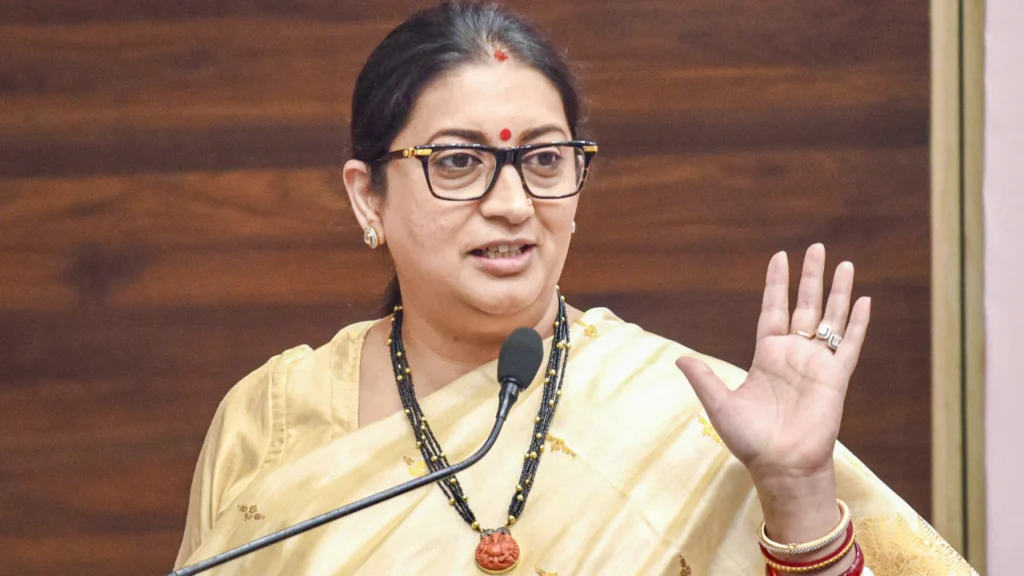
Monday’s announcement from the BJP felt exactly like that. After more than two years on the sidelines of the party’s core organisational structure, Smriti Irani is back — and not in some ceremonial role. She’s been named one of the national general secretaries in the fresh team under new party president Nitin Nabin. And the bigger story isn’t just her return. It’s the clear message that BJP 3.0 is deliberately putting more women in key positions than before. Starting with Smriti. She lost the Amethi Lok Sabha seat in 2024 — a tough defeat after her famous 2019 win against Rahul Gandhi. She stepped out of the Union Cabinet when the new government was formed and stayed away from the central organisational setup. Many wondered if that was the end of her high-profile political phase. Instead, she kept working, even returned briefly to television, and now the party has called her back into the thick of things. Her appointment as national general secretary puts her among eight people in that powerful role. She’s the only woman in that particular group, which itself stands out. Reports suggest she will have a significant hand in Uttar Pradesh, the state that remains the BJP’s biggest electoral testing ground. The 2027 Assembly elections there are already on everyone’s mind. After the mixed results in UP during the 2024 Lok Sabha polls, the party needs experienced campaigners who know the ground and can connect with voters. Smriti has deep roots in the state through her Amethi years, and she’s long been one of the BJP’s sharpest communicators. She reacted with characteristic humility. In a post on X, she called the journey from an ordinary BJP karyakarta to National General Secretary “deeply humbling.” She thanked Prime Minister Narendra Modi and Nitin Nabin for trusting her again and said every responsibility is an opportunity to serve the organisation and the nation with the spirit of “Nation First.” It was a classic Smriti response — grounded, grateful, and focused on the work ahead. But her comeback is part of a larger shift. The new national team of 65 office-bearers includes 12 women. That’s a noticeable jump. Six of the 13 national vice presidents are women. Names like former Rajasthan chief minister Vasundhara Raje (retained), D. Purandeswari, Bharti Pravin Pawar, Rekha Verma, Varshaben Doshi and Dr Madhuchanda Kar figure among the vice presidents. Other women have been given secretary-level roles and leadership of the Mahila Morcha. The previous team had no woman general secretary. This one does. Party leaders have framed it as deliberate. Women voters have become a crucial base for the BJP over the last decade. Schemes that reached kitchens, toilets, gas cylinders, water connections and direct benefit transfers created a visible connect. Bringing more women into organisational roles signals that the party wants that connect to run both ways — not just from the government to women, but from women leaders into the party’s decision-making and campaign machinery. There’s also the longer-term context. The BJP has been pushing for the women’s reservation bill to be implemented after the next delimitation exercise. Putting more women in visible organisational positions now fits the narrative that the party is serious about representation, not just legislation. The new team overall mixes experience and newer faces, with representation from many states and some minority leaders as well. Nitin Nabin’s first full team is being read as a preparation exercise for the state elections coming up and, eventually, 2029. Bringing Smriti back into the core is one of the clearest signals that the party still values her campaign skills and her ability to speak to both party workers and the public. For those who have followed her career, this feels like another chapter rather than a full reset. From television to Rajya Sabha, then Amethi, multiple ministries including Human Resource Development and Women and Child Development, the high of 2019 and the low of 2024 — she has seen the full arc. The fact that the party has chosen to place her in a general secretary role, with likely responsibility linked to Uttar Pradesh, shows they still see her as an asset for the tough battles ahead. Of course, organisational posts are only as strong as the work that follows. The real test will come on the ground in the months leading to the 2027 polls. But for now, the announcement has given the BJP a talking point about women’s representation and brought one of its most recognisable faces back into the national organisational fold. It’s the kind of move that keeps political watchers interested. One day someone is outside the inner circle; the next day they’re back with a key responsibility. In Smriti’s case, the party has made it clear that the door remained open — and that women leaders are getting more seats at the table in this phase of the organisation. Sources: India Today, Hindustan Times, NDTV, Times of India, Moneycontrol, Asianet Newsable, News18, LiveMint, Outlook India (reports dated 17 August 2026). @Rohit Manral