Eyes on Xi’s possible visit, and that ‘early harvest’ talk, as Doval flies to Beijing
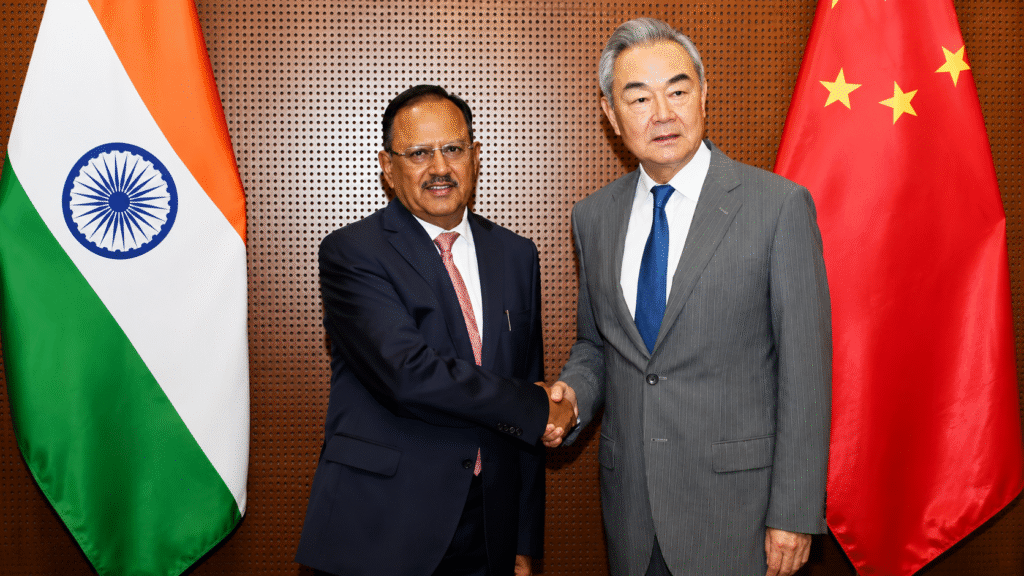
Ajit Doval is heading to Beijing this week. India’s National Security Advisor will sit down with Chinese Foreign Minister Wang Yi for the 25th round of those Special Representatives talks on the border. The formal gatherings are lined up for Monday and Tuesday. The timing feels deliberate. India is hosting the BRICS summit in the middle of September, and a lot of people are watching to see whether Chinese President Xi Jinping finally comes. It would be his first trip to India in seven years. If Doval’s talks go reasonably well, it could help clear the path for that visit and maybe even another meeting between Modi and Xi on the sidelines. This isn’t just about the boundary, though the boundary is the main item. Both sides also want to take a appropriate look at where the overall relationship stands. Things have been inching forward since late 2024, after the long freeze that followed the 2020 clashes in eastern Ladakh. The Modi-Xi meeting in Kazan that year opened a small window. They encountered again in Tianjin last August and both said they saw each other as development partners, not rivals, and that differences shouldn’t turn into open fights. Since then the steps have been careful—flights restarted, some visas eased, the Kailash-Mansarovar yatra back on, border trade through Nathu La and Lipulekh picking up again. The Special Representatives mechanism itself is old. It started in 2003 under the idea of finding a full settlement for the nearly 3,500-kilometre border. Progress has always been slow. After Galwan the talks stopped for almost five years. They only restarted properly in December 2024. Last year’s round in Delhi produced one practical agreement: an expert group under the existing border coordination mechanism to look at what they call an “early harvest”—small, limited agreements in places where the differences aren’t huge, while the bigger framework is still being worked out. That early-harvest idea is expected to come up again this week. Officials from both sides met under the Working Mechanism on 6 August and talked about delimitation, border management, new mechanisms, and cross-border cooperation. Some people point to the middle sector in Uttarakhand and Himachal, and the Sikkim area, as possible spots where something modest might be possible. They’ve also talked about setting up general-level military mechanisms in the eastern and middle sectors to match the one that already exists in the west. Nobody is expecting a big breakthrough. The western and eastern sectors remain complicated, and there have been fresh reports of friction in Arunachal Pradesh this month, with sharp words exchanged publicly. China says the border is “generally stable.” India keeps repeating that peace and quiet along the Line of Actual Control is the basic condition for anything else to improve. External Affairs Minister S. Jaishankar said as much again just the other day. Still, Doval going to Beijing keeps the highest-level channel open. It is his first visit there for these formal talks since the process restarted. He and Wang met more casually in June during the BRICS National Security Advisers meeting in Delhi and both noted that things were moving toward gradual normalisation. Tuesday’s meeting is the first proper boundary round since last August. What comes out of the talks will probably be measured. Quiet, workmanlike language would suggest the stabilisation is holding. Any mention of the expert group making progress, or new confidence-building steps, would be read as small but real movement. The larger questions—the full boundary settlement, the trade imbalance, how the two countries handle their differences in a shifting region—will stay for later. For now the focus is practical. Keep talking, keep the temperature down, and see whether the careful steps taken since 2024 can continue. If the meetings go smoothly, the possibility of Xi coming to Delhi next month stays alive. In a relationship that has swung between deep freeze and cautious thaw, even steady, unspectacular work counts. Sources: Drawn from reporting in The Hindu by Ananth Krishnan, PTI dispatches, Ministry of External Affairs briefings, Chinese Foreign Ministry statements, and coverage in NDTV, India Today, The Statesman and Hindustan Times reports. @Rohit Manral
‘Not expecting neighbours to do only what’s in my interest’: Jaishankar on Bangladesh amid Hasina row
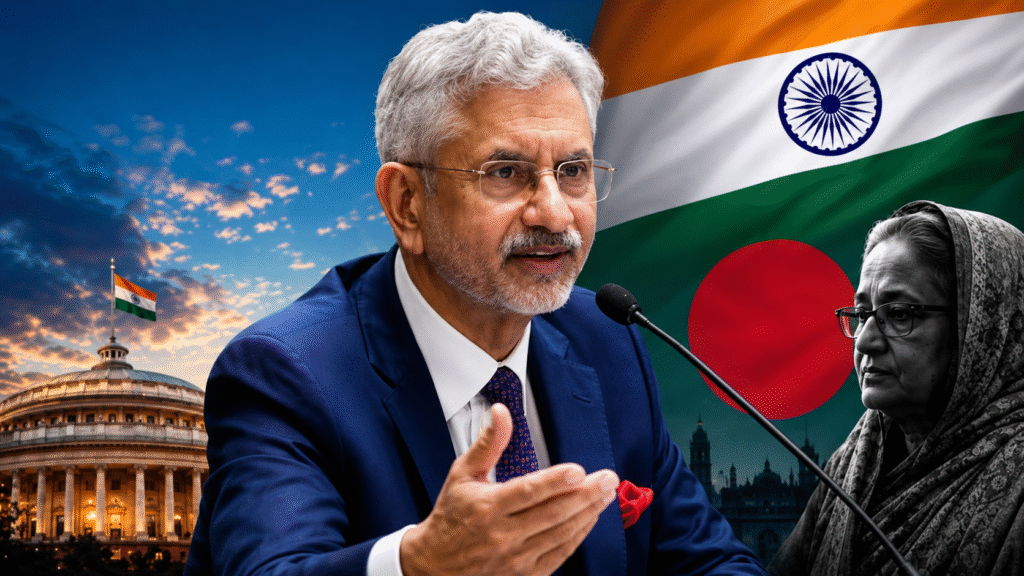
External Affairs Minister S. Jaishankar was saying on Saturday when he spoke about India and Bangladesh.He was at the Economic Times World Leaders Forum in Delhi, and someone asked him about the current awkwardness between the two countries—especially Bangladesh’s demand that India hand over Sheikh Hasina, and the question mark hanging over a possible visit by Bangladesh’s new Prime Minister Tarique Rahman. Jaishankar didn’t get into the details of any private talks. He rarely does. Instead he kept it simple and practical. He said, “What I can tell you is for any relationship to work, it has to meet the test of mutual interest. It has to work for them, it has to work for us.” Then he added the line that really stays with you: “I am also realistic, I’m not expecting neighbours to do only what’s in my interest. There has to be a fair degree, a reasonable degree, of my recognising and respecting what is their interest, just as I expect them also to do so.” He went on to say that once both sides find that common ground—that “landing point”—things start moving more smoothly. At the end of the day, he said, mutuality is what holds these relationships together. It’s a calm, grown-up way of putting it at a time when things have been a bit tense. Sheikh Hasina has been in India since August 2024, when she left Bangladesh during the big political upheaval. Bangladesh has been asking for her return so she can face the cases against her there. Some reports say Dhaka has even linked that demand to Rahman’s possible trip to India. New Delhi has invited him—both for a regular bilateral visit and in connection with the BRICS summit, since Bangladesh chairs BIMSTEC right now. But the timing has been uncertain, and the Hasina issue keeps sitting in the background. After 2024 the relationship took a real knock. There was coolness, some trade friction, sharper public comments. When Tarique Rahman took charge earlier this year, it looked like both sides were trying to steady the boat a bit. Then Hasina did a virtual media interaction from India on the second anniversary of her departure, and that seemed to irritate Dhaka all over again. India has said it didn’t organise or endorse that interaction, but the episode still added to the strain. Jaishankar’s answer didn’t pick a fight and it didn’t give anything away either. He just stated the obvious truth: lasting ties can’t be one-sided. India has its own interests—border security, connectivity for the Northeast, trade, regional stability. Bangladesh has its own priorities, shaped by what its people and its politics want right now. Pretending those don’t exist doesn’t help anyone. He’s talked about neighbourhood diplomacy this way before. What feels refreshing is that he isn’t treating this as a zero-sum game. He’s not saying India holds all the cards, and he’s not saying Bangladesh has to simply fall in line. The message is quieter and more realistic: both sides need to feel they’re getting something out of it. That applies whether you’re talking about high-level visits, legal requests, border management or the everyday economic links that ordinary people actually feel. And ordinary people do feel it. Cross-border trade, medical travel, family visits, the movement of goods—those things matter more than diplomatic language. When the temperature stays high for too long, those practical connections start to suffer first. Finding common ground, as Jaishankar put it, is less about grand speeches and more about the patient work of spotting where interests overlap and managing the differences that will always be there. Right now the two governments are still talking about the visit. Whether it happens soon or takes a little longer, the larger point he made still holds. Neighbours don’t have to agree on everything. They just have to accept that each has legitimate interests of its own. Expecting only one side to adjust is a sure way to keep the friction going. Looking for the place where interests meet is the more practical path—and the one he said India is ready to take. In the end it’s the kind of plain-spoken view that doesn’t make for dramatic headlines, but it might actually help keep the relationship from drifting further off course. Mutual interest isn’t a fancy slogan. It’s just the basic condition for any lasting neighbourhood arrangement. And right now, that’s exactly what both sides need to remember. Sources: Hindustan Times, The Indian Express, India Today, Zee News, News18, India TV, WION, The Daily Star, Firstpost, Times of India (coverage of Jaishankar’s remarks at the Economic Times World Leaders Forum, 22–23 August 2026). @Rohit Manral
‘World looking at India as bright spot of growth & hope’: PM Modi at Economic Times World Leaders Forum 2026
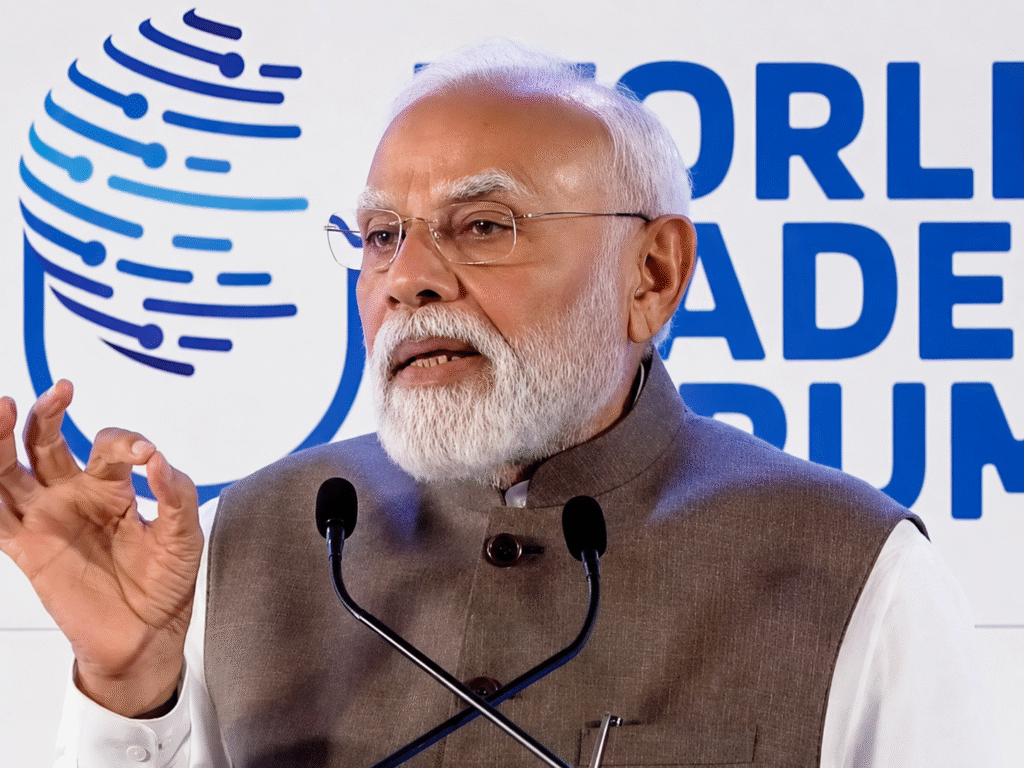
It was one of those evenings in the capital when the air itself seemed to carry a quiet confidence. At the Economic Times World Leaders Forum 2026, held at the Taj Palace, Prime Minister Narendra Modi stood before a hall packed with business leaders, investors and policymakers and said something that felt both simple and significant. The world, he told them, is looking at India as a bright spot of growth and hope. He did not rush into the line. He first spoke about the last few years — the ups and downs, the disruptions, the sense that nothing stays isolated anymore. “Whether one likes it or not,” he said, “the futures of all nations are interconnected. Nothing is possible in isolation.” India’s G20 presidency, he reminded the room, had carried the idea of One Earth, One Family, One Future. That same spirit, he felt, still had answers for the problems of this century. But the present is not easy. Resources are being turned into weapons. Mistrust is spreading. Global growth looks uncertain. And still, Modi said, the world keeps turning its gaze toward India. “Even in such times, the world views India as a bright spot of growth and hope.” He backed the claim with numbers that have become familiar yet still land with weight. In the last 10 to 12 years, about 25 crore people have moved out of poverty. The IMF continues to say India will remain the fastest-growing major economy. On Independence Day, speaking from the Red Fort, he had talked about seven streams of strength — manufacturing, agriculture and food processing, technology, the green economy, the blue economy and more. These, he said, are where the country is putting its energy. Then he turned to the idea of reform itself, and here his tone sharpened. He spoke of the old licence-raj days when companies that produced more than the allowed limit were actually punished. He called it the PLP model — Production Linked Punishment. Today the approach is the opposite. Higher production brings incentives. The government, he said, is not merely changing a few rules. It is changing the entire way regulations are thought about. The old mindset was “prohibited unless permitted.” The new one is “permitted unless prohibited.” If something is not clearly banned by law, there should be no need to keep asking for permission at every step. The relationship between government and people, he insisted, must rest on trust, not suspicion. Policies now are being shaped to be pro-people, pro-growth and pro-development. He pointed to things people actually notice in their daily lives — cheaper data, the quick spread of 5G, changes in the railways, the Delhi Metro, the Namo Rapid Rail. Small reforms on paper, he suggested, but they show a country adjusting itself to the times. Political stability and continuity of policy, he added, give the outside world the confidence that India’s direction will not suddenly reverse. The forum itself was full of people who matter in boardrooms and policy circles. More than 40 global speakers and over 300 Indian CEOs were expected across the two days. Earlier in the day, Times Internet chairman Satyan Gajwani had described Modi as a source of stability in a world that seems to lurch from one crisis to the next. The Prime Minister’s words seemed to answer that description directly. He did not pretend India is untouched by global pressures. He simply argued that the country has chosen a path of continuous reform and that the results are visible. Growth is being protected. The sectors that will matter in the years ahead are receiving focused attention. And the governing idea has shifted from control to enablement. The Economic Times World Leaders Forum continues through Saturday with conversations on technology, geopolitics and the next phase of growth. But Friday evening belonged to that single, clear assertion — that amid everything else, India stands out as a place of growth and hope. Sources: Times of India, Economic Times, ANI, ETV Bharat, New Kerala, The News Mill, Awaz The Voice, Akashvani News, and the official text of the Prime Minister’s address (August 21, 2026). @Rohit Manral
‘U-turn in a week’: DMK hits out at Vijay over his delimitation stand after meeting Amit Shah
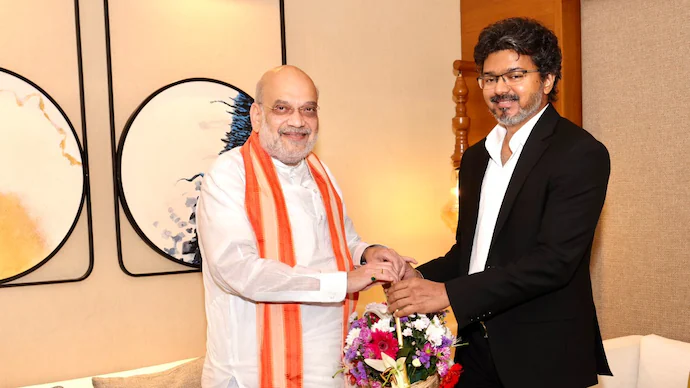
Politics in Tamil Nadu can turn on a dime, and Thursday was one of those days. The DMK came out swinging against Chief Minister C. Joseph Vijay, accusing him of doing a full U-turn on the delimitation issue within a week. The spark? Vijay’s meeting with Union Home Minister Amit Shah at the Southern Zonal Council in Chengalpattu. Only a few days ago, the Tamil Nadu Assembly had passed a clear resolution. It said the number of Lok Sabha seats should stay frozen at 543 and the present share of each state should not be touched. Vijay’s government had pushed it hard. His party, TVK, had even called an all-party meeting of MPs earlier in the month and got a similar demand on the table. Many people thought the message was loud and clear: no redrawing of seats that could weaken the South’s voice in Parliament. Then came Thursday. Speaking at the council meeting that his own government was hosting, Vijay took a softer line. He asked the Centre for a firm legal assurance that no state would lose its percentage of seats in Parliament just because it had managed to control its population better. He spoke about how southern states had done well on population stabilisation, human development and economic growth, and said those achievements should not be punished by cutting their representation. What he did not say was as important as what he did. He never repeated the demand to keep the total number of seats locked at 543. That difference did not go unnoticed. The DMK’s IT wing was quick on social media. One post said, “Chief Minister Vijay, who took a firm stand against Amit Shah on delimitation… who passed a resolution the same week saying do not increase the 543 seats… has now changed his stance.” Another asked, “Has Chief Minister Vijay done a U-turn in a week on the constituency redrawing issue? Is this the same man who once called supporters of redrawing ‘eight-footers’?” They also needled TVK’s alliance partners, asking if anyone would call out what they saw as double-speak. DMK spokesperson Saravanan Annadurai put it simply: the Chief Minister had flipped on the issue. AIADMK’s IT wing joined in, saying the TVK government had completed a full U-turn and was now sounding a lot like the Union government itself. AMMK leader T.T.V. Dhinakaran called the whole sequence political theatre meant to distract from other problems in the state. The setting made the criticism sharper. Amit Shah was chairing the Southern Zonal Council meeting. Chief ministers and senior officials from Tamil Nadu, Karnataka, Andhra Pradesh, Kerala and the southern Union territories were present. Vijay used the platform to raise three main points: protection on delimitation, exemption from NEET for Tamil Nadu students, and tougher action against drug trafficking and illegal online medicine sales. On delimitation, the anxiety in the South is old and real. The freeze based on the 1971 Census is coming to an end. If seats are redistributed purely on today’s population numbers, states in the North that grew faster could gain more seats. States like Tamil Nadu, which brought their population growth under control, could end up with a smaller share. Right now Tamil Nadu holds roughly 7.18 per cent of Lok Sabha seats. Losing even a bit of that is seen as a blow not just to numbers but to the state’s weight on language, culture and federal issues. Vijay’s new wording — protect the percentage, not necessarily freeze the total number — leaves room for the overall size of the Lok Sabha to grow, as long as no state is penalised for doing well on population control. His ministers later insisted there was no change in the government’s position that seats should stay at 543. Energy and Law Minister C.T.R. Nirmalkumar said as much outside the meeting. But the difference in language was hard to miss, and the opposition made full use of it. This episode shows how carefully Tamil Nadu’s parties are treading. Delimitation is not just about maps and numbers. It goes to the heart of federal balance and regional pride. For years, governments here have resisted anything that could shrink the South’s say in Parliament. Vijay himself had spoken strongly against it earlier, saying Tamil Nadu would not let anyone take away its place. Now, with the Centre not rushing a new bill and with earlier assurances that southern representation would not be cut, the room for careful language has grown. Some see Vijay’s remarks as practical engagement. Others, especially the DMK, call it a climbdown after the strong assembly resolution. As the day ended, one thing stood out. The delimitation debate is nowhere near settled. It will keep testing whether Tamil Nadu’s leaders can hold a common line when the state’s long-term interests are on the line. For the moment, the DMK has drawn a sharp line, saying the Chief Minister changed course in the space of a single week. Whether that change is real or just careful wording in front of the Union Home Minister is something the political class will keep arguing over in the days ahead. Sources: Times of India, Hindustan Times, Mathrubhumi, Moneycontrol, India Today, The Federal, The Week, ABP Live. @Rohit Manral